The Problem: Ad Overload
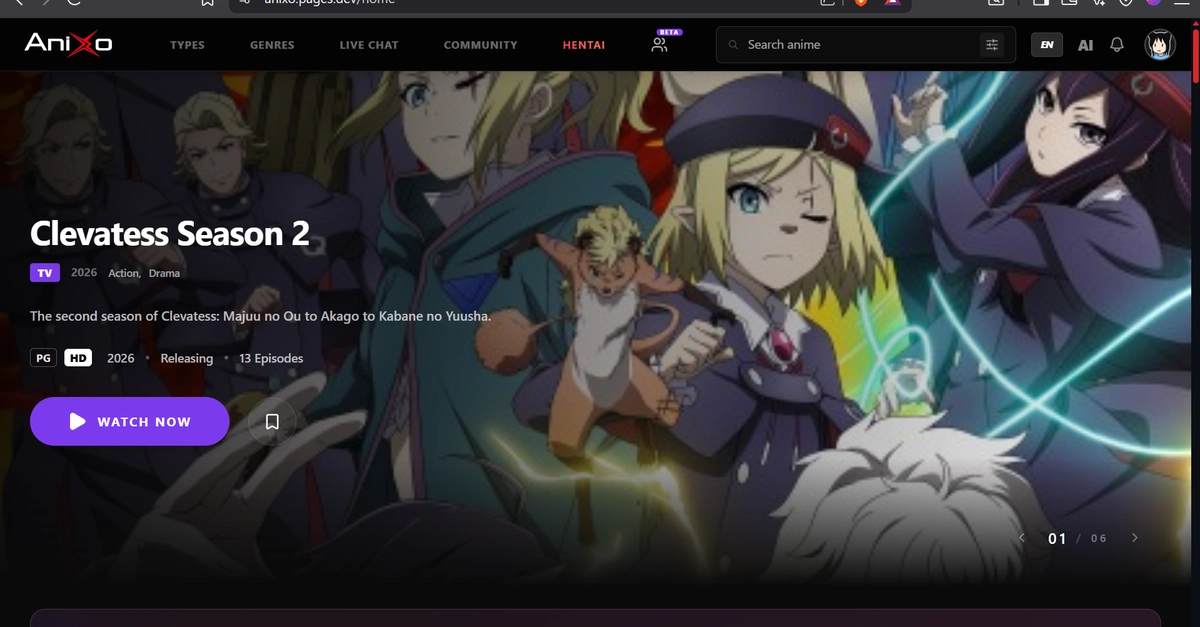
For many anime enthusiasts, especially those who are also web development students and portfolio builders, the experience of tracking watched episodes and discovering new series is often marred by intrusive advertising. Pop-up ads, auto-playing videos, and banner ads on streaming and tracking sites can degrade the user experience. This was the precise problem faced by Rafsan Hossain, a web development student who aimed to create a solution that was not only functional but also provided a clean, distraction-free environment. His goal was to build a project that solved a real, personal pain point while showcasing his development skills.
AniXo: A Minimalist Approach
Hossain’s solution is AniXo, a dashboard designed for speed, simplicity, and an ad-free experience. The project leverages the robust AniList API, a popular platform for tracking anime and manga, to provide core functionality. The primary objective was to offer a seamless way for users to manage their watch progress without the clutter and annoyance typically associated with online content consumption.
Key Features and Implementation
AniXo’s functionality is built around a few core features, all powered by the AniList API and custom development:
Seamless Watch-Progress Syncing
The integration with the AniList API is central to AniXo's utility. Users can connect their AniList accounts, allowing the dashboard to automatically sync their viewing progress. This means that as users finish an episode on a streaming service, they can update their status on AniXo, which then reflects on their AniList profile. This eliminates the need to manually update progress across different platforms, providing a unified and efficient tracking system. The API’s ability to read and write user data is crucial for this feature, enabling bidirectional synchronization.
Watch2Gather Rooms for Social Viewing
Beyond personal tracking, AniXo introduces a social dimension with its custom-built “Watch2Gather” rooms. These are designed to facilitate shared viewing experiences with friends. While the specifics of the implementation are not detailed in the provided excerpt, the concept suggests a feature where users can invite friends to a virtual room, perhaps to watch anime together or simply discuss ongoing series. This feature aims to recreate the communal aspect of anime fandom that can be lost in a purely individual, ad-ridden online experience. The architecture likely involves real-time communication protocols to ensure synchronized playback or chat functionality.
Distraction-Free User Interface
A defining characteristic of AniXo is its clean and minimalist UI. Hossain explicitly aimed for a “distraction-free” experience. This translates to a user interface that prioritizes essential information and controls, avoiding unnecessary visual elements, complex navigation, or any form of advertising. The design philosophy likely emphasizes usability and speed, ensuring that users can quickly access their anime lists, update progress, or engage with social features without being overwhelmed. This focus on UI/UX is a deliberate counterpoint to the cluttered interfaces often found on ad-supported streaming platforms.
Technical Architecture and Stack
While the excerpt doesn’t delve deeply into the technical stack, it highlights the use of the AniList API as the data backbone. As a web development student project, AniXo is likely built using modern front-end frameworks and technologies. Common choices for such projects include React, Vue, or Angular for the front-end, coupled with Node.js or a similar backend environment if server-side logic beyond API calls is required. The deployment on “pages.dev” suggests a static site generation or serverless approach, optimizing for speed and cost-effectiveness. The focus on a minimal and fast dashboard implies efficient code and optimized asset loading.
Feedback and Future Potential
Hossain actively seeks feedback from fellow developers on the architecture and UI of AniXo. This open invitation suggests a project that is still evolving and values community input. For a student portfolio project, AniXo demonstrates a strong understanding of API integration, front-end development principles, and user-centric design. The project addresses a common user frustration and offers a practical, enjoyable alternative to existing solutions. The inclusion of social features like Watch2Gather rooms adds a unique value proposition that could set AniXo apart.
The live project is available for testing at https://anixo.pages.dev. Developers are encouraged to explore the dashboard and provide constructive criticism, focusing on the architectural choices and the overall user interface design. Such feedback is invaluable for refining the project and for Hossain’s continued learning and development as a programmer.