The Brittleness of Static AI Tool Definitions
Hardcoding AI tool definitions, JSON schemas, and manual routing logic directly into AI agent initialization scripts is a fundamental architectural weakness. This static paradigm, common in early agentic frameworks, forces developers to embed tool capabilities directly into the core application loop. It mirrors the early days of web development where every HTML page, script tag, and stylesheet route had to be manually declared and compiled into monolithic binaries. As modern systems scale towards distributed agentic mesh networks, this static binding creates a brittle architecture. The moment an external API schema updates or a new microservice spins up, the entire agent can collapse, requiring significant re-engineering.
This approach becomes untenable as AI agents are increasingly expected to interact with a dynamic and evolving ecosystem of external services. Imagine an agent designed to manage your calendar and send emails. If the underlying calendar API changes its authentication method or adds new event parameters, the agent, hardcoded to the old schema, will fail. Developers are forced into a cycle of constant manual updates, which is neither scalable nor efficient. This static method creates a significant bottleneck for deploying and maintaining sophisticated AI systems that rely on real-world data and services.
Introducing Dynamic Tool Discovery with MCP
The solution lies in a paradigm shift away from static prompt engineering and towards dynamic capabilities. This is where the Model Context Protocol (MCP) becomes crucial. MCP provides a standardized way for AI models to discover and understand the tools available to them. Instead of the agent developer pre-defining every single tool and its schema, MCP allows the agent to query for available tools and their specifications in real-time. This is akin to a new employee being given a directory of available company resources and instructions on how to access them, rather than having every single contact and process pre-programmed into their brain.
MCP enables a more flexible and resilient agent architecture. When an agent needs to perform an action, it can query the available tools through the MCP interface. This query can be based on the task at hand, allowing the agent to dynamically select the most appropriate tool. If a new tool is added to the system, or an existing one is updated, the agent can discover these changes automatically without needing to be re-initialized or re-coded. This dynamic discovery mechanism is essential for building agents that can operate in complex, evolving environments, such as managing a fleet of microservices or interacting with a continuously updated knowledge base.
Runtime Schema Validation with Zod
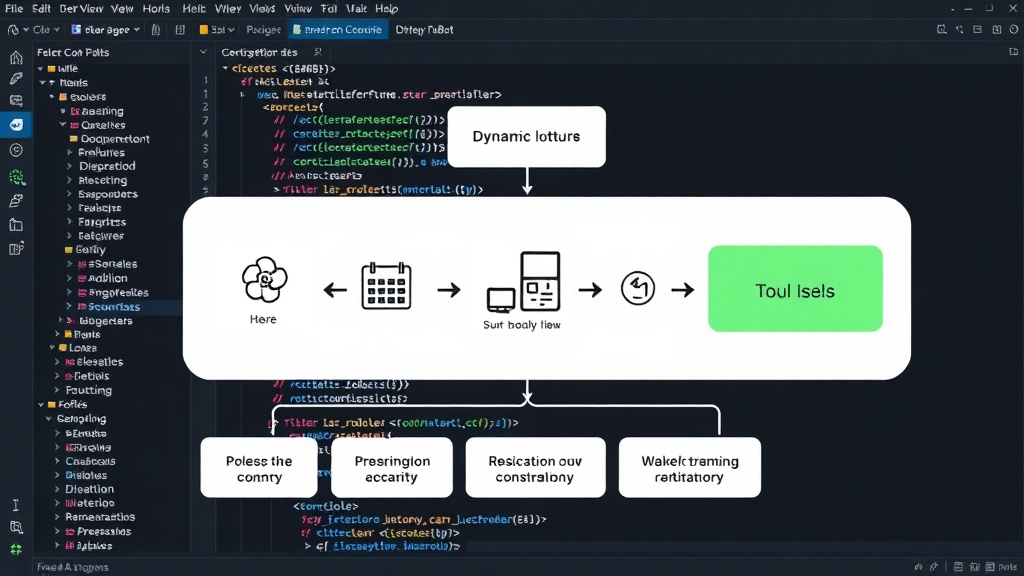
While MCP handles the discovery of tools, ensuring that the data passed to and received from these tools is correct is paramount. This is where Zod, a TypeScript-first schema declaration and validation library, plays a critical role. Zod allows developers to define schemas for data structures, and then use these schemas to validate data at runtime. When an AI agent selects a tool via MCP, it can use Zod schemas to ensure that the arguments it's sending to the tool are correctly formatted, and that the response it receives back adheres to the expected structure.
This runtime validation acts as a crucial safety net. Hardcoded routing logic often fails because it doesn't account for variations in API responses or subtle differences in input requirements. Zod provides a robust mechanism to catch these discrepancies before they cause errors. For example, if a tool is expected to return a JSON object with a `status` field that is a string, Zod can instantly flag if the actual response contains a numerical status or if the field is missing entirely. This prevents downstream errors and provides clear feedback for debugging. It's like having an automated quality control inspector at every point where the agent interacts with an external system, ensuring that the data is always in the right format.
Combining MCP and Zod for Resilient Agents
The real power emerges when MCP and Zod are used in conjunction. MCP provides the dynamic discovery of *what* tools are available and *how* to call them, while Zod provides the runtime guarantee that the *data* being exchanged with those tools is valid. This combination creates a significantly more robust and maintainable architecture for AI agents.
Consider an agent tasked with retrieving user information. Using MCP, the agent identifies a `getUserProfile` tool. Before executing, it consults the Zod schema associated with `getUserProfile` to ensure the `userId` parameter is a string and a valid UUID. If the agent receives a response, it uses another Zod schema to validate that the returned profile object contains expected fields like `name` (string) and `email` (string, valid email format). If any validation fails, the agent can gracefully handle the error, perhaps by retrying the request with corrected parameters or by informing the user of the issue, rather than crashing.
This approach decouples the agent's core logic from the specifics of external tool implementations. Developers can focus on the agent's decision-making process, confident that the interaction with tools will be managed dynamically and validated rigorously. This makes agents easier to update, more resilient to external changes, and ultimately, more reliable in production environments.
The Future of Agentic Architectures
The move away from hardcoded tool definitions is not just an optimization; it's a necessary evolution for AI agents to function effectively in complex, real-world scenarios. By embracing dynamic tool discovery via protocols like MCP and ensuring data integrity with runtime validation libraries like Zod, developers can build AI systems that are more adaptable, scalable, and trustworthy. This architectural pattern is set to become a standard for building sophisticated, distributed agentic systems, moving beyond the limitations of static configurations and towards a more fluid and intelligent interaction between AI models and their environments.