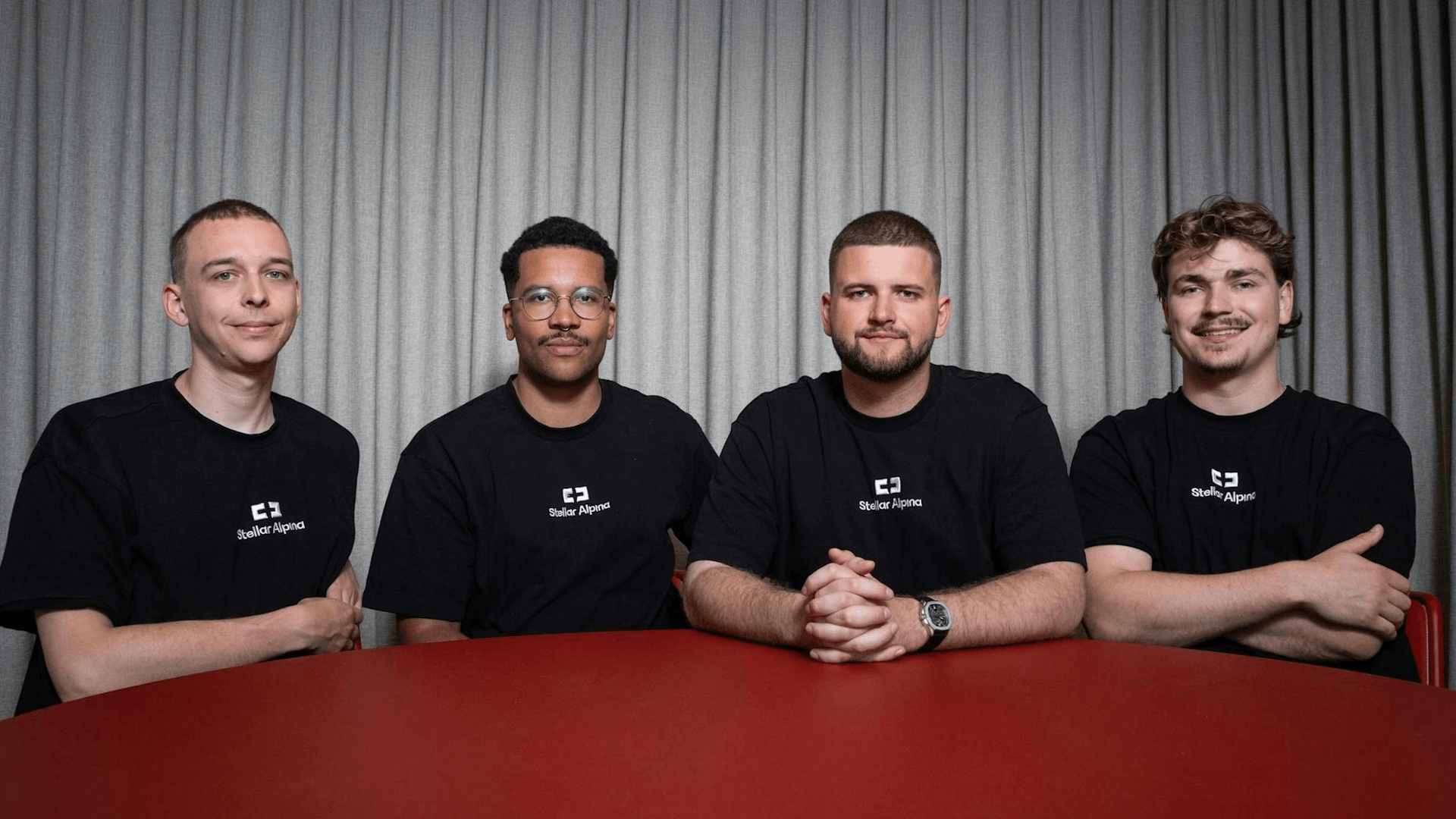
Stellar Alpina's Novel Propulsion System Garners Venture Kick Funding
Zurich-based space technology startup Stellar Alpina has secured €160,000 (CHF 150,000) from Venture Kick to advance its compact rocket engine technology for in-space propulsion. The company, founded by Rick Röthlisberger, is focused on developing innovative solutions for the burgeoning small satellite market, where efficient and reliable propulsion is a critical bottleneck.
The funding from Venture Kick, an organization that supports early-stage startups in Switzerland, will be instrumental in accelerating Stellar Alpina's research and development efforts. Specifically, the capital will be directed towards refining the design, testing key components, and potentially building a prototype of their unique engine system. This injection of funds signifies a crucial step in validating their technology and moving closer to commercialization.
The Challenge of In-Space Propulsion for Small Satellites
The rapid proliferation of small satellites, often referred to as CubeSats and smallsats, has opened up new frontiers in Earth observation, telecommunications, and scientific research. However, these miniaturized spacecraft face significant challenges related to propulsion. Traditional rocket engines are often too large, too power-hungry, or too complex for the constraints of small satellite platforms. This limitation restricts their ability to perform orbital maneuvers, station-keeping, or de-orbiting at the end of their mission, impacting their operational lifespan and effectiveness.
Stellar Alpina aims to address this gap with a novel approach to in-space propulsion. While the specific technical details of their engine remain proprietary, the company has indicated a focus on compactness, efficiency, and scalability. This suggests a system that can provide the necessary thrust for orbital adjustments without consuming excessive power or occupying valuable payload space. Such a solution is vital for enabling more complex missions and extending the utility of small satellite constellations.
The venture kick program is known for its rigorous selection process, which involves multiple stages of evaluation by experienced entrepreneurs and investors. Receiving this funding is a strong indicator of the perceived potential and technical viability of Stellar Alpina's technology. It also positions the company to attract further investment from venture capital firms specializing in the aerospace sector.
Stellar Alpina's Vision and Market Opportunity
Rick Röthlisberger, the founder of Stellar Alpina, brings a vision to democratize in-space maneuverability for smaller spacecraft. The company's ambition extends beyond simply providing an engine; it aims to enable a new generation of agile and versatile small satellite missions. This includes applications such as precise constellation management, rapid orbital adjustments for scientific payloads, and reliable end-of-life disposal to mitigate space debris – a growing concern in low Earth orbit.
The market for in-space propulsion systems for small satellites is poised for significant growth. Analysts project a multi-billion dollar industry in the coming decade, driven by the increasing deployment of satellite constellations for global internet, advanced Earth imaging, and IoT services. Companies that can offer cost-effective, high-performance, and miniaturized propulsion solutions are well-positioned to capture a substantial share of this expanding market.
Stellar Alpina's focus on a compact, efficient engine directly targets this demand. By overcoming the size and power limitations of existing systems, they can unlock new mission profiles and enhance the capabilities of existing ones. The €160,000 from Venture Kick provides the crucial seed capital to move from theoretical design to tangible development, a critical phase for any deep-tech startup in the space industry.
The surprising detail here is not just the funding amount, but the specific focus on compact in-space propulsion for small satellites. While many companies are developing new satellite technologies, those specifically targeting the propulsion bottleneck with innovative, miniaturized solutions are rarer. This niche focus suggests a deep understanding of the market's unmet needs and a targeted strategy to address them.
The Path Forward: From Seed Funding to Commercialization
With the €160,000 in hand, Stellar Alpina is expected to concentrate on critical engineering milestones. This includes finalizing the detailed design of their engine, procuring specialized materials, and initiating rigorous testing protocols. The goal will be to demonstrate the performance, reliability, and safety of their propulsion system under simulated space conditions. Success in these early stages will be vital for building confidence among potential customers and future investors.
The company’s journey mirrors a broader trend in the space industry: the increasing importance of specialized technology providers catering to the unique needs of the small satellite ecosystem. As the cost of launching satellites continues to decrease, the demand for sophisticated, yet affordable, onboard systems like propulsion will only grow. Stellar Alpina is strategically positioning itself to be a key player in this evolving landscape.
The next steps will likely involve securing further funding rounds to scale up production, establish manufacturing capabilities, and build out a sales and support infrastructure. The insights gained from the development and testing phases will inform their go-to-market strategy, identifying early adopters and specific mission types where their technology offers the most significant advantage. The €160,000 from Venture Kick is not just capital; it's a validation that propels Stellar Alpina toward making its mark in the competitive field of space propulsion.