%22%20%2F%3E%0A%20%20%3C%2Fsvg%3E)
Malicious ClickFix Scripts Target Steam Users
Steam discussion forums, a common hub for gamers seeking help and community, are now a vector for sophisticated attacks. Threat actors are leveraging these platforms to distribute malware disguised as fixes for common gaming and computer issues. These malicious posts, often titled with keywords like "ClickFix," "Fix," or specific game names, lure unsuspecting users into downloading infected files. The ultimate payload is XMRig, an open-source cryptominer that hijacks a victim's CPU resources to mine Monero cryptocurrency.
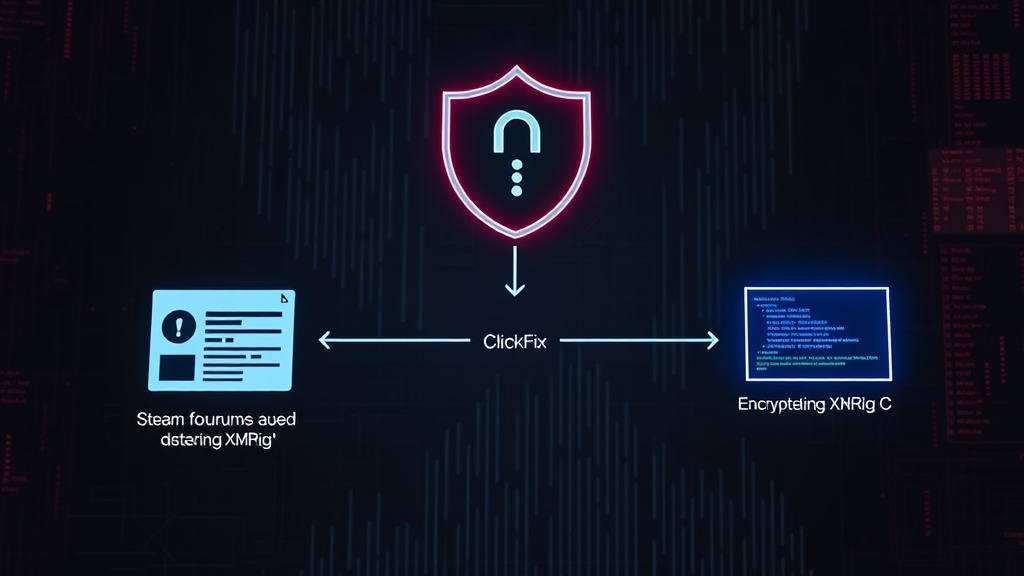
The attack chain begins with a seemingly helpful post on a Steam forum. These posts are crafted to appear legitimate, addressing common problems such as game crashes, performance lags, or even general Windows errors. They often include convincing descriptions and sometimes even fake screenshots to build trust. The crucial element is the link provided, which doesn't point to a legitimate software update or troubleshooting guide, but rather to a malicious executable file. When a user, desperate for a solution to their technical woes, downloads and runs this file, they unknowingly install the XMRig miner.
Understanding the XMRig Payload
XMRig is a well-known and widely used cryptojacking tool. Its primary function is to utilize the victim's CPU (and sometimes GPU) to mine Monero (XMR). Monero is a privacy-focused cryptocurrency, making it attractive to threat actors as transactions are harder to trace. Once installed, XMRig operates stealthily in the background, consuming significant processing power. This leads to noticeable performance degradation on the infected machine, including slower application performance, increased fan noise due to higher CPU temperatures, and general system unresponsiveness.
The attackers profit by directing the mined Monero to their own wallets. While a single infected machine might yield only a small amount of cryptocurrency, the attackers' strategy relies on infecting a large number of users. The widespread nature of Steam and the sheer volume of its user base make it an attractive target. The attackers are essentially turning thousands of gamers' computers into distributed, unpaid mining farms.
The Mechanics of the ClickFix Attack
The success of this attack hinges on social engineering and exploiting the trust gamers place in official-looking forums. Threat actors create accounts and post seemingly helpful solutions. These solutions are often presented as downloadable archives (e.g., .zip, .rar) containing the "fix." Inside these archives, alongside potentially harmless or even legitimate-looking files, lies the XMRig executable. Sometimes, the malware is packed or obfuscated to evade detection by basic antivirus software.
The term "ClickFix" itself is a deceptive label. It implies a simple, one-click solution to a problem, further encouraging users to download and run the file without much scrutiny. The attackers are adept at monitoring popular game forums and identifying common pain points that users are actively seeking solutions for. By providing a fake solution to a real problem, they exploit a user's immediate need for resolution. The surprising detail here is not the sophistication of the malware itself, which is readily available open-source, but the low-tech, high-volume social engineering employed on a platform frequented by millions.
Impact on Gamers and Systems
The immediate impact on infected users is a degraded computing experience. Games may stutter, applications will take longer to load, and the system may become generally sluggish. Beyond performance issues, the constant high CPU usage generated by XMRig can lead to increased wear and tear on hardware components, particularly the CPU and cooling system, potentially shortening the lifespan of the affected computer. Furthermore, the presence of unauthorized software on a system opens the door to further security risks, as the initial infection vector might be exploited to download other types of malware.
For the attackers, the appeal lies in the passive and relatively low-risk nature of cryptojacking compared to ransomware or data theft. They don't need to directly interact with the victim after the initial infection, and the mining process can continue for extended periods. The anonymity offered by Monero further reduces the likelihood of being traced.
Mitigation and Prevention
Users can protect themselves by exercising extreme caution when downloading files, especially those linked from public forums, even if they appear to be official. Always verify the source of any download. If a solution seems too good to be true, it likely is. Gamers should prioritize downloading software and game patches directly from official developer websites or trusted digital storefronts like Steam itself. Running reputable antivirus and anti-malware software and keeping it updated is crucial for detecting and removing known threats like XMRig.
System administrators and security professionals can implement network-level monitoring to detect unusual outbound traffic patterns associated with cryptocurrency mining. Blocking known mining pool domains and monitoring for high CPU utilization on endpoints can also serve as early warning signs. The broader implication for platforms like Steam is the ongoing challenge of content moderation and combating sophisticated social engineering tactics that exploit user trust.
What remains unaddressed is the long-term strategy for platforms like Steam to proactively identify and remove such malicious posts before they can affect a significant number of users. While reporting mechanisms exist, the sheer volume of forum activity makes real-time, automated detection a significant technical hurdle.