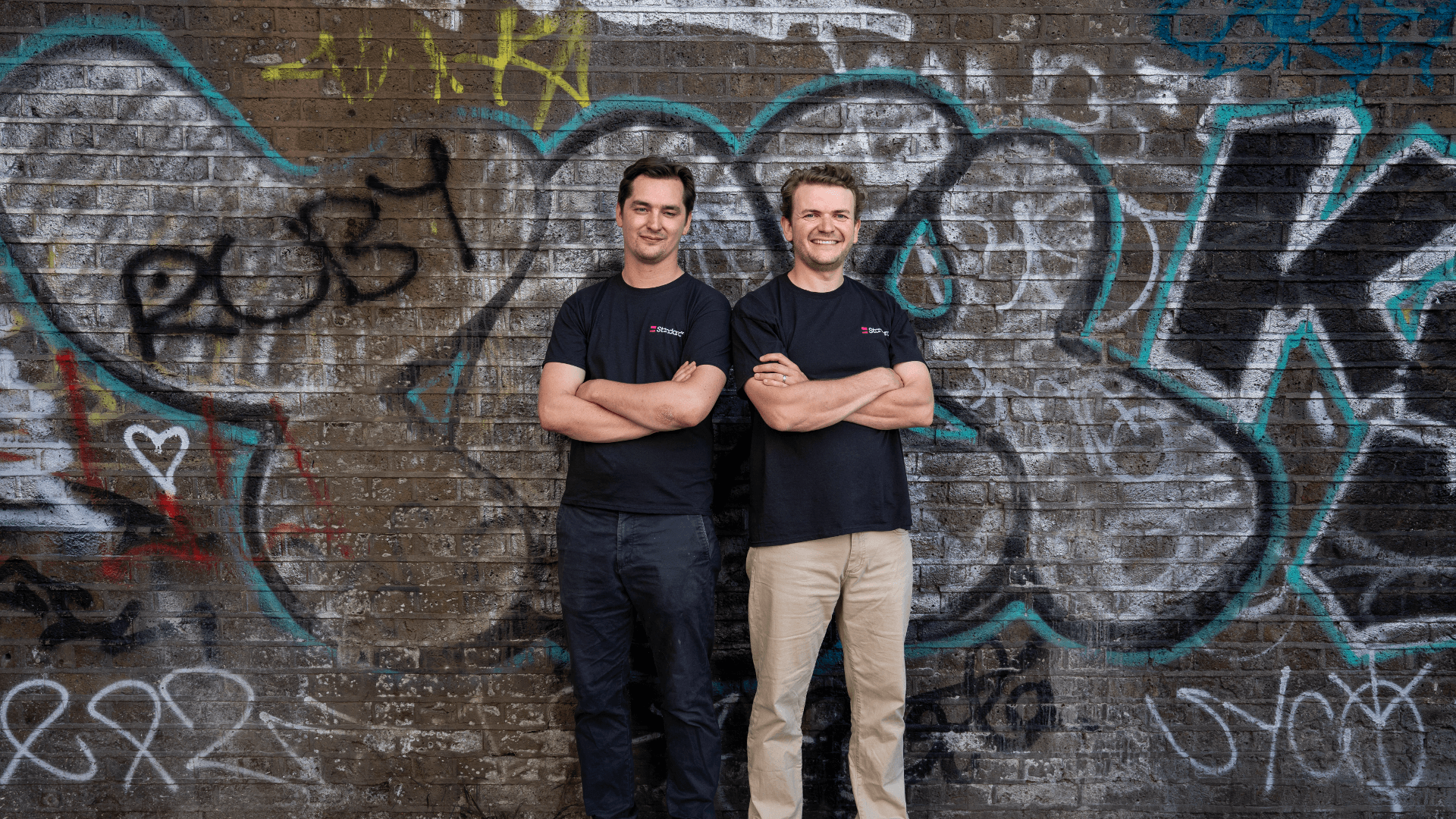
StandardX Secures £10 Million Seed Funding
StandardX, a deeptech company focused on advanced isotope production, has announced the closure of a £10 million seed funding round. This capital infusion is earmarked for the expansion of its novel accelerator-based isotope refinery, aiming to significantly increase the supply of rare isotopes critical for both the medical sector and the burgeoning fusion energy industry. The round was led by Octopus Ventures, with participation from existing investors including Future Ventures and the UK Innovation and Science Seed Fund (UKI2S), underscoring strong confidence in the company's technology and market potential.
The company's core innovation lies in its proprietary accelerator-based method for producing isotopes. Traditional methods often rely on nuclear reactors, which are expensive to build and operate, have limited geographical availability, and can produce significant radioactive waste. StandardX's approach offers a more flexible, potentially more cost-effective, and geographically distributed alternative. This is particularly relevant as demand for specific isotopes, such as Molybdenum-99 (Mo-99) for diagnostic imaging and Helium-3 (He-3) for fusion research, continues to outstrip current supply capabilities.
The Isotope Challenge: Medicine and Fusion
Rare isotopes are essential building blocks for numerous advanced applications. In medicine, isotopes like Mo-99 are precursors to Technetium-99m (Tc-99m), the most widely used radioisotope in diagnostic imaging procedures worldwide, enabling doctors to visualize organs and detect diseases like cancer. The global supply chain for Mo-99 is notoriously fragile, often disrupted by the operational status of a few aging nuclear reactors. StandardX's technology promises a more reliable and domestically sourced alternative, which could significantly enhance healthcare resilience.
Beyond medicine, certain isotopes are gaining prominence in the field of clean energy, specifically in the pursuit of fusion power. Helium-3, for instance, is a proposed fuel component for aneutronic fusion reactions, which would produce significantly less neutron radiation compared to traditional deuterium-tritium fusion. However, He-3 is exceedingly rare on Earth, with most of its known terrestrial supply derived as a byproduct of tritium decay in nuclear weapons stockpiles or through specialized reactor processes. The potential for an accelerator-based method to produce He-3 offers a tantalizing pathway towards a more sustainable source for fusion research and development.

StandardX's Technological Edge
StandardX's accelerator-based technology aims to overcome the limitations of current production methods. Instead of relying on large-scale nuclear reactors, the company utilizes particle accelerators to bombard specific target materials, inducing nuclear reactions that generate the desired isotopes. This approach allows for smaller, modular production facilities that can be deployed closer to points of demand, reducing logistical complexities and transportation costs. Furthermore, the process is designed to be more energy-efficient and to produce fewer long-lived radioactive byproducts, aligning with growing environmental and safety considerations.
The company's development work has focused on optimizing accelerator parameters and target materials to maximize yield and purity for key isotopes. This involves intricate control over particle beam energy, flux, and irradiation times, alongside sophisticated chemical separation and purification techniques to isolate the target isotopes from the irradiated material. The £10 million in seed funding will be instrumental in scaling up these laboratory-proven processes to pilot production levels, validating the technology's commercial viability and reliability.
Market Impact and Future Outlook
The successful seed funding round positions StandardX to address a critical bottleneck in two high-impact sectors. For the medical industry, it offers the prospect of a more stable and accessible supply of diagnostic isotopes, potentially lowering costs and improving patient access to advanced medical imaging. For the fusion energy sector, it represents a potential breakthrough in securing a crucial, albeit rare, fuel component, accelerating research and development towards commercial fusion power. The company's ability to produce isotopes on demand, rather than relying on batch production from large reactors, could fundamentally alter the supply chain dynamics for these vital materials.
StandardX's strategic focus on accelerator technology also places it at the forefront of a broader trend towards distributed, advanced manufacturing for specialized materials. As demand for rare isotopes grows, driven by advancements in healthcare and the urgent global push for clean energy solutions, companies capable of reliable, scalable, and cost-effective production will be in high demand. The company's next steps will involve constructing and operating its pilot refinery, engaging with key customers in the medical and energy sectors, and further refining its production processes to meet stringent quality and regulatory standards. The success of this seed round signals a significant step towards realizing the potential of accelerator-based isotope production.