%22%20%2F%3E%0A%20%20%3C%2Fsvg%3E)
The Challenge of Formal Specifications
Software development, at its core, relies on accurately translating human intent into machine-executable instructions. This translation process, however, is fraught with ambiguity. Natural language, while expressive, is inherently prone to misinterpretation. The gap between a high-level requirement and a precise, unambiguous specification can lead to costly errors, scope creep, and ultimately, software that fails to meet its intended purpose. For decades, developers and architects have grappled with this challenge, using a variety of tools and methodologies, from detailed natural language documents and UML diagrams to more formal methods like model checking. Yet, a universally adopted, accessible, and integrated platform for authoring and managing these critical specifications has remained elusive.
This is the void SpecForge aims to fill. Developed by Imiron, SpecForge is a new platform designed to empower software teams to author, manage, and verify formal specifications with unprecedented ease and rigor. It seeks to move beyond the limitations of traditional documentation by providing a structured environment that encourages precision and reduces ambiguity from the outset.
Introducing SpecForge: Rigor Meets Usability
SpecForge positions itself as a dedicated environment for creating formal specifications. Unlike general-purpose documentation tools or overly abstract theorem provers, SpecForge is built with the practical needs of software development teams in mind. The platform focuses on making the process of formal specification authoring more accessible, integrating it more seamlessly into the development workflow.
At its heart, SpecForge provides a structured language and interface for defining system behavior. This isn't about writing code directly, but about defining the *what* and the *why* with a level of precision that eliminates common sources of misunderstanding. The platform encourages developers to think about system properties, invariants, and state transitions in a rigorous, testable manner.
Key Features and Capabilities
SpecForge offers a suite of features designed to support the entire lifecycle of formal specification authoring:
- Structured Specification Language: The platform utilizes a domain-specific language (DSL) tailored for expressing software requirements and behaviors. This DSL is designed to be more precise than natural language but less complex than full-blown mathematical logic, striking a balance for practical use.
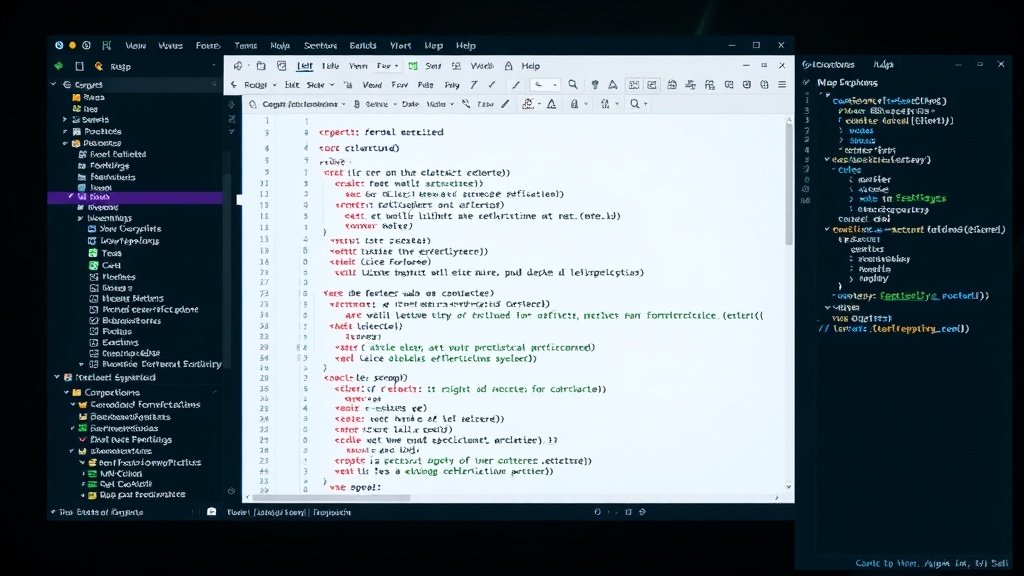
- Integrated Development Environment (IDE): SpecForge provides an IDE that offers syntax highlighting, autocompletion, and real-time validation for the specification language. This aims to reduce the learning curve and catch errors early in the authoring process.
- Verification Tools: The platform integrates verification capabilities, allowing users to check their specifications for consistency, completeness, and adherence to defined properties. This moves beyond mere documentation to actual validation.
- Version Control and Collaboration: Recognizing that specifications are living documents, SpecForge includes features for version control, enabling teams to track changes, revert to previous states, and collaborate on specifications effectively.
- Traceability: The platform facilitates traceability between specifications and other development artifacts, such as requirements documents or even test cases, helping to ensure that the implemented system aligns with its formal definition.
Bridging the Gap: From Intent to Implementation
The most significant contribution of SpecForge lies in its attempt to bridge the perennial gap between human intent and machine execution. Traditional specification documents, often written in natural language, can be interpreted in multiple ways. This ambiguity is a primary source of bugs and project delays.
Consider a simple requirement: "The system should allow users to reset their password." In natural language, this is clear enough for a human to understand. But what about edge cases? What if the user is already logged out? What if the provided email address doesn't exist? What are the security implications of the reset token? A formal specification, authored in SpecForge, would explicitly define these conditions, constraints, and expected outcomes. It would define states, transitions, and invariants that govern the password reset process, leaving no room for interpretation.
This level of precision is analogous to how architects use detailed blueprints and structural analyses for buildings, rather than just a verbal description of a house. The blueprint ensures that every beam, pipe, and wire is accounted for and fits precisely with its neighbors, preventing structural failures. SpecForge aims to provide that same level of precision for software.
The Imiron Vision: Democratizing Formal Methods
Imiron's goal with SpecForge appears to be the democratization of formal methods. Historically, formal specification and verification have been the domain of highly specialized experts, often requiring deep knowledge of abstract mathematics and complex theorem provers. This has limited their adoption in mainstream software development.
SpecForge, by offering a more accessible DSL and an integrated IDE, aims to bring the benefits of formal methods to a broader audience of developers and engineers. The platform's focus on usability suggests a belief that rigorous specification doesn't have to be prohibitively complex. The integration of verification tools directly within the authoring environment further lowers the barrier to entry, allowing teams to gain confidence in their specifications without needing separate, specialized verification teams.
What This Means for Software Development
The introduction of platforms like SpecForge signals a potential shift in how software is specified and, by extension, how it is built. By enforcing a higher degree of precision early in the development lifecycle, SpecForge could lead to:
- Reduced Defects: Clearer specifications mean fewer misunderstandings and thus fewer bugs introduced due to incorrect requirements.
- Improved Maintainability: Formal specifications act as an unambiguous contract for how the system should behave, making maintenance and future development more predictable.
- Enhanced Collaboration: A shared, precise understanding of system behavior can foster better collaboration within and between development teams.
- More Robust Systems: By rigorously defining system properties and invariants, developers can build more resilient and predictable software.
However, the success of SpecForge will depend on its adoption by development teams. The challenge lies not just in the tool itself, but in changing established workflows and mindsets to embrace formal specification as a core part of the development process. If SpecForge can successfully lower the friction associated with formal methods, it could become an indispensable tool for building high-assurance software in an increasingly complex technological landscape.