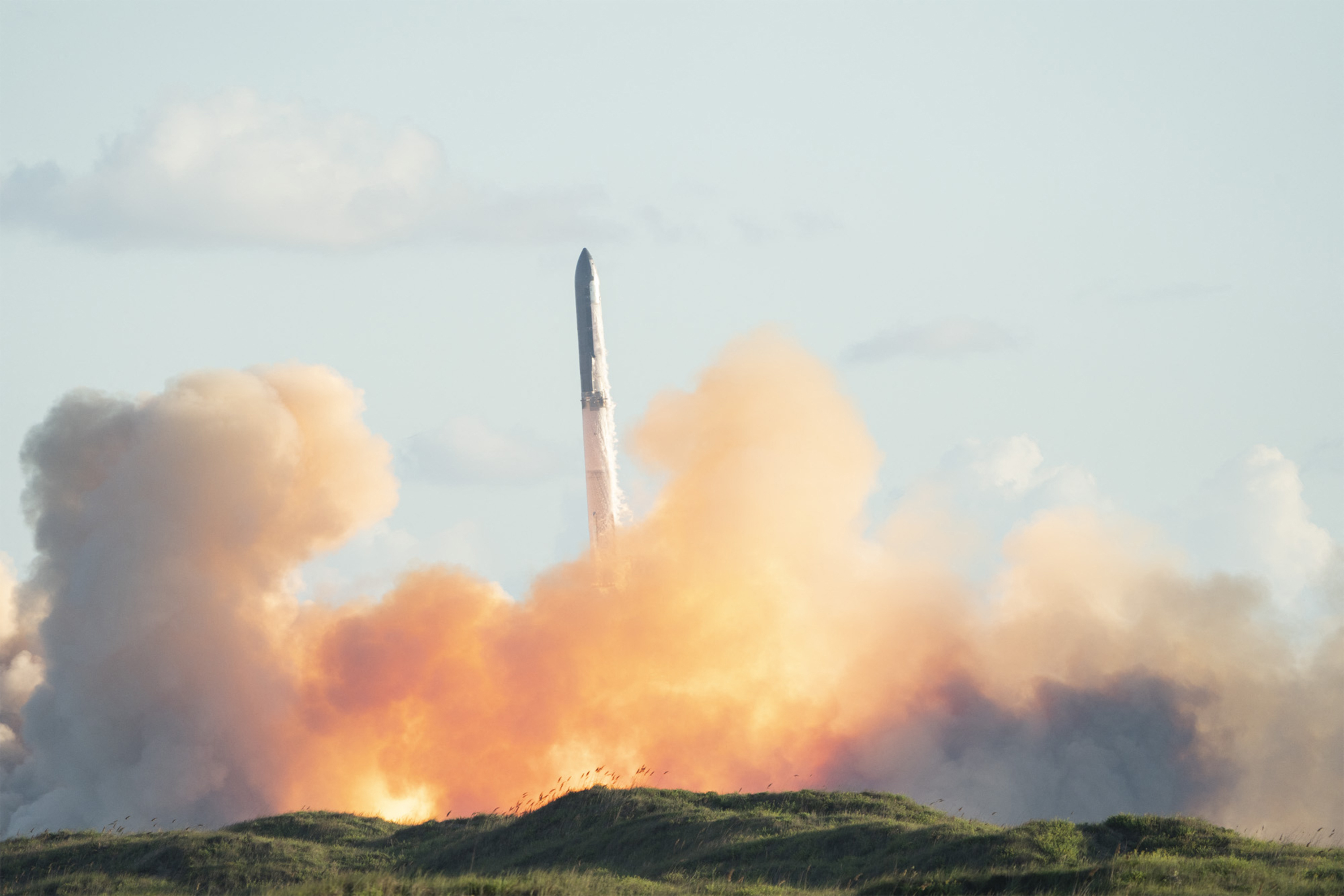
Starship Poised for Orbital Debut
SpaceX has declared its fully integrated Starship vehicle ready for its first orbital flight attempt, setting a target launch date for September 22. This highly anticipated mission represents a critical milestone for the company's ambitious space program, aiming to prove the capability of its next-generation launch system for reaching Earth orbit. Success would not only validate years of development but also pave the way for future interplanetary missions and expanded satellite deployment capabilities.
The fully stacked Starship, comprising the Super Heavy booster and the Starship upper stage, has undergone extensive testing and preparation at SpaceX's Starbase facility in Boca Chica, Texas. Previous test flights have focused on suborbital hops and system validations, but this upcoming launch is designed to push the vehicle to its orbital limits. Achieving orbit would be a significant step beyond previous test flights, demonstrating the integrated system's ability to perform under the stresses and durations of spaceflight.
Beyond Orbit: Starlink Deployment
In addition to reaching orbit, SpaceX intends to use this inaugural orbital flight to deploy the first V3 Starlink satellites. These next-generation satellites are designed to enhance SpaceX's global satellite internet constellation with increased capacity and improved performance. The ability to deploy these advanced satellites directly into orbit from Starship would significantly streamline the expansion of the Starlink network, potentially accelerating its global rollout and service enhancements.
The V3 Starlink satellites represent a leap forward in satellite technology for SpaceX. They are expected to offer higher bandwidth and lower latency, crucial for competing in the increasingly crowded satellite internet market. Successfully deploying these satellites during the Starship's maiden orbital flight would showcase Starship's utility not just as a transport vehicle, but as a crucial platform for building out critical space infrastructure. The technical challenge lies in the precise timing and execution of the satellite deployment sequence while the Starship is in its orbital trajectory.
Reaching Orbit: A Pivotal Moment
Reaching Earth orbit with the fully integrated Starship system is more than just a technical achievement; it's a statement of intent. For years, SpaceX has envisioned Starship as the key to lunar missions, Mars colonization, and rapid point-to-point travel on Earth. This orbital flight is the foundational step, proving that the complex architecture of the Super Heavy booster and Starship upper stage can work in concert to achieve orbital velocity and sustain a mission profile beyond the Karman line.
The development of Starship has been characterized by rapid iteration and bold engineering. Each test flight, even those that have ended prematurely, has provided invaluable data. This approach, while sometimes appearing chaotic to outsiders, has allowed SpaceX to accelerate its learning curve dramatically. The company's ability to declare the vehicle 'ready for orbit' after a series of increasingly complex tests underscores this iterative progress. The specific parameters of the orbital insertion and any planned orbital maneuvers remain undisclosed, but the primary objective is clear: achieve and demonstrate orbital capability.

Broader Implications and Future Prospects
The implications of a successful Starship orbital launch extend far beyond SpaceX's immediate goals. It could fundamentally alter the economics of space access, making heavy-lift capabilities more frequent and less expensive. This, in turn, could spur innovation across the entire space industry, from scientific missions to commercial ventures like space tourism and orbital manufacturing. The successful deployment of V3 Starlink satellites would also signal a new era for satellite internet providers, potentially enabling larger and more capable constellations.
While the focus is on the upcoming launch, the long-term vision for Starship is immense. SpaceX has outlined plans for lunar landings, including NASA's Artemis program, and eventual crewed missions to Mars. This orbital flight is the first domino, and its successful toppling is essential for all subsequent ambitious plans. The world will be watching closely on September 22 to see if Starship can finally achieve its orbital potential.