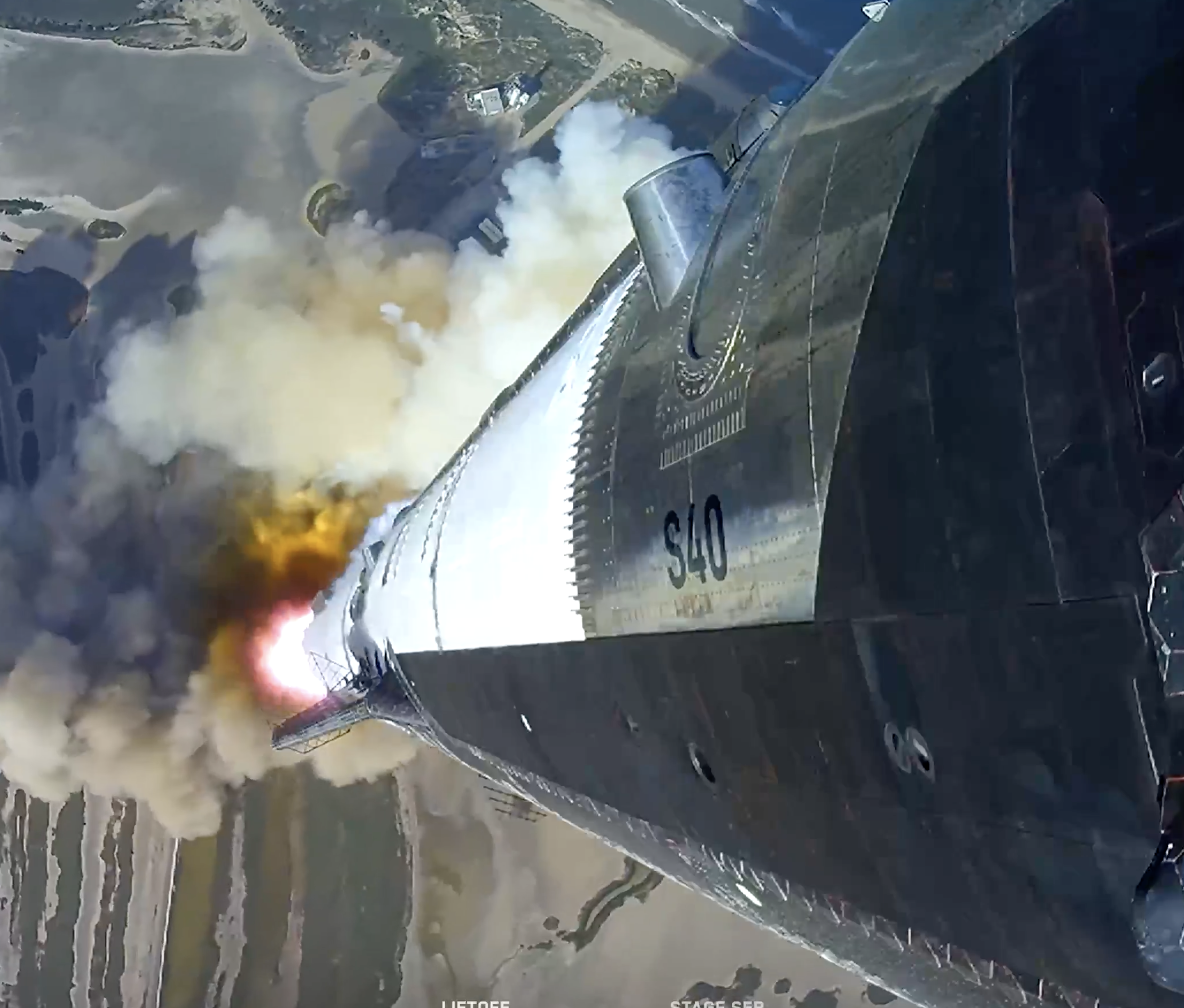
Starship V3 Mission Objectives Met, Despite Booster Glitch
SpaceX achieved a significant milestone with the latest Starship V3 flight, successfully deploying a new batch of Starlink satellites into orbit. The mission, designated Starship Flight 3 (FS3), marked another step forward for the company's ambitious constellation deployment strategy. However, the success was tempered by an apparent issue during the booster's return sequence, raising concerns about the reliability of the reusable rocket system.
The V3 Starlink satellites are designed to enhance SpaceX's global internet service, offering improved speeds and lower latency. These next-generation satellites are crucial for expanding the reach and capability of the Starlink network, particularly in underserved regions. The successful deployment underscores SpaceX's rapid iteration and manufacturing capabilities, a hallmark of its approach to space infrastructure development. Each V3 satellite represents an incremental improvement over its predecessors, contributing to a more robust and powerful constellation.
This latest launch is part of SpaceX's ongoing effort to build out its Starlink constellation, which already numbers in the thousands. The company aims to provide high-speed, low-latency broadband internet access globally, competing with traditional terrestrial providers and offering service in areas where fiber or cable is impractical or unavailable. The V3 satellites are key to maintaining this competitive edge and meeting growing demand.
Booster Anomaly Raises Reliability Questions
While the satellite deployment was successful, reports indicate that SpaceX experienced an anomaly with the booster's rocket engines during its descent. According to preliminary information, the booster's engines may not have relit as expected for the landing burn. This marks at least the second such incident involving booster engine relighting issues in recent Starship test flights. Such anomalies are critical for a system designed for rapid reusability, as reliable engine ignition and control are paramount for safe and efficient booster recovery.
The exact nature of the anomaly is still under investigation by SpaceX. However, the implication for a reusable launch system is clear: every component must function with near-perfect reliability to achieve the cost savings and rapid flight cadence that underpins the Starship program's economic model. Booster recovery is not just about saving hardware; it's about enabling frequent launches that are essential for deploying the massive Starlink constellation and eventually supporting Mars missions.
Think of the booster's relighting sequence less like a car engine starting on a cold morning and more like a complex, high-pressure ballet. Each engine must ignite precisely when commanded, at the right thrust level, and in perfect coordination with its brethren. A single misstep can compromise the entire recovery operation, potentially leading to loss of the booster. For SpaceX, the goal is to make this ballet not just successful, but repeatable, time and time again, with minimal intervention.

Implications for Starlink Deployment and Starship Development
The success of the Starlink V3 deployment is a clear win for SpaceX's internet service. The continued expansion of the constellation is vital for its market position and its ability to meet its service commitments. Each successful launch, even with minor post-flight issues, contributes to the overall growth and resilience of the network. The company's ability to quickly manufacture and deploy these satellites is a significant competitive advantage.
However, the booster anomaly is a more significant concern for the broader Starship program. Starship is envisioned as a fully reusable two-stage vehicle capable of carrying large payloads to orbit, the Moon, and Mars. The success of the entire program hinges on the reliable recovery and rapid reuse of both the Super Heavy booster and the Starship upper stage. While test flights are inherently risky and designed to uncover such issues, repeated anomalies in critical systems like engine relighting indicate areas that require focused engineering attention.
What remains to be seen is how quickly SpaceX can diagnose and resolve the booster engine relighting issue. The company has a history of rapid problem-solving, often iterating designs between flights. However, the complexity of the Raptor engines and the demanding conditions of atmospheric reentry and landing mean that such issues can be persistent. The pace of Starlink deployment, and indeed the timeline for more ambitious Starship missions like lunar landings and Mars colonization, are directly tied to the success rate of booster recovery.
Broader Context: Reusability and Space Infrastructure
SpaceX's pursuit of full and rapid reusability is a fundamental shift in the economics of spaceflight. Traditional rockets are expendable, making space access prohibitively expensive. By reintroducing the booster and even the upper stage into service quickly and cost-effectively, SpaceX aims to dramatically lower the cost per kilogram to orbit. This is not just about launching more satellites; it's about enabling entirely new space-based industries and endeavors.
The Starlink V3 mission, therefore, represents a microcosm of the challenges and triumphs inherent in this ambitious vision. On one hand, it showcases the operational capability to deploy advanced satellite technology. On the other, it highlights the engineering hurdles that must be overcome to make super-heavy lift, fully reusable rockets a routine reality. The data gathered from this flight, particularly regarding the booster's engine performance, will be invaluable as SpaceX continues to refine its hardware and operational procedures.
The company's ability to learn from failures and adapt quickly is its greatest asset. While this booster anomaly is a setback, it is unlikely to derail the long-term trajectory of the Starship program. The critical question for engineers and observers alike is the timeline for resolution and the impact on the cadence of future Starship test flights and Starlink deployments.