
The Enduring Mystery of the PS2's MechaCon
For over two decades, the original PlayStation 2's security measures remained largely intact, a testament to Sony's early engineering prowess. At the heart of this security was the CXP102064, codenamed 'MechaCon'. This specialized chip was designed to prevent unauthorized hardware modifications and the running of pirated software. Its inner workings were a black box, a critical component that kept the console's ecosystem secure and Sony's intellectual property protected.
While subsequent PlayStation models saw their security features more thoroughly explored and bypassed, the MechaCon chip of the original fat PS2 (model SCPH-10000 to SCPH-3900x) stood as a significant barrier. Its complexity and the lack of publicly available documentation meant that for years, it was a puzzle that few attempted, and fewer still succeeded in solving.
The challenge wasn't merely software-based. The MechaCon chip integrated hardware-level security, making it resistant to typical software exploits. This required a more invasive approach – one that involved physically dismantling the chip itself. The journey to unlock its secrets was long, arduous, and required a multidisciplinary approach, blending advanced reverse engineering techniques with specialized hardware analysis.
Chemical Decapping and the Dawn of Physical Intrusion
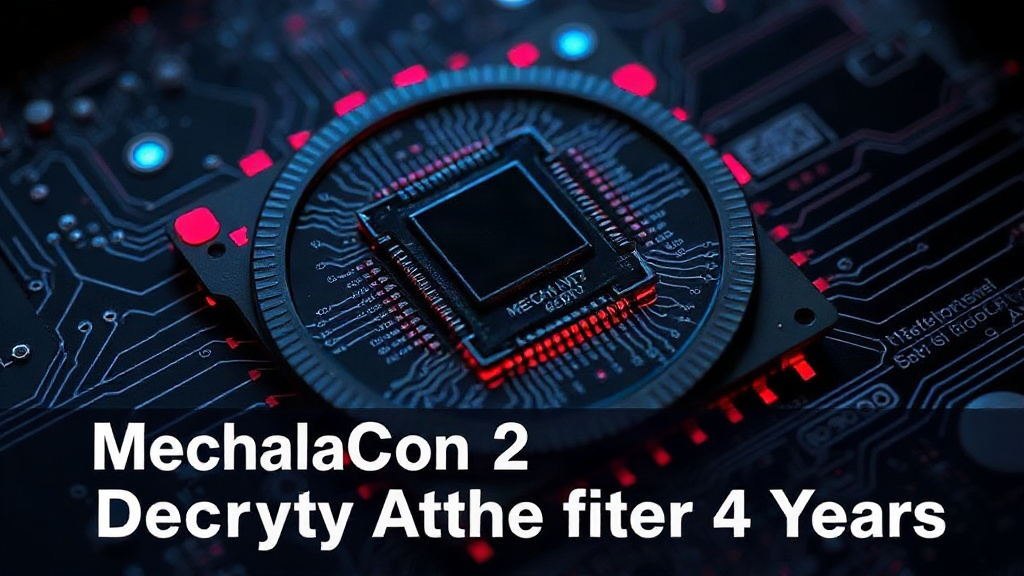
The breakthrough came through a process known as chemical decapping. This technique involves carefully removing the protective layers of a microchip using potent acids, exposing the raw silicon die beneath. It's a delicate operation; too much acid, and the intricate circuitry is destroyed. Too little, and the protective layers remain, obscuring the underlying logic.
This process was the first major hurdle overcome by the security researcher, who dedicated approximately four years to this endeavor. The goal of decapping was to gain direct visual access to the chip's transistors and interconnections. Once the die was exposed, the real work of reverse engineering could begin. This involved meticulously tracing the connections between components, understanding how signals flowed, and ultimately, deducing the chip's functional logic.
The process is akin to trying to understand a complex city by looking at an aerial photograph of its road network, but without any street signs or building labels. Every wire, every junction, has to be interpreted. This requires specialized equipment, such as high-resolution microscopes, and significant expertise in semiconductor design and logic gates. The goal is to reconstruct the chip's original design schematics, which Sony never intended to be public.
Unlocking MechaCon's Secrets: The Dump and the Implications
After years of painstaking work, the researcher successfully created a complete dump of the MechaCon chip's firmware. This dump represents the complete, functional logic of the security chip. It reveals how the PS2 verified legitimate game discs, authenticated system software, and enforced regional restrictions. The secrets of its encryption and authentication protocols are now laid bare.
The implications of this achievement are multifaceted. For hobbyists and retro-gaming enthusiasts, it opens up new avenues for understanding and potentially modding the original PlayStation 2 hardware. It could lead to the development of more sophisticated homebrew applications or even new ways to preserve the console's legacy by ensuring its software can be run on future platforms or custom hardware.
From a security perspective, the analysis of MechaCon provides valuable insights into the security methodologies employed by Sony in the early 2000s. It offers a case study in hardware-based security and the challenges of protecting systems against determined reverse engineering efforts. While the PS2 is an aging console, the techniques used to secure it and the methods used to break that security remain relevant in the ongoing battle between hardware security and exploitation.
The successful reverse engineering of the MechaCon chip highlights the persistent curiosity and dedication within the security research community. It demonstrates that even deeply embedded, proprietary hardware security measures can eventually be understood and documented, given enough time, resources, and ingenuity. The PS2's magic security chip, after 26 years, has finally revealed its secrets.