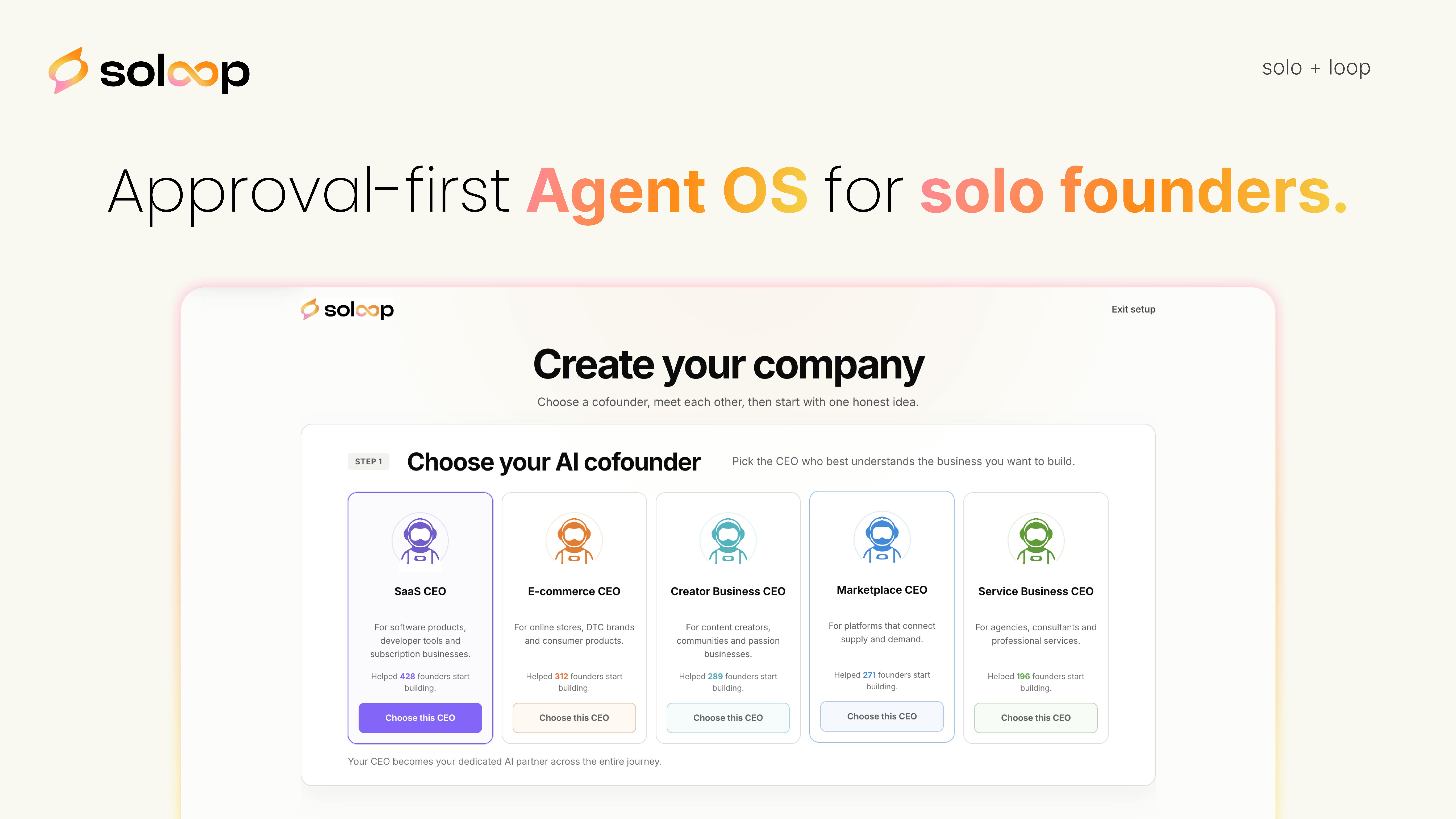
Soloop: An Operating System for the Independent Entrepreneur
Soloop has launched as a new operating system designed specifically for solo founders. The platform positions itself as an "Approval-First Agent OS," aiming to provide independent entrepreneurs with the tools and structure needed to manage their ventures effectively without a team. In a landscape increasingly populated by individuals building businesses solo, Soloop seeks to fill a critical gap by offering a cohesive environment that prioritizes key decision-making and operational efficiency.
The core philosophy behind Soloop revolves around the idea that solo founders often wear multiple hats, juggling product development, marketing, sales, customer support, and administrative tasks. This can lead to burnout and a lack of focus on high-impact activities. Soloop's "Approval-First" approach suggests a system that guides founders through a process of decision validation, ensuring that critical steps are taken with deliberate consideration before moving forward. This is akin to having a built-in project manager who insists on sign-off at each stage, preventing costly rework or missteps.
Streamlining the Solo Founder Workflow
Soloop aims to integrate various aspects of a solo founder's operations into a single, unified platform. While specific features are not detailed in the initial announcement, the concept of an "Agent OS" implies a system that can automate, delegate (to AI or predefined workflows), and track tasks across different business functions. For a solo founder, this could mean a dashboard that manages customer communications, tracks project progress, handles invoicing, and even assists with strategic planning, all while ensuring that the founder remains in control through an approval-centric model.
Consider the typical solo founder's day: responding to emails, updating a CRM, managing social media, working on product features, and trying to secure new business. Without a structured system, these tasks can become chaotic. Soloop's proposed OS could act as a central hub, providing a clear overview of what needs attention, what is in progress, and what requires the founder's explicit approval. This structured approach is particularly valuable for preventing the "busywork" trap that can consume an independent entrepreneur's time without yielding significant business growth.
The "Approval-First" aspect is key. It suggests a system that doesn't just present tasks but requires a deliberate action from the founder to move them forward. This could manifest in several ways:
- Workflow Gatekeeping: Before a marketing campaign can launch, the founder must approve the copy, visuals, and targeting.
- Decision Validation: Before a significant expenditure or strategic pivot, the system prompts for explicit founder approval, perhaps with supporting data or rationale.
- Task Prioritization: The OS could surface tasks that are awaiting approval or require a founder's decision, ensuring that critical path items are not overlooked.
This methodical approach is designed to prevent founders from making impulsive decisions or getting bogged down in operational minutiae at the expense of strategic foresight. It's about building a repeatable, scalable process for a business run by one person.
The Market for Solo Founder Tools
The rise of the solo founder is a significant trend in entrepreneurship. Driven by accessible technology, remote work capabilities, and a desire for autonomy, more individuals are choosing to build and scale businesses independently. This has created a burgeoning market for tools and platforms that cater to their unique needs. Existing solutions often focus on specific functions, such as CRM software, project management tools, or accounting platforms. However, these disparate tools can create fragmentation and require significant effort to integrate and manage.
Soloop's ambition to create an "Agent OS" is a move towards a more integrated, comprehensive solution. It suggests an operating system that not only houses these functions but orchestrates them. The "Agent" component implies intelligence and automation, possibly leveraging AI to assist in tasks, provide insights, or even draft content for approval. For a solo founder, this could be the difference between spending hours on repetitive tasks and having a system that handles much of the grunt work, freeing them up for high-level strategy and innovation.
The challenge for Soloop will be to deliver on this ambitious vision. Building an OS that effectively manages diverse business functions, integrates seamlessly with other tools, and provides a truly intuitive approval process for a single user is a complex undertaking. The success of Soloop will likely hinge on its ability to simplify complexity, provide genuine time-saving benefits, and empower solo founders to operate with the efficiency and discipline of a larger organization.
The "Approval-First" paradigm is an interesting differentiator. It acknowledges that while solo founders need efficiency, they also need control and assurance. It's a system designed not to replace the founder's judgment, but to augment it, ensuring that every critical step is taken with full awareness and consent. This is especially relevant as businesses scale; establishing robust approval processes early on can prevent significant issues down the line.
Soloop enters a market with a clear need, offering a potentially powerful solution for the growing segment of independent entrepreneurs. Its success will depend on its execution and its ability to truly simplify the multifaceted demands of running a business alone.