Running a consumer product company single-handedly, complete with physical inventory, two storefronts, multiple marketplaces, subscription billing, bookkeeping, tax filings, government paperwork, multilingual content, and weekly code deployments, sounds like a Herculean task. For most, it would be. But for one founder, this is the reality, achieved with a headcount of exactly one. This isn't a story about hiring a virtual assistant; it's about harnessing the emergent capabilities of AI agents that can now operate software like a human employee.
Three years ago, this level of solo operation was impossible. The crucial shift isn't solely that AI models have become more abstractly intelligent. The real change lies in agents’ newfound ability to operate software in the same way an employee does. This includes navigating administrative dashboards, completing government forms, processing emails, writing and deploying code, recalling past events, and executing scheduled tasks without explicit, real-time prompting. Once agents can perform these actions, the majority of tasks previously handled by a small company's staff transform into workflows that can be documented, delegated to an agent, and then audited weekly, rather than managed daily.
The Five Primitives of Solo Operation
The entire operation of this one-person company hinges on five core primitives, each representing a fundamental capability that AI agents now enable for a single operator:
1. Inventory Management as an Agent Workflow
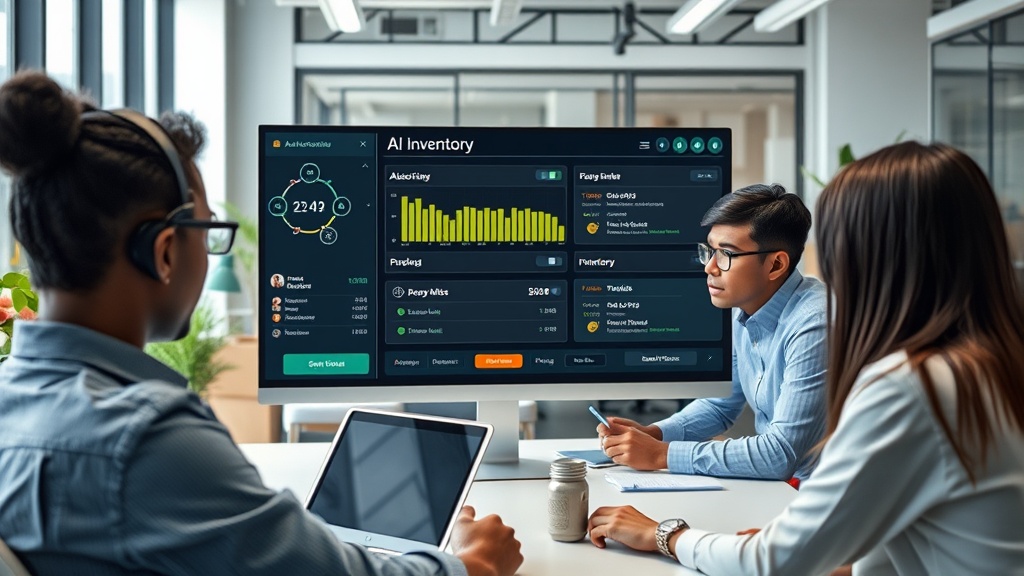
Managing physical inventory, especially across multiple sales channels, is a complex logistical challenge. Traditionally, this involves meticulous tracking of stock levels, reorder points, supplier communication, and order fulfillment. For a solo operator, this is a significant time sink. AI agents can now automate this by interacting directly with inventory management software. They can monitor stock levels in real-time, trigger reorder alerts based on predefined thresholds, communicate with suppliers to place orders, and even update inventory counts across different marketplaces (e.g., Shopify, Etsy, Amazon) as sales occur. The agent acts as a perpetual, vigilant inventory clerk, ensuring that stockouts are minimized and overstocking is avoided. This involves parsing sales data, cross-referencing it with current inventory, and executing purchase orders or updating listings.
2. Sales and Marketplace Operations
Beyond just inventory, sales channels themselves require active management. This includes updating product listings, responding to customer inquiries across platforms, processing orders, and managing subscription billing. AI agents can handle these repetitive but critical tasks. They can monitor sales dashboards, automatically generate and send invoices for subscription services, update product descriptions or pricing based on market analysis or internal strategy, and even draft responses to common customer service questions. For marketplaces, agents can ensure listings comply with platform rules, track sales performance, and flag any issues. Think of this agent as a tireless sales and customer service representative, available 24/7 across all channels.
3. Financial Operations and Compliance
Bookkeeping, tax filings, and government paperwork are often the most daunting aspects of running a business, particularly for a sole proprietor. These tasks demand accuracy and adherence to strict regulations. AI agents can now be trained to navigate accounting software, categorize transactions, generate financial reports, and even pre-fill tax forms based on the company's financial data. They can also manage government paperwork by accessing relevant portals, filling out forms, and submitting them on schedule. This primitive essentially turns complex administrative and compliance tasks into auditable, automated processes, reducing the risk of human error and freeing up significant mental overhead for the founder.
4. Content Creation and Localization
Maintaining content, especially in multiple languages, requires ongoing effort in writing, editing, and publishing. AI agents can assist with content generation by drafting blog posts, social media updates, or product descriptions based on prompts. More critically, they can handle localization by translating existing content and adapting it for cultural nuances, then publishing it across the appropriate platforms. This allows a single founder to maintain a consistent and multilingual online presence without needing dedicated translation services or spending hours on manual content updates. The agent acts as a multilingual content manager and publisher.
5. Code Deployment and Maintenance
For a company with a codebase that ships to production weekly, continuous integration and continuous deployment (CI/CD) are essential. AI agents can now be integrated into the development workflow to automate testing, identify bugs, generate commit messages, and even push code to production environments. They can monitor application performance, flag errors, and potentially even suggest or implement fixes. This primitive transforms the development and deployment cycle from a manual, time-consuming process into an efficient, agent-driven operation, enabling rapid iteration and stability for a one-person tech team.
The Agent-Operated Future for Small Business
The ability for AI agents to operate software and execute complex workflows is not just an incremental improvement; it's a paradigm shift for small businesses and solo operators. It democratizes the ability to manage a multifaceted business that previously required a team. The five primitives—inventory, sales, finance, content, and code—represent the foundational pillars that can now be managed by intelligent agents. This allows a single individual to focus on high-level strategy, innovation, and critical decision-making, rather than getting bogged down in the daily operational minutiae. The implications are profound: a potential surge in solo entrepreneurship, a redefinition of small business team structures, and a new frontier for AI agent development focused on practical business application.
The question that remains is not whether these agents can perform these tasks, but how robustly and securely they can be integrated into critical business operations, and what the long-term implications are for the nature of work itself.