The Immutable Core of Solana's Token Ecosystem
For years, the address Tokenkeg… has been the bedrock of token management on Solana. It is the most frequently called program on the network, responsible for every non-Token-2022 SPL token. The implicit assumption was that this critical piece of infrastructure, hard-coded into countless applications and wallets, would remain static. Any change would necessitate a seismic shift across the entire ecosystem. However, the Solana network recently executed a stealth upgrade, fundamentally altering the program's implementation without touching its address.
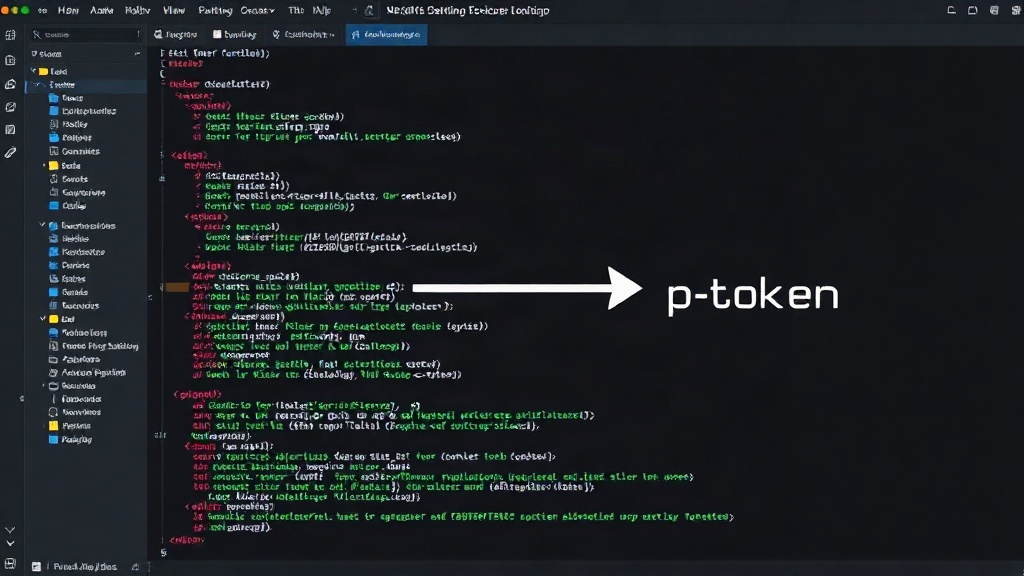
This transformation, driven by SIMD-0266, involved a significant architectural shift. On May 13, 2026, at the commencement of epoch 971, a feature gate was activated. This gate swapped the underlying bytecode of the Tokenkeg… program with a new, optimized version known as 'p-token'. Crucially, the program was also moved from the original loader to the upgradeable loader. To cement its immutability, its upgrade authority was set to 'nothing'. The implications are profound: the same program ID and instruction set persist, but the execution is faster, and no single entity can alter it again.
What 'Replaced In Place' Actually Means
The term 'replaced in place' is key here. It signifies that the program's unique identifier (its address) remains constant. This is analogous to upgrading the engine in a car without changing its VIN. The car still looks the same from the outside, and its identification remains consistent, but its internal performance and capabilities have been enhanced. For developers and users, this means existing integrations and dependencies do not break. Wallets, decentralized exchanges, and smart contracts that reference the original Tokenkeg… address continue to function seamlessly.
The new p-token implementation brings several benefits. From the validator's perspective, the code is more efficient. This translates to reduced computational overhead for processing token transactions. While the exact performance gains will vary based on network load and specific transaction types, the move to a more optimized bytecode is a direct improvement to the network's throughput and efficiency. This is not just a minor tweak; it's a foundational upgrade to the most heavily utilized component of the Solana token standard.
The Technical Details: From Tokenkeg to p-token
The transition involved migrating the program from the legacy program loader to the upgradeable loader. This move is significant because the upgradeable loader is designed to manage programs that can be updated, although in this specific case, the upgrade authority was deliberately removed. This ensures that while the *mechanism* for upgrades is now in place (the loader), the *ability* to perform future upgrades is intentionally disabled for this core program. The old bytecode for Tokenkeg… has been effectively superseded by the p-token implementation.
The process was orchestrated to minimize disruption. The feature gate for SIMD-0266 acted as a switch, flipping the active implementation on a specific date and epoch. Validators, running the updated software, would then execute transactions against the new p-token logic when interacting with the program address. The instruction set and the structure of the accounts the program operates on remain identical. This means that the API for interacting with tokens has not changed. Developers do not need to rewrite their code to accommodate a new interface. The change is entirely at the execution layer, a technical detail that yields tangible performance benefits without requiring upstream code modifications.
The removal of the upgrade authority is perhaps the most critical aspect for long-term ecosystem stability. It means that the core SPL token program is now truly immutable. This contrasts with many other programs on Solana, which retain an upgrade authority held by the developers or a multisig. This decision instills a higher degree of trust and predictability. Users and developers can be confident that the fundamental rules governing token transfers will not be arbitrarily changed by a central party. It aligns with the ethos of decentralization by removing a single point of control over a critical protocol component.
Implications for the Solana Ecosystem
The upgrade to p-token represents a maturation of the Solana network. It addresses a long-standing technical debt by optimizing the most critical program while ensuring backward compatibility. For developers, this means they can continue building on Solana with the assurance that the core token standard is robust, efficient, and now, immutable. The performance improvements, while potentially subtle on an individual transaction level, compound across millions of daily operations, contributing to a more scalable and cost-effective network.
What remains to be seen is how this immutability influences future development on top of the SPL standard. With the core program locked, any future innovations or necessary fixes to token behavior will likely need to occur via the Token-2022 standard or through entirely new program deployments. This reinforces the direction Solana is pushing with Token-2022 as the platform for advanced token features, while solidifying the classic SPL standard as a stable, high-performance foundation. The successful, disruption-free upgrade of such a critical component demonstrates the network's technical capability and its commitment to long-term stability and performance.