The Misconception: Data Structures as the Starting Point
The common narrative in technical interviews often leads aspiring engineers to believe that mastering data structures is the primary key to unlocking great software design. Questions like "Which data structure will solve this problem efficiently?" dominate the interview landscape. While crucial for performance and algorithmic efficiency, this focus can be a red herring in the context of Low-Level Design (LLD). It prompts a premature dive into implementation details, potentially at the expense of understanding the system's fundamental purpose and desired outcomes.
In reality, the best software engineers don't start by picking a binary search tree or a hash map. They begin by dissecting the problem: what does the system *need* to do? What are its core functionalities? What user interactions must it support? This behavioral-first approach is not just an alternative perspective; it's the bedrock of truly effective and scalable software architecture.
Shifting the Focus: Behavior as the Design Catalyst
The paradigm shift from data-centric to behavior-centric design is subtle but profound. Instead of asking "How can I store this data efficiently?", the experienced engineer asks, "What are the essential actions this system must perform, and how should it behave under various conditions?" This reorientation forces a deeper understanding of requirements, user workflows, and the overall purpose of the software.
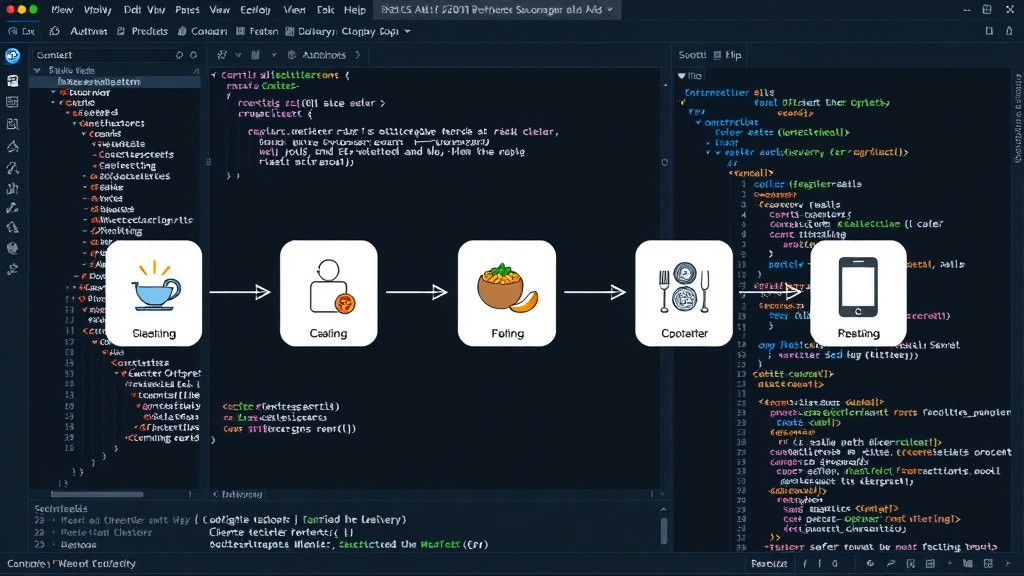
Consider designing an online food delivery platform. A data-structure-first approach might immediately jump to optimizing database schemas for restaurant menus or user orders. A behavior-first approach, however, would first define the core user journeys: a customer browsing restaurants, adding items to a cart, placing an order, a restaurant accepting the order, a delivery driver picking it up, and the customer receiving it. Each of these behaviors has implications for how data is structured and accessed, but the behavior itself dictates the necessary data models and operations, not the other way around.
Why Behavior-First Design Leads to Better Software
Prioritizing behavior offers several critical advantages:
- Clarity of Purpose: It ensures the design directly addresses the system's objectives. Every component and interaction is justified by a required behavior.
- Flexibility and Scalability: By abstracting away specific data structures, the design becomes more adaptable. If a particular data structure proves inefficient for a specific behavior, it can be swapped out without fundamentally altering the system's core logic, provided the behavior contract is maintained.
- Improved Maintainability: Systems designed around behaviors are often easier to understand and modify. Developers can reason about the system's functionality by tracing behaviors, rather than getting lost in complex data interdependencies.
- Reduced Complexity: Focusing on what the system does, rather than how it stores data, can simplify the initial design phase. It prevents over-engineering solutions for data storage that may never be fully utilized or may change as requirements evolve.
The Role of Data Structures in Behavior-Centric Design
This is not to say data structures are unimportant. They are absolutely critical for performance and efficiency. However, their selection should be a consequence of the defined behaviors, not the starting point. Once the necessary behaviors are identified and modeled, engineers can then select the most appropriate data structures to implement those behaviors optimally.
For instance, if a required behavior is to efficiently retrieve a user's order history by date, an engineer might then consider using a sorted list or a time-series database. If another behavior requires rapid lookups of restaurant availability by location, a spatial indexing structure or a geo-hash might be appropriate. The choice is driven by the *need* to perform a specific action quickly and reliably.
Think of it like building a house. You don't start by deciding to use copper pipes or PVC pipes for the plumbing. You first decide you need water to flow to the kitchen sink, the shower, and the toilets. You define the *behavior* of water delivery. Only then do you choose the specific materials and layouts for the pipes that best achieve those defined behaviors, considering factors like pressure, cost, and durability.
The Beginner's Trap and the Expert's Insight
The trap for junior engineers is to see a problem and immediately map it to known data structures. This is a natural consequence of learning data structure algorithms. However, LLD requires a higher level of abstraction. It's about designing the system's blueprint, ensuring it meets functional requirements and can adapt to future changes. The expert engineer understands that a system's robustness and longevity stem from how well its behaviors are defined and how flexibly those behaviors can be implemented.
The question for interviews and real-world design should evolve. Instead of asking "What data structure solves this?", we should ask "What is this system supposed to achieve?" and "How should it behave to achieve that?" The answers to these questions will naturally guide us to the most effective data structures and architectural patterns. Great software doesn't just store data; it *acts* upon it in meaningful ways. Designing these actions, these behaviors, is where true engineering excellence begins.