
The Rise of Slopsquatting
AI coding assistants are powerful tools, but they can sometimes invent information. This phenomenon, known as hallucination, is now being weaponized in a new type of supply chain attack dubbed "slopsquatting." Unlike traditional typosquatting, which preys on simple typing errors, slopsquatting exploits the AI's tendency to generate plausible-sounding, yet entirely fictional, package names.
Imagine an AI coding assistant suggests installing a package named requests-oauth2-helper. It looks legitimate; the naming convention, casing, and hyphenation are idiomatic for ecosystems like PyPI. You're seeking a straightforward way to integrate OAuth2 tokens with your HTTP requests, and this name perfectly matches that need. Confident, you execute the command: pip install requests-oauth2-helper. The installation proceeds, tests pass, and you move on, unaware of the trap.
The critical flaw here is that requests-oauth2-helper never existed when the AI model was trained. The model hallucinated it. An attacker, aware of this potential for AI-generated package names, registers the name shortly after the model becomes popular or is widely adopted. They then wait for developers, trusting their AI assistants, to attempt installation.
The Attack Kill Chain
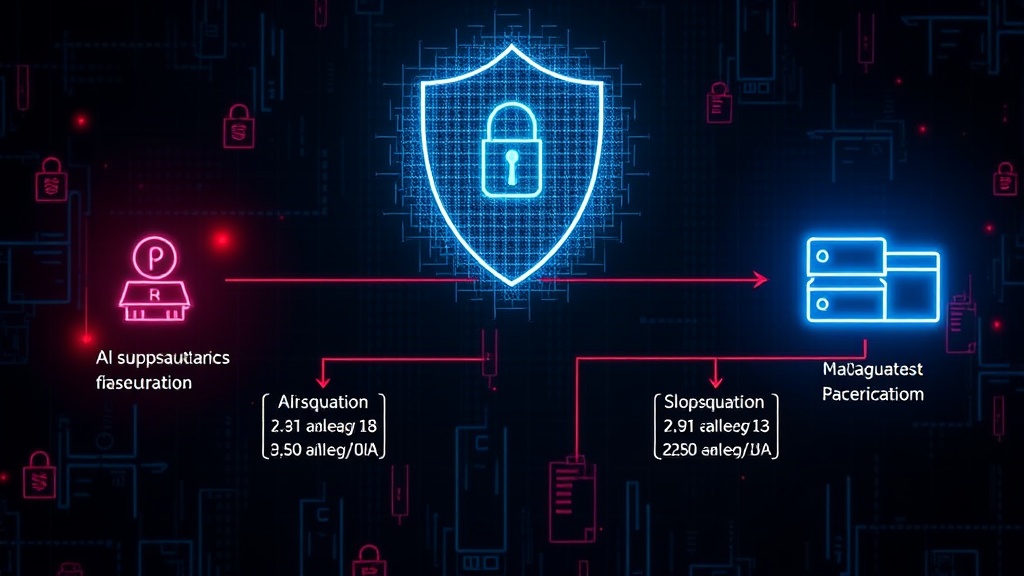
The slopsquatting kill chain unfolds in several stages:
- AI Hallucination: A large language model (LLM) or coding assistant, when prompted for a specific functionality, invents a package name that sounds plausible but does not exist in any official repository.
- Attacker Registration: Malicious actors monitor AI-generated suggestions or actively query models to identify these non-existent, yet convincing, package names. They then register these names on package repositories like npm, PyPI, or Composer.
- Developer Installation: Developers, relying on the AI's suggestion and the package's seemingly legitimate name, install the package into their projects.
- Malicious Payload Execution: Upon installation, the attacker-controlled package executes its payload, which could range from stealing credentials and sensitive data to installing further malware, establishing backdoors, or participating in botnets.
This attack vector bypasses many conventional security measures. Signature-based detection systems might not flag the package if its code is obfuscated or its initial behavior appears benign. Dependency scanning tools often check against known malicious packages, but slopsquatting leverages newly registered, previously unknown names. The trust developers place in their AI tools becomes the primary vulnerability.
Ecosystems at Risk
Slopsquatting is not confined to a single programming language or package manager. It poses a threat across major development ecosystems:
- npm (Node.js): JavaScript developers commonly use AI assistants for frontend and backend development. A hallucinated package name for a utility function or framework could lead to the installation of a malicious npm module.
- PyPI (Python Package Index): Python's extensive use in data science, machine learning, and web development makes PyPI a prime target. The example
requests-oauth2-helperhighlights the risk for Python developers. - Composer (PHP): PHP developers, often building web applications, can fall victim if AI suggests non-existent packages for common tasks like database interaction or API management.
The sophistication lies in the subtlety. Attackers don't need to find zero-day exploits in existing packages; they simply need to capitalize on the AI's creative license. The package name itself is the lure, appearing as a natural extension of the developer's needs as interpreted by their AI assistant.
Mitigation Strategies
Combating slopsquatting requires a multi-layered approach, focusing on both AI model behavior and developer practices:
- AI Model Verification: AI developers must implement robust checks to prevent models from confidently suggesting non-existent packages. This could involve cross-referencing generated names against known repositories in real-time or flagging potentially fabricated names for user review.
- Developer Education: Developers must be trained to critically evaluate AI-generated suggestions, especially regarding package installations. Treat AI suggestions as hints, not gospel. Always verify package existence and reputation before installation.
- Enhanced Repository Security: Package repositories could explore mechanisms to flag newly registered packages that closely resemble common AI-generated patterns or have a suspicious lack of historical data. Rate limiting on package registration might also deter rapid exploitation.
- Dependency Auditing Tools: Future dependency auditing tools could incorporate AI hallucination detection, flagging packages that appear to be generated rather than organically developed.
- Manual Verification: The most effective immediate defense is manual verification. Before running `npm install`, `pip install`, or `composer require`, take a moment to search for the exact package name in the official repository. Check the number of downloads, the last publish date, and the maintainer’s reputation. If an AI suggests a package that seems too perfect or too new, it warrants extra scrutiny.
This is less about a specific CVE and more about a new attack vector enabled by the proliferation of AI in the development workflow. The trust placed in AI assistants is a powerful force for productivity, but it also creates a novel attack surface that security professionals and developers must now navigate.
The Unanswered Question: AI's Role in Trust
What remains unaddressed is the fundamental question of how to manage trust in AI-generated code suggestions. As AI becomes more integrated into development pipelines, the line between helpful assistance and potential exploit blurs. Developers will need to develop a new form of critical thinking, one that questions the very tools designed to augment their capabilities. The responsibility doesn't solely lie with AI developers or security vendors; it's a shared burden that requires a paradigm shift in how we perceive and interact with AI in software creation.