Introducing Skull Skills: Local AI Project Management
The burgeoning landscape of AI-assisted development has a new contender, and it's taking a decidedly local and open-source approach. Skull Skills, an open-source project developed by aturzone, aims to bring the power of AI project management directly to a developer's machine without requiring external accounts, API keys, or cloud services. This initiative offers a free, self-contained Claude Code team designed to streamline project understanding, planning, and execution.
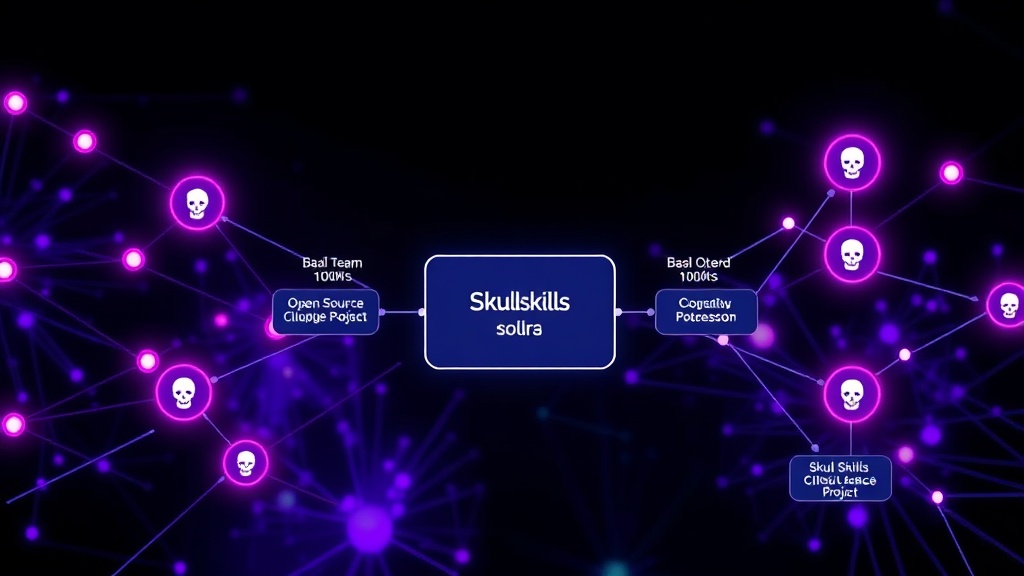
At its core, Skull Skills functions by leveraging a local, plain-text markdown system. Users interact with the tool by simply typing "skull" in their terminal. This command initiates a leadership-style interview process where the AI probes the user about their project. Based on this interaction, Skull Skills assembles a specialized AI team tailored to the project's specific needs. This team includes roles like 'Sentinel the project cartographer,' responsible for mapping out the project's structure and requirements, alongside specialists in planning, review, understanding, and guardrail implementation.
The entire system operates within the user's local environment, specifically within a .claude/ directory. This means all project data, configurations, and AI interactions remain private and under the user's control. The emphasis on plain text and open-source principles makes Skull Skills transparent and easily auditable. Developers can inspect the markdown files to understand how the AI is interpreting their project and how the team is being configured. This local-first, open-source model directly addresses growing concerns around data privacy, vendor lock-in, and the cost associated with cloud-based AI services.
Functionality and Team Assembly
When a user invokes "skull," the process begins with an AI-driven interview. This isn't a rigid questionnaire but rather a conversational exploration designed to elicit detailed project information. The AI aims to understand the project's goals, current status, technical stack, and any specific challenges or constraints. The 'leader' AI then synthesizes this information to curate a bespoke team from its available Claude Code specialists.
The assembled team is conceptualized as a group of AI agents, each with a defined role:
- Sentinel: The project cartographer, responsible for creating a comprehensive map of the project, including its architecture, dependencies, and workflows.
- Planning Specialist: Focuses on breaking down project goals into actionable tasks and timelines.
- Review Specialist: Implements code review processes and quality assurance checks.
- Understanding Specialist: Ensures the AI team maintains a deep comprehension of the project's evolving requirements and context.
- Guardrail Specialist: Enforces project constraints, best practices, and ethical considerations.
Once assembled, this team is set to work directly on the user's project files. The system is designed to not only assist with initial project setup and mapping but also to maintain currency with the latest features and updates within the Claude Code ecosystem. This continuous updating capability ensures that the AI team remains effective and leverages the most advanced AI capabilities available.
The Open-Source and Local-First Advantage
The decision to make Skull Skills free, open-source, and entirely local is a significant differentiator. In an era where many AI tools rely on proprietary cloud infrastructure, requiring users to sign up, generate API keys, and potentially pay for usage, Skull Skills offers a refreshing alternative. The absence of accounts, API keys, and vaults means there are no central servers to breach, no usage limits imposed by a provider, and no data leaving the user's control. This approach is particularly appealing to developers and organizations with strict data privacy requirements or those who prefer to avoid the complexities and costs associated with managing cloud-based AI services.
The project's repository on GitHub, maintained by aturzone, serves as the central hub for its development and community engagement. The use of markdown for configuration and interaction simplifies the process of contributing to the project or customizing its behavior. Developers can examine the codebase, understand the AI's decision-making logic, and even propose improvements. This transparency fosters trust and allows for rapid iteration based on community feedback.
The implications of this local, open-source model are far-reaching. It democratizes access to advanced AI project management tools, making them available to anyone with a compatible development environment. It also sets a precedent for how AI tools can be integrated into developer workflows without compromising privacy or control. The project's commitment to staying current with Claude Code features suggests an ongoing effort to provide a powerful, albeit locally-bound, AI assistant that evolves alongside the underlying AI models.
What Lies Ahead for Skull Skills?
Skull Skills represents a bold step towards a more decentralized and developer-centric approach to AI integration. By prioritizing local execution and open-source principles, it offers a compelling alternative to existing cloud-based solutions. The project's ability to dynamically assemble a specialized AI team based on user input, coupled with its continuous learning capabilities, positions it as a potentially powerful tool for managing complex software projects.
However, the success of Skull Skills will ultimately depend on its ability to deliver on its promises of effective project mapping, planning, and oversight. The technical challenges of running sophisticated AI models locally, even specialized ones like Claude Code, are not trivial. Performance, resource utilization, and the accuracy of the AI team's outputs will be critical factors for adoption. Furthermore, as the Claude Code ecosystem evolves, maintaining the local AI team's currency will require ongoing development effort.
What remains to be seen is how the broader developer community will embrace a tool that requires a degree of technical engagement—interacting via terminal commands and markdown files—rather than a polished, point-and-click graphical interface. The target audience is clearly developers who value control and transparency, but scaling adoption beyond this core group will be an interesting challenge.