The Unattended Agent Problem
The moment is familiar to anyone using advanced AI coding assistants like Claude Code, Codex, or Cursor. You've assigned a significant task – not just a typo fix, but a complex refactor or an update to core middleware with accompanying tests. The AI gets to work, often without interruption. Yet, even with features like "ask before edit" turned off, a human still needs to monitor the process. You want to see what the AI did, understand its reasoning through difficult sections, and catch unintended consequences before they propagate too far. This oversight can take minutes, during which you might find yourself passively watching a terminal scroll or, worse, wandering off and forgetting to check back. The core issue is that AI coding agents have become capable of working autonomously for extended periods, but the interface remains largely stuck in the "stare at a terminal" paradigm.
Introducing Ski: Bridging the Oversight Gap
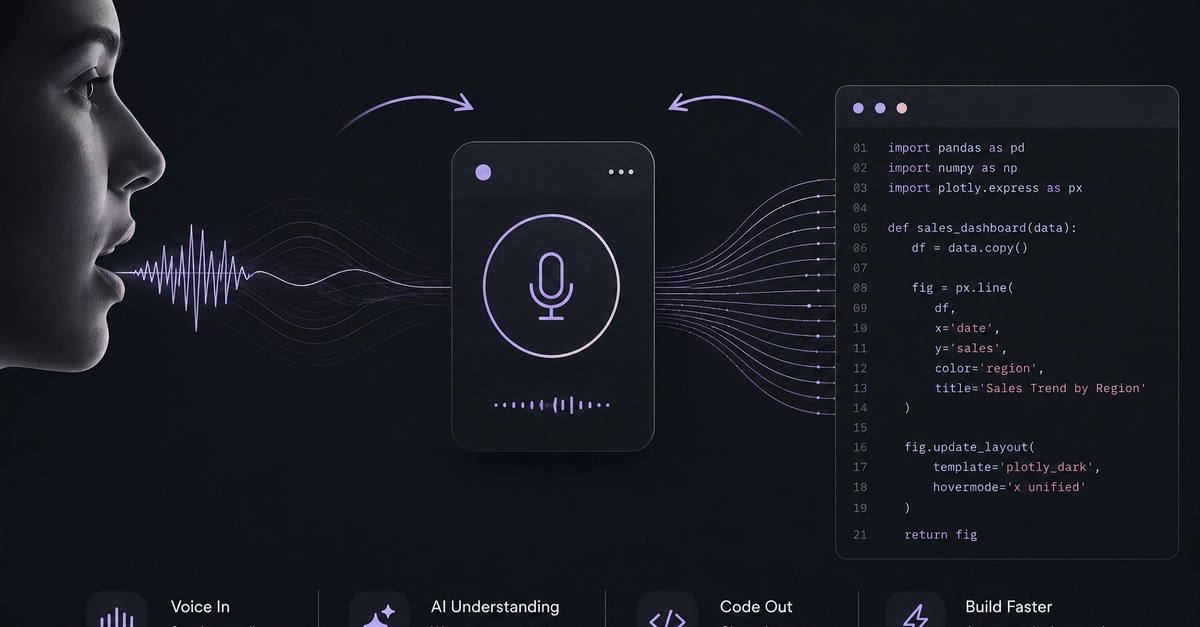
Ski emerges as a solution to this growing problem. It’s a free desktop application designed to give your coding agent a voice, and importantly, to give you a way to interact with its actions in real-time. The application aims to create a more symbiotic relationship between human developers and their AI coding partners, ensuring that sophisticated AI assistance doesn't lead to a loss of understanding or control.
How Ski Works: Two-Way Communication
Ski operates by facilitating two-way communication between you and your AI coding agent. When an agent performs actions, Ski can announce them. This means instead of just seeing lines of code appear or disappear in your editor, you can hear your agent describe what it’s doing. This vocal feedback loop is crucial for maintaining awareness. Imagine your agent saying, "I am now refactoring the authentication middleware to incorporate JWT verification, and I am updating the associated unit tests to reflect these changes." This level of explicit communication allows developers to stay engaged and informed without constantly scrutinizing a screen.
The "voice" aspect is not merely a novelty; it's a fundamental shift in how developers can supervise AI-driven coding tasks. This auditory feedback is particularly valuable when a developer is multitasking or has stepped away from their primary coding environment. It provides an ambient layer of information, akin to a background status update, that keeps the developer implicitly connected to the AI's progress.
Beyond Voice: Real-time Interaction and Control
While the voice feature is Ski's most distinctive offering, the application is built to support more comprehensive interaction. Ski is designed to work with various AI coding tools. This suggests a flexible architecture that can potentially integrate with different AI models and coding environments. The goal is to provide a unified interface that enhances the usability of these powerful, yet often opaque, AI assistants.
The implication is that developers won't need to switch between multiple tools to manage their AI coding partners. Ski aims to be the central hub for interacting with and overseeing AI-generated code. This could involve features that allow developers to pause, resume, or even provide quick feedback to the AI agent directly through Ski, ensuring that the AI's actions remain aligned with the developer's intent and project requirements. The ability to "check in" on the AI's reasoning process, as mentioned in the initial problem statement, is paramount. Ski intends to make this check-in seamless and informative.
The Future of AI-Assisted Development
The development of tools like Ski signals a maturing understanding of how AI will integrate into professional workflows. Initially, AI coding assistants were seen as sophisticated autocomplete tools. Now, they are capable of executing complex, multi-step tasks. This evolution necessitates a parallel evolution in the interfaces and interaction models used to manage them.
Ski addresses a critical gap: the need for human oversight without demanding constant, undivided attention. By providing a voice and a more interactive interface, Ski aims to make AI coding agents more trustworthy and collaborative partners. It’s a step towards a future where AI doesn't just write code, but communicates its intentions, allowing developers to leverage its power more effectively and safely. This approach could significantly reduce the risk of AI-generated code going unnoticed or uncorrected, ultimately leading to higher quality software and more efficient development cycles.
What remains to be seen is how Ski's integration will scale with increasingly complex AI models and larger codebases. As AI agents become even more autonomous and capable of handling entire projects, the nature of human supervision will undoubtedly evolve further. Ski’s current implementation is a vital first step, but the journey towards truly seamless human-AI collaboration in software development is ongoing.