Massive Investment Signals Semiconductor Ambitions
SK hynix, a global leader in memory semiconductors, has announced an ambitious investment plan totaling $712.5 billion (approximately 900 trillion KRW) into its South Korean operations. This colossal sum underscores the company's commitment to bolstering its domestic manufacturing capabilities and securing its position in the increasingly competitive global semiconductor market. While the overall figure is staggering, the company has provided specific details regarding two key projects: an expansion of its NAND flash production in Cheongju and the development of a new DRAM-focused semiconductor cluster in Yongin.
This significant capital injection is not merely about increasing production capacity; it represents a strategic move to enhance technological leadership, particularly in advanced memory technologies. The global demand for semiconductors, driven by artificial intelligence, data centers, and the expanding Internet of Things, continues to surge. SK hynix's investment is a direct response to these market dynamics, aiming to ensure a robust supply chain and maintain its competitive edge in both DRAM and NAND flash segments.
Cheongju NAND Expansion: A Focus on Advanced Flash
The Cheongju facility, a long-standing hub for SK hynix's NAND flash production, is slated for a significant expansion. This project will involve the construction of a new fabrication plant dedicated to advanced NAND flash memory. The focus will be on producing next-generation NAND technologies, including high-layer count V-NAND, which is crucial for high-density storage solutions demanded by data centers and consumer electronics.
The expansion in Cheongju is designed to address the growing demand for high-performance, high-capacity storage. Advanced NAND flash is the backbone of solid-state drives (SSDs), enabling faster data access and improved efficiency in computing systems. By investing in a new fab, SK hynix aims to not only scale up production but also to pioneer advancements in NAND technology, potentially leading to further breakthroughs in storage density and performance. This move also positions SK hynix to capitalize on the burgeoning AI market, which requires massive amounts of data storage.
Yongin Semiconductor Cluster: A New Epicenter for DRAM Innovation
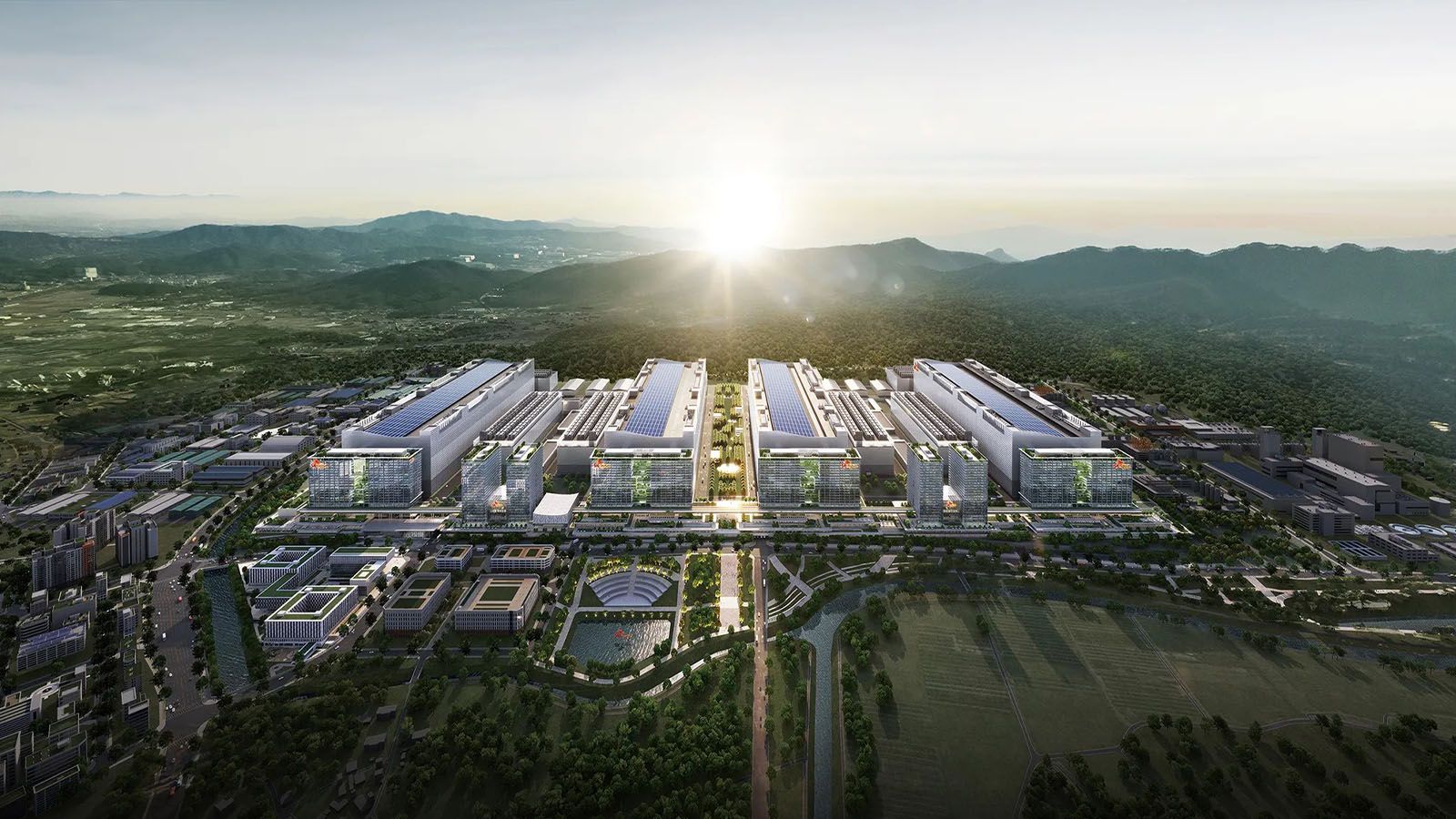
Perhaps the most significant aspect of SK hynix's investment is the planned development of a large-scale semiconductor cluster in Yongin, Gyeonggi Province. This cluster will be primarily dedicated to DRAM production, the memory technology that has historically been SK hynix's strongest segment. The project envisions multiple DRAM fabrication plants, research and development facilities, and supporting infrastructure, creating a comprehensive ecosystem for DRAM innovation and manufacturing.
The Yongin cluster is envisioned as a state-of-the-art facility, incorporating the latest manufacturing technologies and automation. This will allow SK hynix to produce the most advanced DRAM chips, including high-bandwidth memory (HBM), which is critical for AI accelerators. The strategic location in Yongin, within close proximity to existing tech hubs and research institutions, is expected to foster collaboration and talent acquisition. This initiative is a clear statement of intent to solidify SK hynix's dominance in the DRAM market, especially as AI workloads continue to drive demand for specialized memory solutions.
Strategic Implications and Market Impact
SK hynix's substantial investment reflects a broader trend within the semiconductor industry: a renewed focus on onshoring and strengthening domestic supply chains. Governments worldwide are incentivizing chip manufacturers to build and expand facilities within their borders, driven by concerns over geopolitical stability and supply chain resilience. South Korea, with its existing technological prowess and skilled workforce, is a prime location for such strategic investments.
The scale of this investment signals SK hynix's aggressive strategy to outpace competitors and secure long-term market leadership. By expanding its NAND capacity in Cheongju and establishing a new, advanced DRAM cluster in Yongin, the company is positioning itself to meet the escalating demands of next-generation computing, AI, and data storage. This move is likely to intensify competition with rivals like Samsung Electronics and Micron, further shaping the global semiconductor landscape.
The development of the Yongin cluster, in particular, is noteworthy. Building such an extensive ecosystem from the ground up requires immense foresight and capital. It is less like building a single factory and more like constructing a new city dedicated to chipmaking, complete with its own power, water, and logistics networks, alongside advanced R&D labs and manufacturing floors. This comprehensive approach aims to create efficiencies and foster innovation that a standalone fab cannot achieve.
Looking Ahead: Challenges and Opportunities
While the investment signals strong confidence in future market growth, SK hynix faces significant challenges. The semiconductor industry is notoriously cyclical, and massive capital expenditures carry inherent risks. Furthermore, the complexity of building and operating advanced fabrication facilities requires a highly skilled workforce and continuous technological innovation. The global economic climate, trade policies, and the pace of technological advancement will all play a crucial role in the success of these ambitious plans.
However, the opportunities are equally substantial. The insatiable demand for memory chips, particularly for AI applications, provides a strong tailwind. SK hynix's strategic focus on advanced technologies like HBM and high-layer NAND positions it to capture a significant share of this growing market. The comprehensive nature of the Yongin cluster project suggests a long-term vision, aiming to create a sustainable competitive advantage through integrated R&D, manufacturing, and talent development.
The company has stated that the precise timeline and phased rollout of these investments will be detailed in future announcements. However, the sheer scale of the $712.5 billion commitment leaves no doubt about SK hynix's intent to shape the future of semiconductor manufacturing in South Korea and globally.