The Flaw in Simple Additive Risk Scoring
Many risk scoring systems operate on a simple additive principle: each detected signal contributes a fixed number of points to a running total. This approach is easy to implement and tune, offering a clear path to understanding how a score is generated. However, it possesses a critical blind spot: it struggles to appropriately weight a single, high-confidence, malicious indicator.
Consider a scenario where an IP address is identified by a trusted threat intelligence feed, like ThreatFox, as confirmed Cobalt Strike command-and-control (C2) infrastructure. The confidence level is 100%. When this IP contacts an API endpoint, the additive model might assign it a maximum of +30 points, perhaps capped by policy. If other, less critical signals like a low-risk user-agent string contribute only a few more points, the total event score might land at 33 out of 100. In many systems, this score falls into the 'LOW' severity category. This outcome is deeply problematic. A definitive, independently verified indicator of active malware infrastructure should not be drowned out by a collection of probabilistic, low-confidence signals.
Why Additive Models Fail Critical Events
The core issue lies in the equal-weighting, capped contribution of each signal. ThreatFox's confirmation of an IP as known C2 infrastructure represents a powerful signal. It is not a probabilistic guess; it is a statement of fact from a specialized source. In contrast, a user-agent string, while potentially useful, is often a weak signal. It can be easily spoofed, and many legitimate applications might share similar identifiers. When the system treats both signals as mere point contributors in an additive formula, the sheer strength of the C2 indicator is diluted. The system doesn't inherently understand that one signal is an order of magnitude more critical than a dozen others combined.
This is akin to a fire alarm system that simply adds up the number of smoke particles detected. A single, large ember falling onto a detector might register as a moderate event, while a dozen tiny dust specks might register as a slightly higher, but still low, event. The system fails to recognize the critical difference between a potential spark and a confirmed, active fire source.
The Need for Weighted and Multiplicative Signals
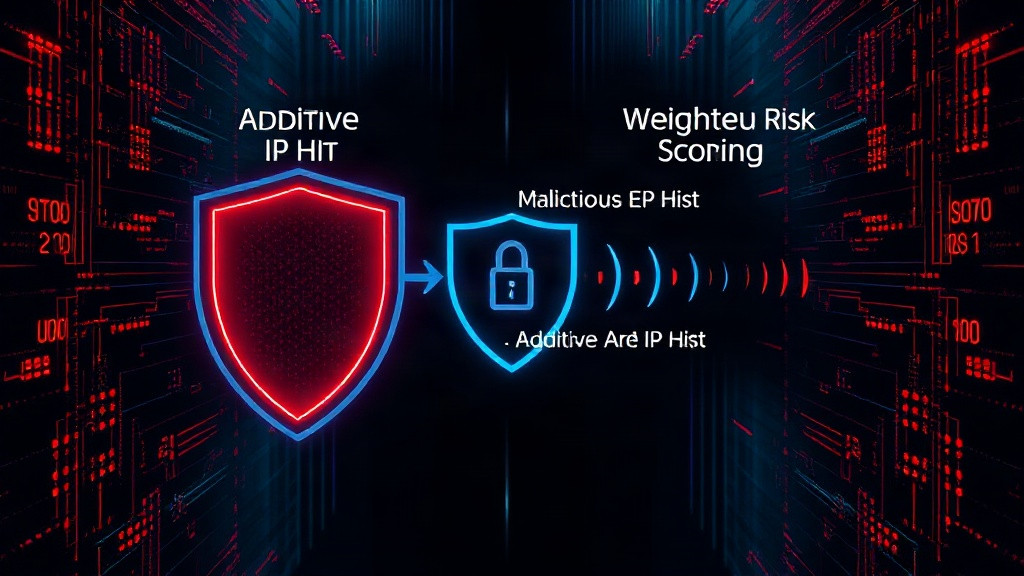
To address this, risk scoring systems must move beyond purely additive models. A more robust approach incorporates weighted signals and potentially multiplicative factors. In a weighted model, the Cobalt Strike C2 indicator would not just add points; it would carry a significantly higher weight. The system should recognize that this signal, due to its source and confirmed malicious nature, fundamentally alters the risk profile of the interaction.
Furthermore, a single high-confidence malicious signal could trigger a multiplicative increase in the score. Instead of simply adding 30 points, the system might recognize this as a critical event and multiply the score of all associated signals by a factor of 5 or 10. This ensures that a confirmed threat immediately elevates the event's severity, demanding immediate attention.
Rethinking Risk Thresholds and Alerting
The implications for security operations teams are significant. If a confirmed C2 hit results in a 'LOW' severity alert, it means that critical threats can slip through automated review processes. This can lead to delayed incident response, increased dwell time for attackers, and potentially severe consequences for the organization.
Organizations must critically evaluate their risk scoring mechanisms. The current approach, where a single, definitive malicious indicator is treated with the same importance as a dozen probabilistic ones, is insufficient. It requires a shift towards models that can dynamically adjust risk based on the confidence and severity of individual signals. This might involve:
- Dynamic Weighting: Assigning weights to signals based on their source reputation, historical accuracy, and the nature of the threat.
- Multiplicative Effects: Implementing logic where critical signals can exponentially increase the overall risk score.
- Threshold Re-evaluation: Adjusting the thresholds for 'MEDIUM', 'HIGH', and 'CRITICAL' severity levels to ensure that confirmed malicious activity is always flagged appropriately.
- Contextual Analysis: Incorporating contextual information about the asset, user, and network to further refine risk assessments.
A single, confirmed-malicious threat intelligence hit should not be just another data point in an additive tally. It should be a red flag, immediately and unequivocally elevating the risk score to a level that triggers urgent investigation. Failing to do so means that even with sophisticated threat intelligence, the defense mechanisms remain fundamentally vulnerable.