%22%20%2F%3E%0A%20%20%3C%2Fsvg%3E)
Modeling a Geopolitical Flashpoint
The Strait of Hormuz, a narrow waterway through which approximately 30% of the world's seaborne oil passes, is a critical chokepoint in global energy security. Any disruption, whether accidental or deliberate, carries profound implications for international trade and economies. A recent project, shared on Hacker News as a "Show HN," attempts to quantify these potential impacts by simulating the closure of this vital strait using real-world oil trade data. The simulation, developed by an individual who wishes to remain anonymous, provides a granular look at how such an event would ripple through the global oil market, affecting prices, trade routes, and supply chains.
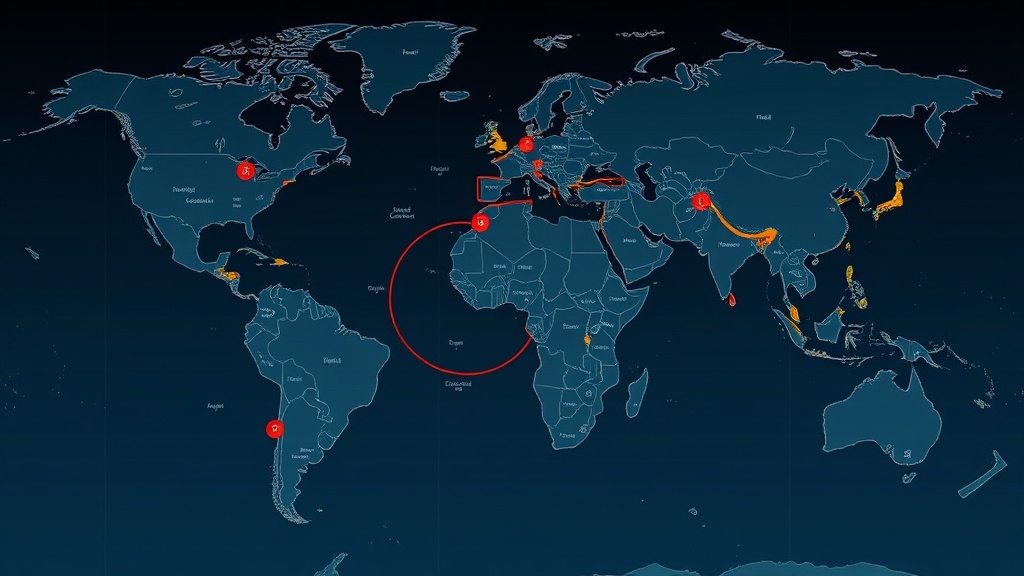
The project leverages historical oil trade data to map out the flow of crude oil and refined products. By modeling a complete closure of the Strait of Hormuz, the simulation projects the immediate consequences: rerouting of vessels, increased transit times, and a sharp escalation in oil prices. The core of the simulation lies in its ability to trace the movement of oil from producers to consumers and to identify which regions would be most acutely affected by a sudden halt in supply through this critical artery.
The methodology involves taking a snapshot of global oil trade patterns and then introducing a hypothetical scenario. This scenario involves the complete cessation of traffic through the Strait of Hormuz. The simulation then recalculates optimal shipping routes, factoring in increased distances, longer voyage durations, and the scarcity of available tanker capacity. This recalculation is not merely a logistical exercise; it directly translates into economic costs, primarily in the form of higher shipping rates and, more importantly, elevated crude oil prices due to reduced supply and increased demand for alternative, longer routes.
Projected Economic Ramifications
The simulation's findings paint a stark picture. A closure of the Strait of Hormuz, even for a relatively short period, would likely trigger a significant surge in global oil prices. The exact magnitude of the price increase would depend on the duration of the closure, the geopolitical response, and the ability of other supply sources to ramp up production. However, the models suggest that prices could easily double or even triple from pre-closure levels, particularly for oil destined for major consuming nations in Asia, such as China, India, and Japan, which are heavily reliant on Middle Eastern crude transported through the strait.
Beyond immediate price hikes, the simulation also highlights the logistical challenges. Tankers that would normally transit the Strait would be forced to take significantly longer routes, such as circumnavigating the Arabian Peninsula via the Red Sea or, for shipments from the Persian Gulf to the East, sailing around Africa. These extended journeys not only increase fuel consumption for the ships themselves but also tie up valuable tanker capacity for longer periods. This reduction in available shipping capacity would further exacerbate supply shortages and push freight rates skyward, adding another layer of cost to an already strained energy market.
The impact would not be uniform. Countries with robust domestic oil production or diversified energy portfolios would fare better than those heavily dependent on imported crude. Nations in East Asia, with their high energy demands and limited domestic resources, would face the most severe economic consequences, potentially leading to inflation, reduced industrial output, and energy rationing. The simulation's detailed data outputs allow for an analysis of specific trade flows, identifying which import terminals and refinery complexes would be the first and hardest hit.
Unanswered Questions and Future Directions
While this simulation provides a valuable quantitative assessment, it also raises several critical questions that remain open for further exploration. One significant aspect is the human element of geopolitical decision-making and market response. The simulation models rational economic actors, but real-world events are subject to panic, speculation, and political maneuvering, which could amplify or dampen the projected effects. How would financial markets react, and what role would strategic petroleum reserves play in mitigating the immediate shock?
Furthermore, the simulation focuses on the direct impact on oil trade. It does not explicitly model the secondary effects on other industries that rely on oil as a feedstock or energy source, such as petrochemicals, aviation, and transportation. The cascading economic damage to these sectors could be substantial, leading to broader inflation and potential recessions. The project also assumes a static production capacity from non-Strait of Hormuz sources; in reality, producers might attempt to rapidly increase output, though this is constrained by geological and infrastructure limitations.
The surprising detail here is not the complexity of the simulation itself, but the accessibility of its underlying data and methodology, presented as a "Show HN." This suggests a growing trend of sophisticated economic modeling being undertaken by individuals and smaller teams, leveraging publicly available data to shed light on critical global issues. It democratizes analysis that was once primarily the domain of large governmental or corporate entities.
The project's creator has made the data and simulation code available, inviting further scrutiny and development. This open approach is crucial for building trust in the model's findings and for expanding its scope. Future iterations could incorporate more dynamic supply responses, model the impact of sanctions, or simulate the effects of partial blockades rather than a complete shutdown. The current work serves as a powerful, albeit hypothetical, warning about the fragility of global energy supply chains and the profound economic consequences of geopolitical instability in critical regions.
For developers and data scientists, this project is a compelling example of using real-world data to model complex systems. It showcases the power of data analysis to inform policy and business strategy. The ability to ingest, process, and visualize large datasets of trade routes, vessel movements, and commodity prices is a valuable skill set. The open-source nature of the project means that others can fork the code, experiment with different parameters, and contribute to a more refined understanding of global energy security risks.