The Pain of Slow Deployments
A single logic error, a one-line fix. This is a common scenario for mobile developers. For one team, a minor bug sent Sentry alerts into overdrive as their Flutter app began crashing for users. The fix was trivial, but shipping it was anything but. Android users waited 8 hours for the corrected build to go live, while iOS users endured a 12-hour delay. During this entire period, the application remained unstable, frustrating users and damaging trust. This delay, a consequence of traditional app store release cycles, highlighted a critical need for a more agile deployment solution: Over-The-Air (OTA) updates.
Introducing Shorebird: Instant Code Pushes for Flutter
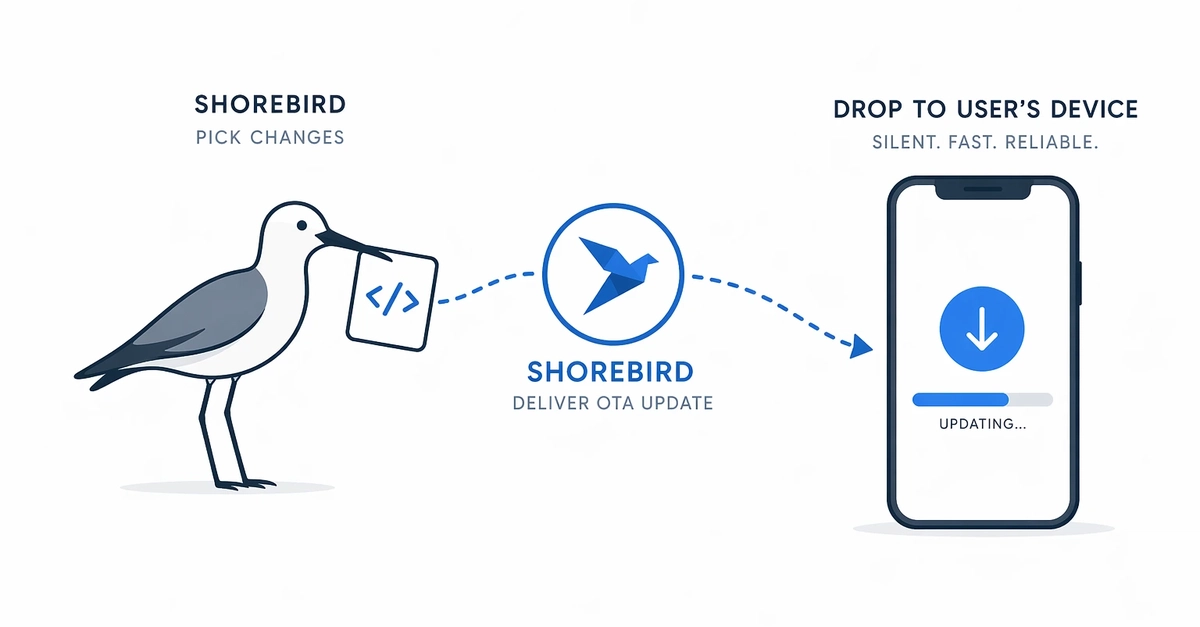
Shorebird emerges as the solution to this deployment bottleneck. It’s a code push tool specifically designed for Flutter applications. Instead of repackaging the entire app and submitting it through the arduous app store review process, Shorebird allows developers to push only the changed Dart code directly to end-users. These updates, termed 'patches,' are delivered silently and rapidly, bypassing the lengthy review times that can stretch for days.
The core value proposition of Shorebird lies in its speed and seamless user experience. Patches download in the background without user intervention, and once downloaded, the app automatically applies the update on its next launch. This means critical bug fixes, minor feature tweaks, or even A/B testing variations can reach users within minutes, not hours or days. This agility dramatically improves the developer's ability to respond to issues and iterate on their application.
How Shorebird Works Under the Hood
Shorebird's approach is sophisticated yet straightforward for developers. When a developer initiates a patch, Shorebird's backend processes the new Dart code. It then generates a differential patch file containing only the changes from the previously deployed version. This patch is uploaded to Shorebird's servers. On the user's device, the Shorebird SDK, integrated into the Flutter app, periodically checks for available patches. Upon detecting a new patch, it downloads the differential update in the background. When the user next launches the application, the SDK applies the patch to the existing code. This process effectively replaces the old code with the new, updated version without requiring a full app reinstallation or a visit to the app store.
This method is remarkably efficient. By only transmitting the delta – the difference between versions – Shorebird significantly reduces the bandwidth required for updates compared to distributing a full application binary. Furthermore, the patching mechanism is designed to be robust, handling potential interruptions and ensuring that the app remains in a consistent state after the update. The entire process is managed through the Shorebird CLI, providing developers with clear commands to create, test, and deploy patches.
Key Benefits for Developers and Users
The advantages of adopting Shorebird for Flutter OTA updates are manifold:
- Rapid Bug Fixes: As demonstrated by the initial use case, critical bugs can be resolved and deployed to users in minutes, drastically reducing downtime and user frustration.
- No App Store Bottleneck: Eliminating the need for app store review for code changes removes a significant time sink and unpredictable delay. This is especially valuable for apps with frequent update needs or those operating in rapidly evolving markets.
- Silent Background Updates: Users receive updates without any action required on their part. The app simply runs the latest code the next time it's opened, ensuring a smooth and uninterrupted experience.
- Reduced Development Overhead: Teams can focus more on feature development and less on the administrative burden of preparing and submitting new app store builds for minor changes.
- Enhanced User Retention: By providing a more stable and up-to-date application, developers can improve user satisfaction and reduce churn caused by bugs or outdated functionality.
The Future of Flutter Deployment
Shorebird represents a significant step forward in the deployment lifecycle for Flutter applications. It addresses a fundamental challenge that has long plagued mobile development: the friction and delay inherent in traditional app distribution models. By enabling instant, silent OTA updates, Shorebird empowers developers to deliver a more responsive, stable, and continuously improving user experience. This capability is not just about fixing bugs faster; it's about fundamentally changing how applications are maintained and evolved post-launch. For any team building a Flutter app where agility and user experience are paramount, exploring Shorebird is no longer optional—it's a strategic imperative.