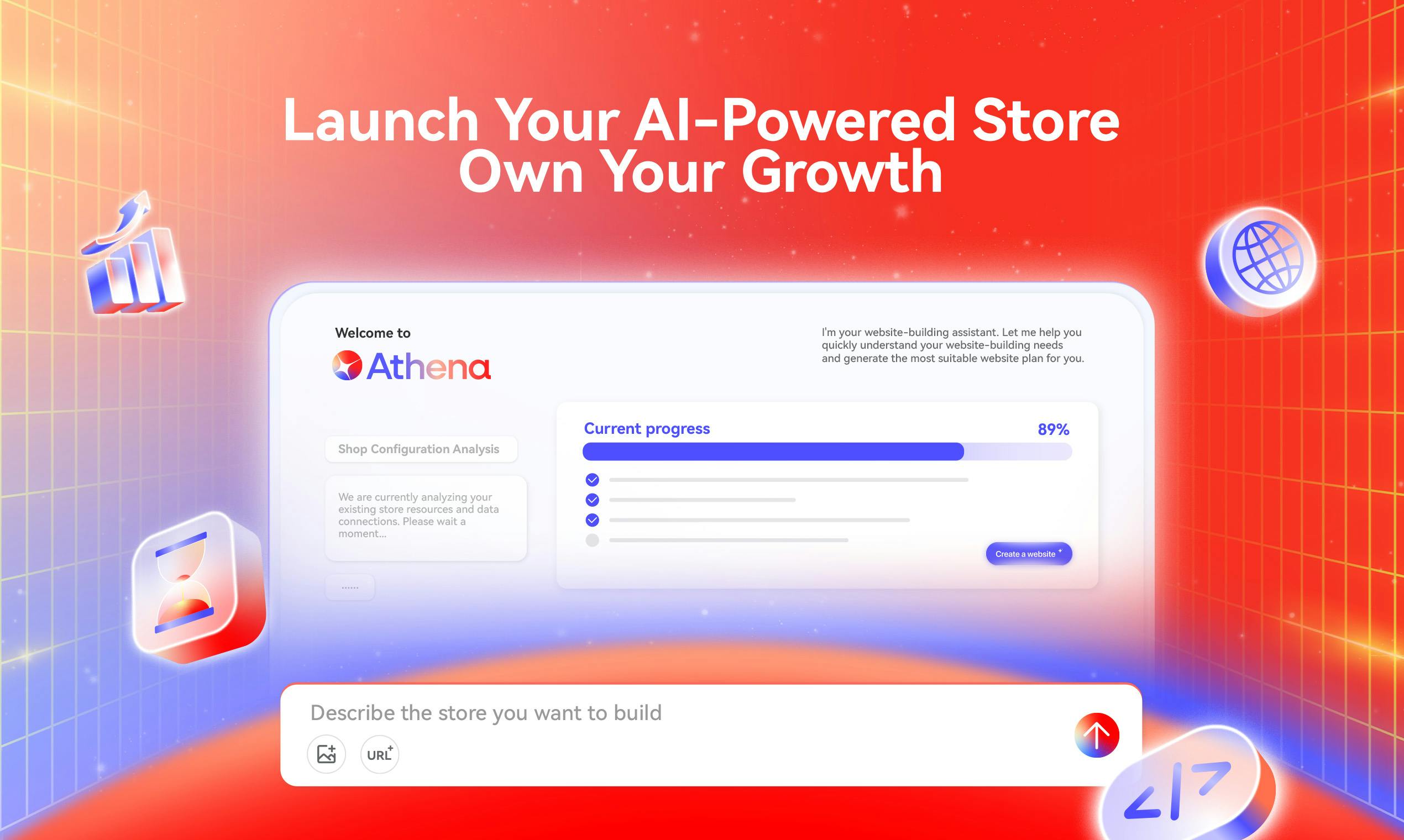
Athena: Orchestrating the E-commerce Stack
Shoplazza, a prominent e-commerce platform, has introduced Athena, a new product designed to act as an orchestrator for the complex web of tools that power modern online businesses. In an era where e-commerce operations often rely on a patchwork of specialized software – from CRM and marketing automation to inventory management and analytics – Athena promises to bring order to this chaos. It positions itself not as another tool to add to the stack, but as the central nervous system that connects and controls them.
The core problem Athena seeks to solve is fragmentation. Businesses, especially growing ones, accumulate a variety of SaaS products to handle different aspects of their operations. While each tool might excel at its specific function, getting them to communicate seamlessly, share data effectively, and trigger actions across platforms is a significant challenge. This often results in manual data entry, siloed information, and inefficient workflows. Athena's ambition is to abstract away this complexity, allowing businesses to manage their entire commerce ecosystem from a single point of control.
Think of Athena less like a new piece of specialized software and more like a highly organized, intelligent project manager for your online store. Instead of manually updating your inventory system after a sale and then triggering a follow-up email campaign, Athena can be configured to automate these sequences. It acts as a central hub, receiving information from one system and relaying it to another, often initiating actions based on predefined rules or triggers. This can significantly reduce operational overhead and minimize human error.

Key Capabilities and Functionality
While the specifics of Athena's architecture are not fully detailed, its stated purpose as an orchestrator agent suggests several key capabilities. Primarily, it focuses on workflow automation and data synchronization across different commerce applications. This means users can potentially set up custom workflows that span multiple tools. For example, a customer making a purchase could automatically trigger an update in the CRM, a notification to the fulfillment team, and a personalized thank-you email, all orchestrated by Athena.
The platform likely provides a visual interface or a rule-based system for defining these workflows. This approach is common in integration platforms and iPaaS (Integration Platform as a Service) solutions, allowing users with varying technical expertise to design and implement automated processes. The goal is to empower merchants to tailor their operational flows to their specific business needs without requiring deep coding knowledge. This democratizes advanced automation, making it accessible to a broader range of businesses.
Data synchronization is another critical function. In a fragmented tech stack, data often becomes inconsistent. A customer's address might be updated in the shipping software but not in the marketing CRM, leading to delivery issues or irrelevant campaign targeting. Athena aims to ensure that data remains consistent across all connected applications, providing a single source of truth and improving the accuracy of business intelligence and customer interactions.
The Broader Context: The Rise of Commerce Orchestration
Athena by Shoplazza enters a market that is increasingly recognizing the need for integrated commerce solutions. The traditional model of e-commerce platforms offering a suite of built-in features is giving way to a more modular approach. Businesses prefer to select best-of-breed tools for specific functions and then integrate them into a cohesive operational framework. This is where orchestration layers like Athena become essential.
This trend mirrors developments in other tech sectors, such as the rise of microservices in software development and the adoption of composable architectures in enterprise systems. The idea is to break down monolithic systems into smaller, independent components that can be combined and recombined as needed. For e-commerce, this means enabling merchants to build a tech stack that is agile, scalable, and perfectly suited to their unique operational requirements. Athena fits squarely into this paradigm, offering the connective tissue that makes a modular stack function as a unified whole.
The competitive landscape includes established iPaaS providers, specialized e-commerce integration tools, and even the native capabilities of larger e-commerce platforms attempting to broaden their scope. Shoplazza's move with Athena suggests a strategic effort to provide a more holistic solution for their merchants, moving beyond being just a storefront provider to becoming a central hub for managing all commerce-related operations.
Implications for Merchants
For merchants already using Shoplazza, Athena offers the potential for deeper integration and more sophisticated automation within their existing ecosystem. It could simplify the management of third-party applications and unlock new efficiencies. For businesses struggling with manual processes and data inconsistencies across their tools, Athena presents a compelling solution to streamline operations. The ability to automate complex, multi-step workflows can free up valuable time and resources, allowing teams to focus on strategic growth rather than day-to-day operational minutiae.
However, the success of Athena will depend on its ease of use, the breadth of its integrations, and its reliability. Merchants will need to evaluate whether the platform can effectively connect with their existing suite of tools and whether the workflow configuration is intuitive enough for their teams. The true value will lie in its ability to translate complex technical integrations into tangible business benefits, such as reduced costs, improved customer satisfaction, and faster time-to-market for new initiatives.
The emergence of dedicated orchestration agents like Athena signals a maturing e-commerce technology landscape. As businesses become more sophisticated in their operational needs, the demand for tools that can manage this complexity will only grow. Athena by Shoplazza is a significant step in addressing this demand, aiming to provide a unified, automated experience for the modern online merchant.