The Allegation: A Significant Data Exfiltration

Hacking group ShinyHunters has claimed a substantial breach of U.S. Federal Bureau of Investigation (FBI) systems. According to their assertions, the group exploited a previously unknown, or zero-day, vulnerability within Oracle's PeopleSoft enterprise resource planning software. This vulnerability reportedly allowed them to gain access to internal FBI services and exfiltrate a significant volume of sensitive data. The stolen information allegedly includes personal details of FBI agents and records pertaining to job applicants. The implications of such a breach, if confirmed, are far-reaching, particularly concerning the personal information of law enforcement personnel.
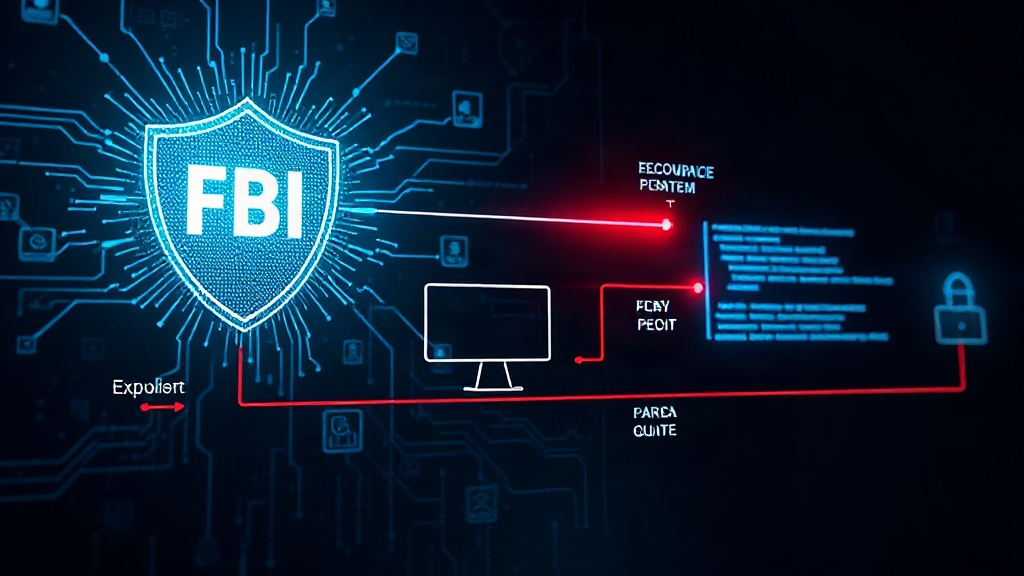
Diagram illustrating the claimed exploit path via Oracle PeopleSoft into FBI systems
ShinyHunters is an extortion gang known for targeting organizations with large datasets. Their modus operandi typically involves stealing sensitive information and then attempting to ransom the victim organization for its return or to prevent its public disclosure. The group has previously claimed responsibility for numerous high-profile data breaches, often targeting companies with significant customer or employee data.

Exploiting a Zero-Day in PeopleSoft

The core of ShinyHunters' claim rests on the exploitation of a zero-day vulnerability in Oracle PeopleSoft. Zero-day vulnerabilities are flaws in software that are unknown to the vendor and for which no patch or fix currently exists. Attackers who discover and exploit these vulnerabilities can operate with a significant advantage, as defenses are not yet in place. Oracle PeopleSoft is a widely used suite of applications for human capital management, financial management, and supply chain management, deployed by many large organizations, including government agencies. A zero-day exploit targeting such a critical system could grant attackers broad access. The specific nature of the vulnerability has not been disclosed by ShinyHunters, nor has Oracle or the FBI confirmed its existence. However, if the claims are accurate, this represents a significant security lapse. The FBI, as a primary law enforcement and intelligence agency, maintains some of the most sensitive data in the U.S. government. A breach of this magnitude could compromise ongoing investigations, endanger personnel, and undermine national security.

Potential Counterintelligence and Personal Threats

The theft of personal information belonging to FBI agents and their families presents a severe counterintelligence threat. Such data could be used for targeted extortion, coercion, or recruitment by foreign adversaries. Agents could be pressured into cooperating with foreign governments under threat of harm to themselves or their loved ones. This risk is amplified by the fact that agents often work on highly classified and sensitive cases. Similarly, data pertaining to job applicants could contain a wide array of personal identifiers, including social security numbers, addresses, and employment history. While not as directly critical to national security as agent data, this information is highly valuable to cybercriminals for identity theft and other fraudulent activities. The FBI processes a vast number of applications, meaning the pool of affected individuals could be substantial.

FBI and Oracle Response

As of the latest reports, neither the FBI nor Oracle has officially confirmed the breach or the existence of the specific PeopleSoft zero-day vulnerability. Typically, government agencies and software vendors conduct thorough investigations before issuing public statements on security incidents. This process involves verifying the claims, assessing the scope of the breach, and determining the technical details of the exploit. The absence of an immediate confirmation does not necessarily negate the claim; investigations can be complex and time-consuming. However, if the breach is substantiated, it would trigger a series of actions. The FBI would likely initiate a full-scale incident response, including forensic analysis, containment, and remediation. Oracle would be under immense pressure to develop and deploy a patch for the identified PeopleSoft vulnerability. The U.S. Cybersecurity and Infrastructure Security Agency (CISA) would likely issue alerts and guidance to other federal agencies and critical infrastructure operators using PeopleSoft.

Implications for the Cybersecurity Landscape

The alleged ShinyHunters breach of the FBI highlights several critical points in the current cybersecurity landscape. Firstly, it underscores the persistent threat posed by sophisticated hacking groups and the continued effectiveness of extortion-based cybercrime. Secondly, it brings into sharp focus the vulnerability of critical infrastructure and government systems to zero-day exploits, particularly in widely deployed enterprise software like Oracle PeopleSoft. The reliance on such systems by numerous entities means a single vulnerability can have widespread consequences. For organizations using Oracle PeopleSoft, this incident serves as a stark reminder to maintain rigorous security practices. This includes timely patching of known vulnerabilities, robust network segmentation, regular security audits, and comprehensive monitoring for anomalous activity. Even with these measures, the threat of zero-day exploits remains, necessitating advanced threat detection capabilities and well-rehearsed incident response plans. The cybersecurity community will be closely watching for official confirmations and further technical details. The disclosure of a PeopleSoft zero-day, especially one used to breach a high-value target like the FBI, could lead to rapid development and deployment of new detection rules and defensive strategies by security vendors and researchers worldwide.