
Automating Security Assessments with ShiftGrid
A new open-source project, ShiftGrid, aims to automate the day-to-day tasks of penetration testers by leveraging large language models (LLMs) like Claude. Developed by ShiftGrid, the project provides a prompt engine designed to orchestrate agentic pentesting workflows. The core idea is to enable AI agents to conduct security assessments with a degree of human oversight, offering transparency and traceability throughout the process.
ShiftGrid functions as an API that agents interact with. Once an agent is pointed at the ShiftGrid API, it receives the defined scope of the test and follows a set of prompts and checklists. This structured approach ensures that the agent systematically works through potential vulnerabilities. The system meticulously records observations, notes, and a list of identified findings, creating a detailed audit trail. This documentation is crucial for understanding the agent's actions, validating its findings, and maintaining accountability.
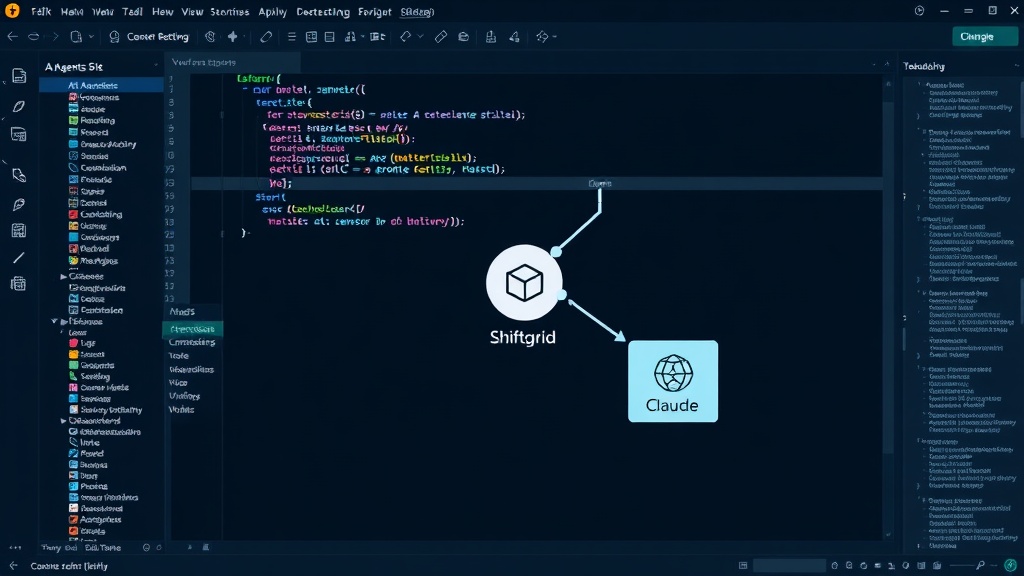
Agentic Pentesting with Human Oversight
The project's design emphasizes a collaborative approach between AI and human testers. While the agents perform automated scanning and analysis, the operator retains the ability to intervene at any point. This could involve switching to a different agent, taking over the testing manually, or refining the agent's strategy based on initial findings. This hybrid model combines the speed and scalability of AI with the critical thinking and adaptability of human expertise.
ShiftGrid's extended context window is a key enabler of this agentic behavior. It allows the LLM to maintain a comprehensive understanding of the testing environment, past actions, and discovered vulnerabilities. This persistent memory is essential for agents to make informed decisions and avoid redundant or contradictory actions. The project's creator noted that beyond finding security issues, the process provides a valuable overview and perspective on the application or server being tested.
Beyond Security: A General-Purpose Harness
While ShiftGrid was initially conceived for security testing, its underlying architecture suggests broader applicability. The project can serve as a general-purpose harness for various tasks where an AI agent needs to perform actions, collect data, and report findings under human supervision. The explicit logging and visibility into the agent's operations make it suitable for audits, compliance checks, or even complex data analysis workflows.
The developer highlighted an experiment using ShiftGrid for an audit of Confluence, indicating its potential to adapt to different application types and testing methodologies. The ability to observe an agent's step-by-step process is invaluable for debugging, understanding emergent behaviors, and ensuring that the AI is performing tasks as intended. This level of transparency is often lacking in more opaque automated tools.
Technical Architecture and Future Potential
The ShiftGrid project, hosted on GitHub, provides the code for this prompt engine. Its open-source nature invites community contributions and allows users to inspect, modify, and deploy the system for their specific needs. The reliance on LLMs means that the effectiveness of ShiftGrid will evolve alongside the capabilities of these models. As LLMs become more sophisticated in reasoning, planning, and code execution, the potential for agentic pentesting will expand significantly.
The current implementation focuses on structured checklists and prompt chaining to guide the LLM. Future developments could involve more dynamic task generation, adaptive strategy adjustments based on real-time threat intelligence, and integration with a wider array of security tools and reconnaissance frameworks. The ultimate goal is to create a system that can not only identify vulnerabilities but also provide actionable remediation advice and even assist in the patching process.
The project's success hinges on the careful crafting of prompts and the ability of the LLM to interpret and execute them accurately within the defined scope. The human oversight component remains critical, ensuring that the AI's outputs are validated and that complex, nuanced security issues are not missed. ShiftGrid represents a significant step towards more intelligent and transparent automated security assessments, bridging the gap between human expertise and AI capabilities.