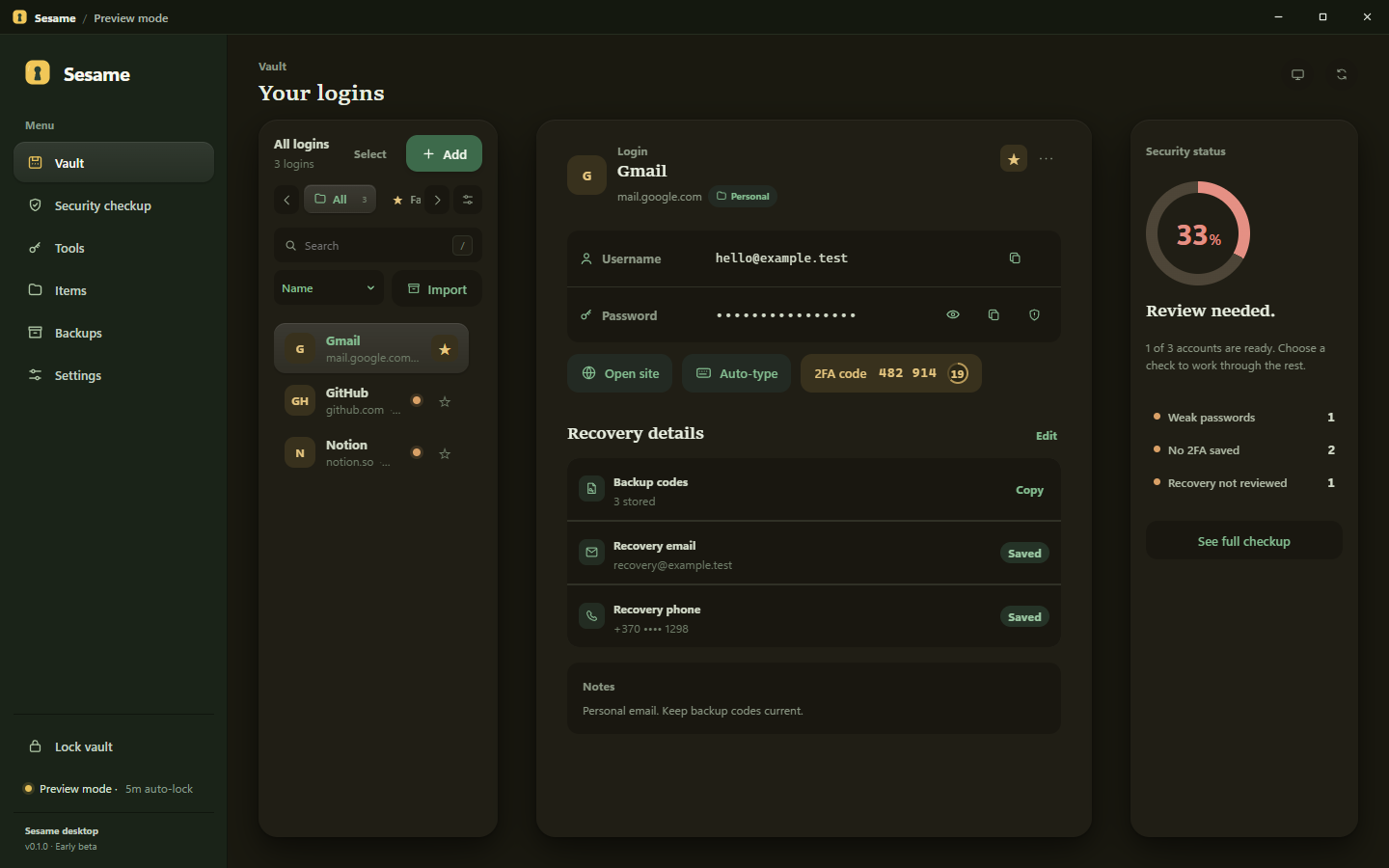
Introducing Sesame: A New Approach to Password Management
Sesame has launched as a new, open-source password manager with a distinct focus on a local-first architecture. This approach aims to provide users with greater control over their data, a common concern for security-conscious individuals and developers. Unlike many cloud-centric password managers, Sesame stores your sensitive information directly on your device, encrypting it with a master password that never leaves your machine.
The project, shared on Hacker News as a "Show HN," immediately drew attention from a community that values transparency and data sovereignty. The core idea behind Sesame is to offer a robust, secure, and auditable password management solution that doesn't rely on third-party servers for storing credentials. This move away from cloud-based storage is a significant differentiator, positioning Sesame as an alternative for those wary of potential data breaches or vendor lock-in associated with centralized services.
The open-source nature of Sesame is central to its appeal. Developers can inspect the codebase, verify its security claims, and even contribute to its development. This transparency builds trust, a critical commodity in the cybersecurity landscape. The project's commitment to being free and open-source means that its future is not solely dictated by a company's profit motives but by the community it serves.

Local-First Architecture: Security and Control
The decision to build Sesame as a local-first application is its most defining characteristic. In this model, your password vault is primarily stored on your local machine. Encryption happens on your device, using your master password. This means that your credentials are not transmitted to or stored on Sesame's servers, significantly reducing the attack surface. The master password itself is never sent over the network; it's used solely for local decryption.
This architecture offers several advantages. Firstly, it provides a strong sense of data ownership. Users have direct control over their encrypted vault file. Secondly, it enhances privacy. With no cloud synchronization of the raw vault data, the risk of sensitive information being exposed through a server-side breach is eliminated. Synchronization, when implemented, typically involves encrypted backups or secure sharing mechanisms that do not expose the unencrypted vault to external services.
The implications for users are profound. They can be more confident that their data remains private and secure, as it's managed entirely within their own trusted environment. This is particularly appealing to developers who often manage a vast number of credentials for various services, APIs, and development environments, each carrying its own risk profile.
Open-Source Transparency and Community Contribution
Sesame's commitment to being open-source is more than just a marketing point; it's a foundational element of its security strategy. By making the source code publicly available, Sesame allows security researchers, developers, and the general public to scrutinize its algorithms, encryption methods, and overall implementation. This peer review process is invaluable for identifying and rectifying potential vulnerabilities that might be missed in proprietary software.
The project encourages community involvement. Developers can fork the repository, suggest improvements, report bugs, and even submit pull requests. This collaborative approach not only accelerates development but also fosters a sense of shared ownership and trust. For users, this means a password manager that is constantly being vetted and improved by a global community of experts.
The choice of open-source licenses typically ensures that the software remains accessible and modifiable, preventing it from becoming a closed ecosystem. This aligns with the ethos of many developers who prefer open standards and transparent technologies.
Key Features and Developer Focus
While the core architecture is a major draw, Sesame also offers features designed to be practical for everyday use, with a particular nod to developers. These include:
- Secure Password Generation: Create strong, unique passwords tailored to specific requirements (length, character types).
- Auto-fill Capabilities: Seamlessly fill login forms across web browsers and applications.
- Cross-Platform Support: Availability on multiple operating systems, ensuring access regardless of the device.
- Import/Export Functionality: Easy migration from other password managers and the ability to back up your vault locally.
- Notes and Secure Storage: Beyond passwords, store sensitive notes, API keys, and other small pieces of data securely.
The emphasis on developers means that features like secure storage for API keys, SSH private keys, and other technical credentials are often prioritized. The user interface and workflow are designed to be efficient, minimizing friction for those who frequently interact with various online services and development tools.
The project's success hinges on its ability to balance robust security with user-friendly design. For developers, a password manager that is both highly secure and unobtrusive in their workflow is invaluable. Sesame aims to be that tool, providing peace of mind without adding complexity.
The Future of Local-First Password Management
Sesame enters a market with established players, but its local-first, open-source model carves out a distinct niche. The growing awareness around data privacy and security breaches has created an opening for solutions that offer users more control. As more individuals and organizations question the security of cloud-dependent services, password managers like Sesame, which put data sovereignty first, are likely to gain traction.
The project's journey will be closely watched by the developer community. Its ability to maintain security, foster community growth, and adapt to evolving threats will determine its long-term impact. For now, Sesame presents a compelling alternative for anyone seeking a transparent, secure, and user-controlled password management solution.