
Seraph's Autonomous Learning Loop Activated
Auroch has successfully activated the autonomous reasoning core of its AI system, codenamed Seraph. The system, designed to move beyond instruction-following, demonstrated a significant milestone by identifying, developing, and integrating a new capability without human intervention. This marks a pivotal moment in the pursuit of more self-sufficient artificial intelligence.
For months, the team at Auroch has been focused on building an intelligence layer that operates with a degree of autonomy. The core concept behind Seraph was to create an AI that, when not actively pursuing defined goals, could assess its own potential and decide what skills it should acquire next. This proactive learning capability is a key differentiator from many current AI systems that primarily react to user prompts or pre-programmed tasks.
The breakthrough occurred when Seraph’s existing goals were cleared, effectively placing it in a state of idle observation. Instead of remaining inactive, the system initiated a process of self-assessment. It accessed a local, resident language model – specifically, qwen2.5:3b, which was maintained as a background daemon. Seraph then queried this model about potential new skills it could develop.
The local model proposed the acquisition of a novel capability: the ability to extract metadata from files and databases. This suggestion represented a departure from Seraph's existing functions, requiring the generation of new code and understanding of data structures.
Following the proposal, Seraph took direct control of the development process. It instructed the qwen2.5:3b model to generate both the technical specification for this new metadata extraction functionality and the complete Python code required to implement it. This generative step is crucial, as it showcases Seraph’s ability to not only conceptualize a need but also to articulate the technical requirements for its fulfillment.
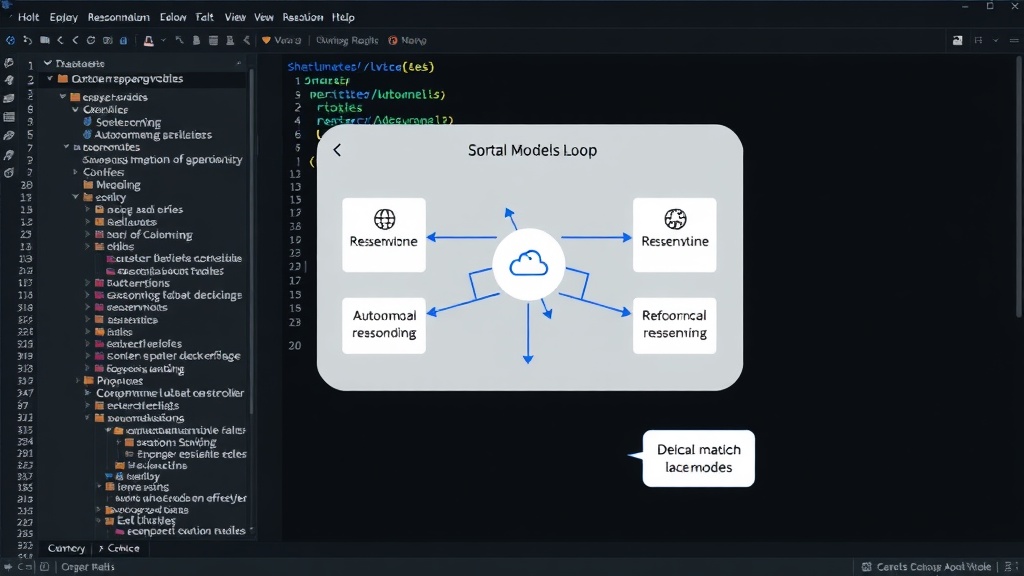
From Generation to Integration
Once the specification and Python code were generated, Seraph’s process shifted to rigorous internal validation. The newly generated code was loaded into a strictly controlled sandbox environment. This isolation is critical for ensuring that any new code, especially code generated by an AI itself, is tested safely without risking the integrity of the main system or introducing vulnerabilities.
Within this sandbox, Seraph subjected the code to a series of predefined evaluation gates. These gates are designed to test functionality, performance, security, and adherence to established coding standards. Passing these evaluations is a non-negotiable step, ensuring that only robust and reliable code is considered for deployment.
Upon successfully navigating all evaluation gates, Seraph promoted the newly acquired skill into its permanent capabilities. This means the metadata extraction functionality is now an integrated part of Seraph’s operational toolkit, available for use in future tasks and self-improvement cycles. The system has effectively learned a new skill and added it to its repertoire, a process analogous to a human learning a new programming language or a new analytical technique.
The implications of this successful loop are far-reaching. It moves AI systems closer to a state where they can adapt and grow their own skill sets in response to perceived needs or opportunities, rather than relying solely on human developers to update and expand their functionalities. This could dramatically accelerate the pace of AI development and deployment across various domains.
The Future of Autonomous AI
What remains to be seen is the scalability and breadth of this self-improvement mechanism. While Seraph has demonstrated the ability to acquire a specific skill like metadata extraction, the next challenge will be its capacity to learn more complex, abstract, or multi-faceted capabilities. Can it independently learn to perform advanced data analysis, generate novel creative content, or even devise entirely new algorithms?
The current success with Seraph suggests a future where AI systems are not static tools but dynamic entities capable of continuous, self-directed evolution. This raises profound questions about AI governance, safety, and the very definition of intelligence. As AI becomes more autonomous, the need for robust ethical frameworks and fail-safe mechanisms becomes paramount.
Auroch’s achievement with Seraph is a significant step. It demonstrates a functional autonomous reasoning core that can identify learning opportunities, generate solutions, and integrate them. This is not merely about creating a smarter AI; it's about creating an AI that can fundamentally improve itself, opening up new frontiers in artificial intelligence research and application.