The Agent-as-Black-Box Problem
Multi-agent systems, where multiple AI agents collaborate to achieve a complex goal, are rapidly becoming a cornerstone of advanced AI applications. However, a significant challenge emerges when these agents are treated as opaque boxes. This lack of visibility is particularly dangerous when agents are chained together in a pipeline. Without proper instrumentation, developers lose insight into crucial internal operations like retry logic, backoff strategies, and the cascade effects of failures. The problem isn't always within the agent's core logic; often, the latency lies hidden within the 'retry envelope' – the external mechanisms managing agent re-executions.
Sarvar's recent post highlights a compelling case study involving a five-agent pipeline. While most agents performed within expected parameters, taking around 5 seconds per execution, one agent consistently took 22.6 seconds. Initially, this might lead one to assume a compute-bound bottleneck within that specific agent's processing. However, this assumption overlooks the critical role of observability infrastructure. Without detailed tracing, the root cause remains obscured, leading to misdiagnosis and inefficient debugging.
This reliance on black-box agents is a ticking time bomb for complex workflows. As the number of agents and their interactions increase, the potential for hidden issues to propagate and cause system-wide slowdowns or failures grows exponentially. The latency observed is not a reflection of the agent's computational efficiency but rather the overhead introduced by its error-handling and retry mechanisms, which are often invisible without granular tracing.
Span Hierarchy: Illuminating the Invisible
The solution to this pervasive observability gap lies in adopting a span-based tracing approach, akin to Sentry's span hierarchy. This method groups related operations, or 'spans,' into a hierarchical structure, providing a clear lineage of execution. When applied to multi-agent systems, this hierarchy transforms a confusing jumble of execution times into an easily digestible map of interactions.
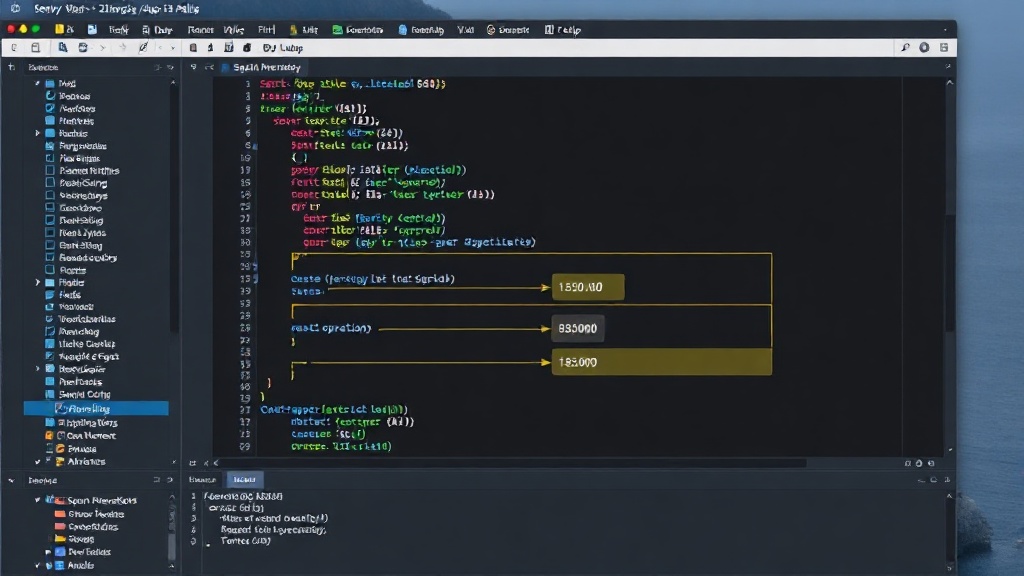
In the case of the five-agent pipeline, Sentry's hierarchical view immediately made the problem apparent. Instead of seeing a single, long execution time for the problematic agent, the trace revealed a series of shorter spans within that agent's execution. These spans clearly indicated a retry pattern. The 22.6-second duration was not a single, slow computation but rather multiple attempts to execute a task, each likely failing and triggering a retry according to some predefined strategy. The 'retry envelope' was the culprit, not the agent's core intelligence.
This hierarchical visualization is crucial. It allows developers to distinguish between an agent genuinely struggling with a complex task and an agent repeatedly failing and retrying that same task. The distinction is vital for targeted optimization. Focusing on optimizing the agent's core logic when the issue is actually with its retry strategy is a common and costly mistake. Span hierarchy cuts through this ambiguity, directing engineering effort to the true source of latency.
The Cascade Effect in Multi-Agent Pipelines
The implications of undetected silent retries and latency become far more severe as the complexity of the agent pipeline scales. In a system with just five agents, a single inefficient retry strategy can cause significant delays or even lead to cascading failures. Imagine a scenario where Agent A calls Agent B, which then calls Agent C. If Agent C has a poorly configured retry mechanism, it might repeatedly fail and retry, consuming resources and time. Agent B, waiting for Agent C's response, will also be delayed. If Agent B has its own timeout or retry logic for Agent C, this can further exacerbate the problem, creating a tangled web of waiting processes.
When you add more agents, error handling, timeout logic, and fallback chains into the mix, the potential for a 'retry forest' – a complex, interconnected network of retries and failures – becomes immense. Without granular observability, debugging such a system is akin to navigating a maze blindfolded. Each agent might appear to be functioning correctly in isolation, but their interactions create emergent, system-level problems that are incredibly difficult to pinpoint.
The danger of silent retries is that they are, by definition, hidden. If an agent logs every retry attempt, it's a different story. But when retries occur without explicit logging or are buried within opaque SDKs, they become 'silent.' This silence allows latency to creep into the system unnoticed, degrading performance and user experience. The problem is exacerbated by the fact that many agent frameworks and libraries abstract away these retry mechanisms, presenting a clean API to the developer while hiding the complex, and potentially inefficient, internal workings.
The Necessity of Agentic Observability
The lesson from Sentry's span hierarchy is clear: robust observability infrastructure is not an optional add-on for agentic systems; it is a fundamental requirement. Treating each agent as a distinct service with its own defined interface and internal execution trace is paramount. This requires instrumenting at a level granular enough to capture not just the initiation and completion of a task, but also the intermediate steps, including retries, timeouts, and any internal decision-making processes.
For developers building multi-agent pipelines, this means actively seeking out tracing solutions that support hierarchical span data. Tools that can visualize the call graph between agents, and crucially, the execution flow *within* each agent, are essential. This allows for the identification of bottlenecks, whether they stem from computational load, inefficient algorithms, or, as demonstrated, problematic retry strategies.
The future of AI development will undoubtedly involve more complex, multi-agent architectures. As these systems grow in sophistication, the ability to observe their internal workings will become a key differentiator. Without it, development teams will struggle with performance issues, debugging nightmares, and unreliable systems. The insights gleaned from Sentry's approach serve as a critical reminder: visibility into the 'retry envelope' is as important as visibility into the agent's core logic itself. If you run a team building with multiple AI agents, you need to ensure your observability stack can reveal these hidden retry patterns before they cripple your application.