Kimi K3 Self-Hosting: A Performance Trade-off
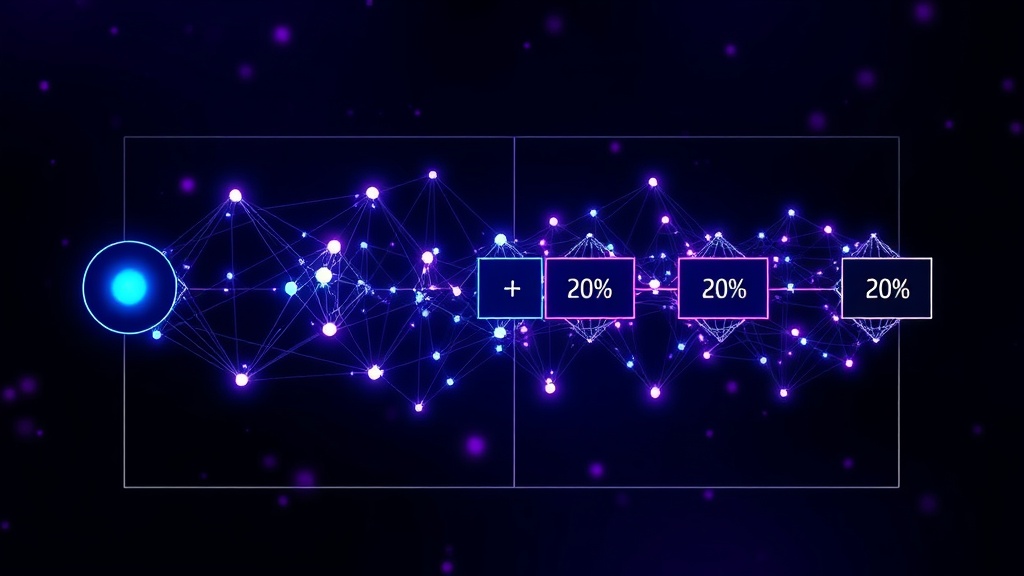
The decision to self-host Kimi K3, the latest iteration of the large language model, presents a clear trade-off: a substantial 20% increase in hardware costs for a corresponding 20% improvement in task resolution. This isn't a marginal upgrade; it's a significant shift that requires careful consideration for organizations aiming to leverage Kimi K3's advanced capabilities without relying on third-party APIs.
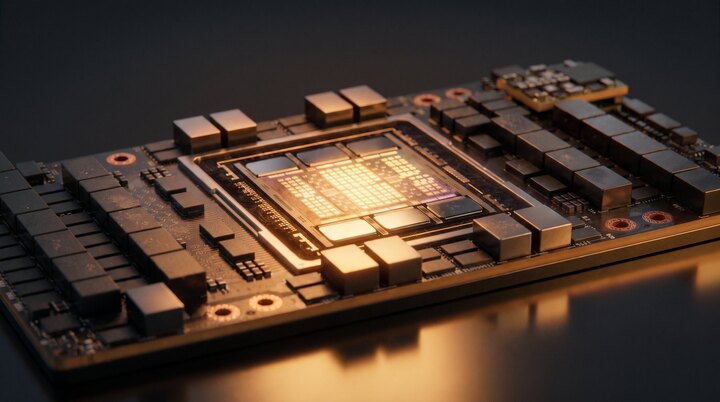
The core of this calculation lies in the demands of running a model of Kimi K3's scale. Unlike smaller models that can be deployed on standard server configurations, Kimi K3 requires specialized hardware, primarily high-performance GPUs, to achieve optimal inference speeds and accuracy. The 20% hardware cost increase reflects the necessity of acquiring more powerful, or a greater number of, GPUs than might be needed for less demanding models. This includes not only the purchase price of the hardware but also the associated costs of power, cooling, and rack space within a data center environment.
For many development teams and businesses, the allure of self-hosting lies in greater control, enhanced data privacy, and potentially lower per-inference costs at extreme scale. However, the upfront capital expenditure and ongoing operational overhead are significant hurdles. The 20% premium on hardware suggests that organizations must be prepared to invest in top-tier components, likely including multiple high-VRAM GPUs per inference node, to unlock the model's full potential.
Understanding the 20% Task Resolution Gain
The 20% improvement in task resolution is the critical counterpoint to the increased hardware expenditure. This metric typically refers to the model's ability to accurately and completely address complex prompts, generate coherent and relevant outputs, and perform specific tasks such as summarization, code generation, or complex reasoning with a higher success rate. For developers building applications that rely on LLM performance, this uplift can translate directly into:
- Improved User Experience: More accurate responses lead to higher user satisfaction and reduced need for manual correction or re-prompting.
- Enhanced Application Capabilities: Complex tasks that were previously unreliable or impossible become feasible, opening new avenues for application development.
- Increased Efficiency: For internal business processes, higher resolution means tasks are completed correctly the first time, saving significant human effort and time.
The specific nature of these tasks and the benchmark used to derive the 20% figure are crucial. If the benchmark involves highly nuanced, multi-turn conversations or intricate code generation problems, the 20% gain becomes even more valuable. Conversely, if it relates to simpler, single-turn queries, the justification for the increased hardware cost might be weaker.
The Infrastructure Imperative
Self-hosting Kimi K3 is not merely about acquiring the right GPUs. It necessitates a robust infrastructure capable of managing, serving, and scaling the model. This includes:
- Compute: High-density GPU servers are essential. Decisions must be made regarding GPU type (e.g., NVIDIA A100, H100, or newer architectures), VRAM capacity, and the number of GPUs per server. The 20% cost increase likely accounts for configurations that push the boundaries of current consumer or prosumer-grade hardware, leaning towards enterprise-grade solutions.
- Networking: High-bandwidth, low-latency networking is critical, especially in distributed inference setups where multiple GPUs or servers collaborate. Inefficient networking can become a bottleneck, negating the benefits of powerful compute.
- Storage: Fast storage solutions are needed for model weights, which can be hundreds of gigabytes, and for caching intermediate results during inference.
- Software Stack: A sophisticated software stack is required for model loading, inference serving (e.g., using frameworks like vLLM, TGI, or custom solutions), load balancing, and monitoring. This stack needs to be optimized for the specific hardware and model architecture.
- Cooling and Power: High-density GPU deployments generate significant heat and consume substantial power. Data center infrastructure must be capable of handling these demands reliably.
The 20% hardware cost increase is a baseline. The total cost of ownership (TCO) will be higher when factoring in the operational complexities and the specialized personnel required to manage such an environment. This is where the decision to self-host moves from a simple hardware acquisition to a significant IT infrastructure project.
Who Should Consider Self-Hosting Kimi K3?
The decision to self-host Kimi K3 hinges on several factors. Organizations that generate a very high volume of inference requests, where the 20% improvement in task resolution translates into significant operational savings or competitive advantage, are prime candidates. Companies with stringent data privacy or regulatory requirements that prevent them from using third-party cloud services will also find self-hosting compelling, provided they can meet the infrastructure demands.
Startups or smaller teams might find the initial hardware outlay prohibitive. For them, a managed service or API access to Kimi K3 might remain the more practical choice. However, for established enterprises or AI-focused companies looking to fine-tune Kimi K3 for specific internal use cases or to build proprietary applications on its foundation, the investment in self-hosting could yield substantial long-term benefits. The 20% increase in hardware cost is essentially an investment in a more capable, more controlled AI inference engine.
Ultimately, the choice is a strategic one, balancing the immediate financial outlay against the long-term gains in performance, control, and potential for innovation. A thorough TCO analysis, factoring in hardware, operational costs, and the quantifiable value of the 20% task resolution improvement, is essential before committing to this path.