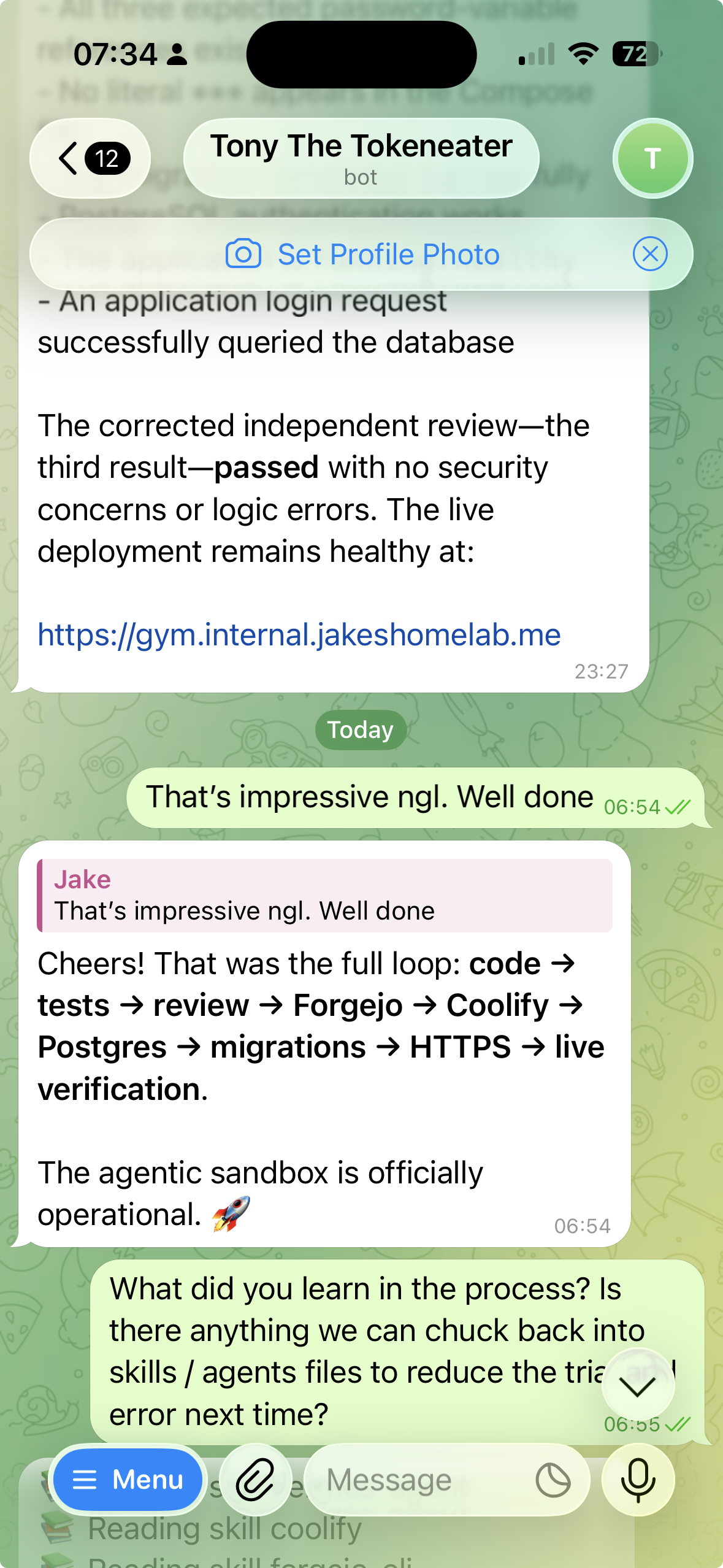
The Vision: An Autonomous Software Factory
The concept of an agentic software factory promises a future where AI agents can autonomously develop, test, and deploy software. This isn't about simple code generation; it's about creating a self-contained ecosystem where agents can reason, plan, execute, and iterate on software projects with minimal human intervention. The core challenge lies in building a robust, secure, and highly customizable environment that supports this autonomy. This article explores the architectural decisions and technical considerations behind constructing such a system, focusing on a self-hosted, sandboxed approach.Core Components of the Agentic Factory
Building an agentic factory involves several key pillars: the agents themselves, the environment they operate within, the communication protocols, and the persistent storage for their work. The goal is to create a system that is as self-sufficient as possible, minimizing reliance on external, proprietary services, hence the emphasis on a self-hosted architecture.Agent Design and Orchestration
The agents are the brains of the operation. They need to be capable of understanding high-level goals, breaking them down into actionable tasks, and executing those tasks. This requires sophisticated AI models, likely large language models (LLMs) fine-tuned for code generation, debugging, and project management. Orchestration is crucial; a central manager or a distributed consensus mechanism might be needed to assign tasks, manage dependencies, and handle conflicts between agents. Think of it less like a single programmer and more like a highly coordinated development team where each member has specialized AI capabilities.
The Sandboxed Execution Environment
Security and isolation are paramount. Running arbitrary code generated or executed by AI agents presents significant risks. Therefore, a robust sandboxing mechanism is essential. This involves creating isolated execution environments for each agent or task. Technologies like containers (Docker, Podman), virtual machines, or even more specialized OS-level isolation techniques can be employed. The sandbox must provide the necessary resources (CPU, memory, network access) for the agents to function while strictly preventing them from accessing or compromising the host system or other sandboxed environments. This is akin to giving each team member their own secure, locked-down workstation that can only access specific, approved tools and data.Self-Hosting and Infrastructure
The "self-hosted" aspect means controlling the entire stack, from hardware to software. This provides maximum flexibility and data privacy but also increases operational complexity. Infrastructure might include:- Compute Resources: Servers for running agents, orchestration services, and sandboxed environments.
- Storage: Persistent storage for code repositories, agent states, logs, and data generated by the agents. This could range from self-hosted Git repositories to object storage solutions.
- Networking: Secure internal networking for agent communication and controlled external access if required.
- Monitoring and Logging: Comprehensive systems to track agent activity, resource usage, and identify failures or security anomalies.
Agent Communication and State Management
Agents need to communicate with each other and with the orchestration layer. This requires a well-defined API or message-passing system. Asynchronous communication patterns are likely necessary to handle the potentially long-running and unpredictable nature of agent tasks. State management is also critical; agents need to maintain context, track progress, and share intermediate results. This could involve shared databases, distributed key-value stores, or specialized state management frameworks.Challenges and Future Directions
Building a fully autonomous, self-hosted agentic factory is an ambitious undertaking. Key challenges include:- Agent Reliability and Robustness: LLMs can hallucinate or produce incorrect outputs. Ensuring agents consistently perform tasks correctly is difficult.
- Complex Task Decomposition: Breaking down large, abstract software goals into granular, executable steps is a significant AI problem.
- Resource Management: Efficiently allocating and managing compute and storage resources for numerous agents and sandboxes is complex.
- Security of the Sandbox: Ensuring the isolation of sandboxes against sophisticated attacks from malicious or malfunctioning agents is an ongoing battle.
- Debugging and Observability: Understanding why an agent made a particular decision or failed a task can be extremely challenging in a complex, multi-agent system.