The Promise and Peril of Local AI
The allure of running Large Language Models (LLMs) entirely on-premise is data sovereignty. Organizations can process sensitive proprietary information without the inherent risks of sending it to third-party APIs. However, the term "local" is not a synonym for "secure." A poorly architected or configured local LLM deployment can introduce significant vulnerabilities. Attack vectors such as prompt injection, unauthorized tool usage, and adversarial inference attacks become not just theoretical, but tangible threats to your infrastructure.
This analysis delves into constructing a secure local AI agent architecture. We examine the roles of SGLang, a high-performance LLM serving engine, and Olares, a framework designed for local AI orchestration and security. By dissecting their security implications and drawing lessons from real-world penetration testing, we aim to outline a path toward production-hardened local AI deployments.
SGLang: High-Performance LLM Serving with Security in Mind
SGLang is a crucial component for efficient local LLM deployment. Its core strength lies in its high-performance inference engine, which allows for rapid processing of LLM requests. For security, SGLang's architecture is designed to offer a degree of isolation and control over model interactions. It provides mechanisms to manage model inputs and outputs, which is foundational for preventing certain types of attacks.
Key security considerations when using SGLang include:
- Input Validation and Sanitization: While SGLang itself focuses on serving speed, the application layer interacting with it must rigorously validate and sanitize all user inputs before they are passed to the LLM. This is the first line of defense against prompt injection.
- Output Parsing and Verification: Similarly, the output from the LLM needs careful parsing and verification. Unexpected or malicious content in the LLM's response can be as dangerous as malicious input.
- Resource Management: Securely managing computational resources (CPU, GPU, memory) is vital. Uncontrolled LLM behavior can lead to denial-of-service conditions, impacting overall infrastructure stability.
The surprising detail here is not the speed SGLang offers, but its inherent design considerations that, when coupled with proper application logic, can form a robust security posture. Many high-performance engines prioritize throughput above all else, leaving security as an afterthought. SGLang, however, appears to bake in some awareness of the need for controlled interaction.
Olares: Orchestration and Security for Local AI
Olares steps in to provide the orchestration layer and specific security guardrails for local AI agents. Unlike SGLang, which is primarily focused on the LLM serving itself, Olares aims to manage the entire lifecycle of an AI agent, including its interactions with external tools and data sources. This makes it a critical piece for building secure, autonomous agents.
Olares tackles security through several mechanisms:
- Tool Security: Local AI agents often need to interact with external systems or APIs (tools). Olares provides frameworks to define, manage, and restrict the capabilities of these tools. This prevents an agent from executing arbitrary commands or accessing sensitive resources it shouldn't. Think of it less like an open door and more like a carefully curated set of approved actions with strict permissions.
- Access Control: Olares can enforce access controls on the agent itself and on the data it can access. This ensures that only authorized users or processes can interact with the agent, and that the agent operates within defined data boundaries.
- Sandboxing: For untrusted code or tool executions, Olares can implement sandboxing techniques to isolate potentially malicious operations from the host system. This is akin to running a program in a sealed container where any damage is confined to the container itself.
- Policy Enforcement: Defining and enforcing security policies for agent behavior is a core function. This includes specifying what actions are permissible, what data can be accessed, and how the agent should respond to unexpected situations.
The challenge for developers is to correctly configure and integrate Olares. Misconfiguration here can lead to a false sense of security, leaving the system vulnerable.
Lessons from Real-World Audits and Penetration Testing
Real-world security audits reveal common pitfalls when deploying local AI agents:
- Prompt Injection Remains Pervasive: Even with sophisticated models, attackers can craft prompts that bypass safety filters or trick the LLM into revealing sensitive information, executing unintended commands, or generating harmful content. Audits often uncover instances where input sanitization was insufficient or output validation was absent.
- Tool Misuse is a Major Threat: When AI agents are granted access to tools (e.g., a file system browser, a database query tool, an API client), the potential for misuse is enormous. An attacker gaining control of an agent can leverage these tools for data exfiltration, system compromise, or launching further attacks. Audits frequently highlight overly permissive tool access or inadequate sandboxing.
- Adversarial Inference Attacks: These attacks aim to infer sensitive information about the training data of the LLM itself. While harder to execute, they pose a significant risk to data privacy, especially if the LLM was trained on proprietary datasets.
- Supply Chain Vulnerabilities: Relying on open-source components, while beneficial, introduces supply chain risks. Vulnerabilities in SGLang, Olares, or the LLM itself, if not patched promptly, can become entry points for attackers. Regular audits of dependencies and robust patching strategies are essential.
- Human Factor: A significant portion of vulnerabilities stems from human error in configuration, deployment, or operational procedures. Lack of security awareness among developers and operators is a critical gap.
What nobody has addressed yet is the long-term maintenance cost and expertise required to keep these complex local AI systems truly secure against evolving threats. The initial setup might be manageable, but continuous vigilance and adaptation are demanding.
Building a Production-Hardened Architecture
To build a secure local AI agent, several principles must be followed:
- Principle of Least Privilege: Grant the AI agent and its tools only the minimum permissions necessary to perform their intended functions.
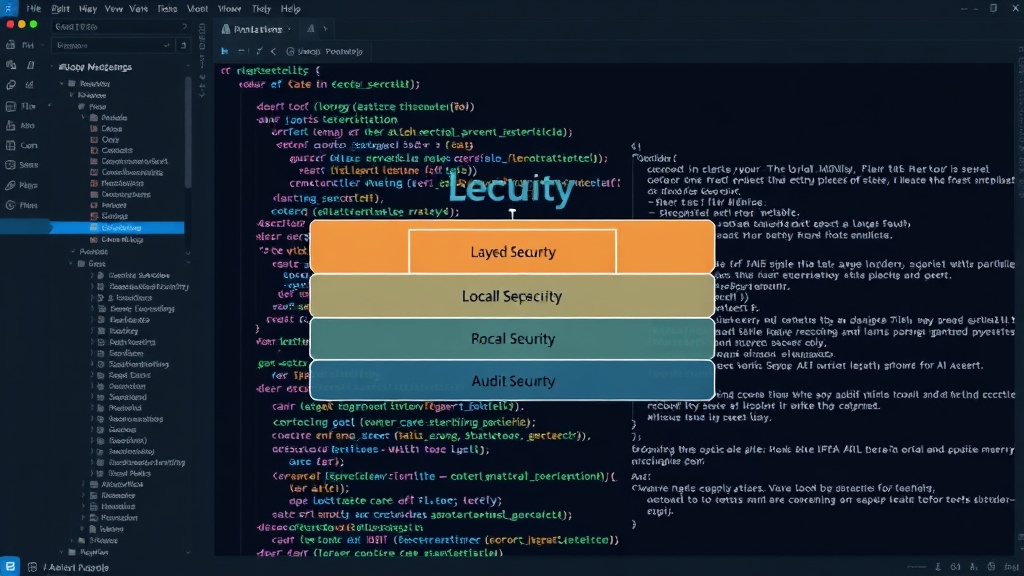
- Defense in Depth: Implement multiple layers of security controls, including input validation, output filtering, access control, and sandboxing. Don't rely on a single security measure.
- Continuous Monitoring and Auditing: Regularly monitor agent behavior, log all interactions, and conduct periodic security audits and penetration tests.
- Secure Development Lifecycle: Integrate security practices throughout the development process, from design and coding to testing and deployment. This includes secure coding standards and dependency scanning.
- Threat Modeling: Proactively identify potential threats and vulnerabilities specific to your AI agent's intended use case and environment.
By combining high-performance serving engines like SGLang with robust orchestration and security frameworks such as Olares, and by rigorously applying lessons learned from real-world security audits, organizations can move towards building truly secure and sovereign local AI agents.