SE3 Labs Emerges from Stealth with Spatial AI Platform
SE3 Labs, a Munich-based startup, has officially emerged from stealth, announcing its foundational spatial intelligence technology designed for the next generation of autonomous systems. The company has secured €7.6 million in seed funding from prominent investors including Lakestar, Seedcamp, EWOR, and G-Squared Capital. This funding round signifies strong confidence in SE3's mission to advance the capabilities of autonomous platforms across various sectors.
At its core, SE3's technology aims to create a unified spatial understanding for multiple autonomous systems, allowing them to operate and coordinate seamlessly within complex environments. This capability is particularly crucial for scenarios where human oversight is required but direct, granular control of each individual system becomes impractical or impossible. The platform focuses on building a persistent, high-fidelity digital twin of the operational environment, enabling AI to reason about space, object relationships, and dynamic events.
Voice Control for Complex Autonomous Operations
The most striking aspect of SE3's offering is its ambition to enable operators to control multiple autonomous systems using only their voice. This is not merely about issuing simple commands but about providing high-level, context-aware instructions that the spatial AI can interpret and translate into coordinated actions across a fleet of machines. Imagine an operator directing a swarm of drones for surveillance, or coordinating a team of ground robots for logistics, all through natural language commands that leverage the system's understanding of the physical world.
This approach moves beyond traditional command-and-control interfaces, which often require specialized training and focus on individual units. SE3's spatial AI acts as an intelligent intermediary, understanding the operator's intent within the context of the environment and the capabilities of the available autonomous systems. This is achieved by building a detailed, real-time 3D map of the surroundings, identifying objects, their states, and their potential interactions. The system can then predict outcomes of actions and suggest optimal strategies to the operator, or execute them autonomously if authorized.
Defense and Industrial Applications
While the technology has clear applications in defense, particularly for coordinating unmanned aerial vehicles (UAVs) and ground robots in surveillance, reconnaissance, and tactical operations, SE3 is also targeting industrial use cases. Sectors such as logistics, manufacturing, and infrastructure inspection stand to benefit from more efficient and intuitive management of autonomous fleets. For instance, a warehouse manager could direct a team of robots to clear a path or reconfigure a storage area using voice commands, with the SE3 platform handling the complex pathfinding and collision avoidance.
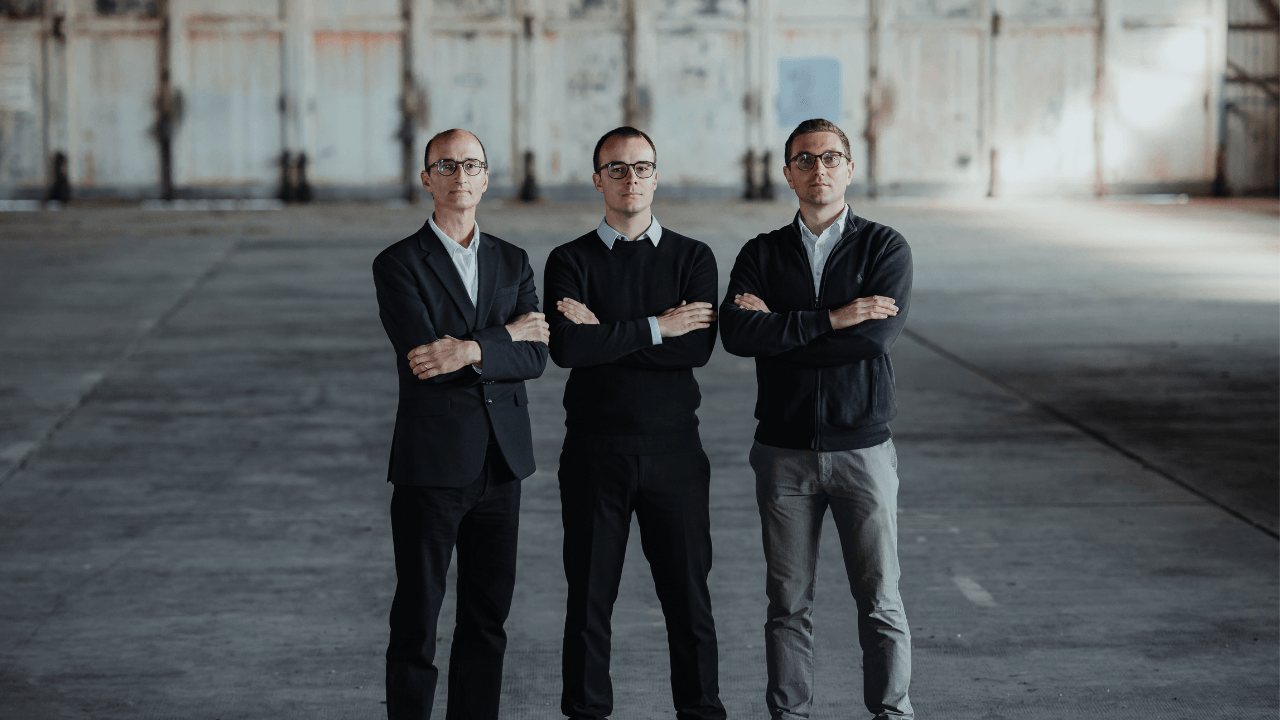
The company's leadership, including CEO Julian Fernandez and CTO Dr. Benno Öhm, emphasizes the foundational nature of their spatial AI. They aim to provide a robust platform that can be adapted to a wide range of autonomous hardware and software stacks. This modular approach is key to their strategy, allowing them to integrate with existing systems and avoid being tied to specific hardware manufacturers. The technology is built on a 3D, eight-layer spatial representation, enabling detailed environmental understanding and reasoning.
Technical Underpinnings and Future Vision
SE3's platform focuses on creating a digital twin of the operational environment. This involves fusing data from various sensors – lidar, cameras, radar, and inertial measurement units (IMUs) – to build a comprehensive and dynamic 3D model. The AI then reasons over this model to understand object relationships, predict future states, and plan actions. This spatial reasoning capability is what allows the system to interpret high-level commands and translate them into precise movements and coordinated behaviors for multiple agents.
The company is also exploring the integration of advanced sensor fusion techniques and machine learning models to enhance the AI's understanding of complex scenarios, including human presence and unpredictable events. The long-term vision is to create a ubiquitous spatial intelligence layer that can underpin any autonomous system, making them more capable, safer, and easier to operate. This could fundamentally change how humans interact with and deploy robotic systems in the future.
The €7.6 million seed funding will be instrumental in scaling SE3's engineering team, accelerating product development, and expanding its market reach. The company plans to conduct extensive field trials with early partners in both defense and industrial sectors to validate and refine its technology. The challenge ahead lies in proving the reliability and safety of voice-controlled autonomous systems in high-stakes environments, a hurdle SE3 is clearly positioning itself to overcome.
What remains to be seen is how SE3's spatial AI will handle the inherent ambiguities and complexities of real-world environments, especially in dynamic military or industrial settings. The ability to consistently interpret nuanced voice commands and ensure robust, predictable behavior from multiple autonomous agents under pressure will be the ultimate test of their spatial intelligence claims.