
Automated Proxy Performance Benchmarking
Selecting the right proxy for web scraping is a critical, often time-consuming task. Proxies vary wildly in reliability, speed, and success rate, especially when targeting specific websites. ScrapeOps, a company known for its web scraping infrastructure and monitoring tools, has launched a new product aimed at simplifying this selection process: Proxy Tester.
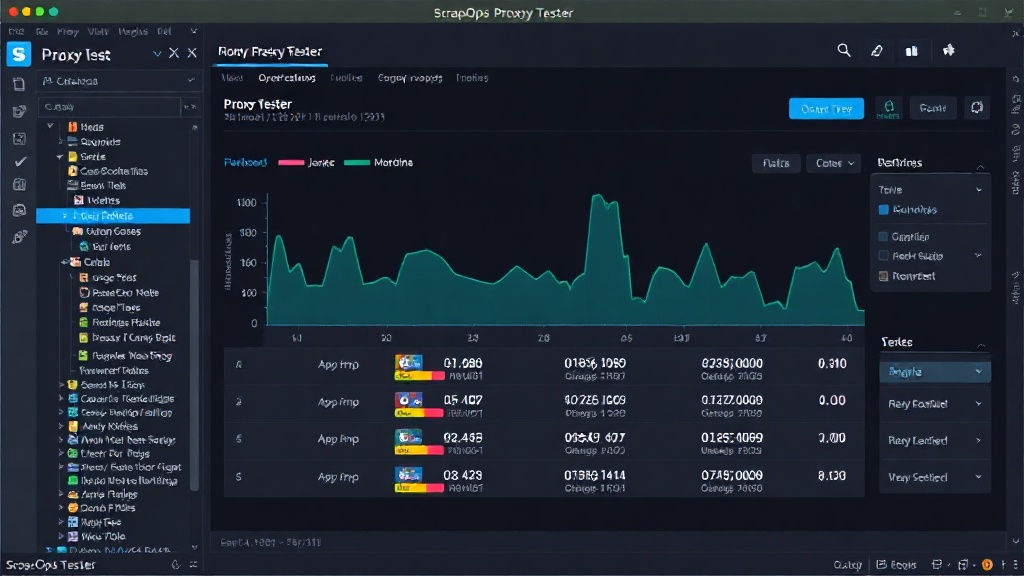
The core function of Proxy Tester is to benchmark proxies against defined target websites. This moves beyond generic proxy quality metrics and focuses on practical performance for actual scraping tasks. Users can input a list of proxies and specify the websites they intend to scrape. The tool then systematically tests each proxy against these targets, measuring key performance indicators relevant to successful scraping.
This approach is vital because a proxy that performs well on one site might fail spectacularly on another. Factors like IP reputation with specific hosting providers, CAPTCHA challenges unique to a site's security setup, and rate limiting policies all influence a proxy's effectiveness. Proxy Tester aims to provide data-driven insights into which proxies are most likely to succeed for a given scraping project, reducing the guesswork and manual effort involved.
Key Features and Functionality
Proxy Tester offers several features designed to streamline the proxy selection workflow:
- Targeted Testing: Users define specific websites to test proxies against. This ensures relevance to their actual scraping needs, unlike generic ping tests.
- Performance Metrics: The tool measures critical metrics such as success rate (percentage of successful requests), average response time, and failure rate. This quantitative data allows for objective comparison.
- Proxy List Management: It supports importing and managing lists of proxies, making it easy to test new batches or re-evaluate existing ones.
- Reporting: Results are presented in a clear, actionable format, allowing users to quickly identify the best-performing proxies for their specific targets.
The underlying mechanism involves sending requests from each proxy to the specified target URLs. The tool analyzes the responses, categorizing them as successful, failed, or timed out. It also logs the time taken for each request to complete, providing a measure of latency. This granular data is then aggregated to provide an overall performance score or ranking for each proxy relative to the tested targets.
Why Proxy Testing Matters for Web Scraping
Web scraping is an essential technique for data collection across many industries, from e-commerce and market research to AI training data acquisition. However, websites actively try to prevent automated access through various measures, including IP blocking, CAPTCHAs, and sophisticated bot detection systems. Proxies are used to circumvent these measures by routing traffic through different IP addresses.
The challenge is that the effectiveness of these IP addresses is not static. A proxy that worked yesterday might be blocked today. Furthermore, different websites employ different detection strategies. A proxy might be good at bypassing Cloudflare on one site but struggle with Akamai on another. Without proper testing, scrapers often face high failure rates, leading to incomplete data sets, wasted resources, and increased operational costs.
Proxy Tester directly addresses this pain point. By providing concrete performance data for specific targets, it empowers developers and data professionals to make informed decisions. Instead of relying on anecdotal evidence or generic proxy provider claims, users can see empirical results tailored to their use case. This is akin to a mechanic not just checking if a car engine turns over, but if it can actually win a race on a specific track.
Implications for the Scraping Ecosystem
For web scraping professionals, Proxy Tester offers a way to optimize their infrastructure and improve the efficiency of their data collection operations. By identifying high-performing proxies, they can reduce the number of IP addresses needed, lower the risk of blocks, and ensure more consistent data acquisition. This translates directly into cost savings and more reliable data pipelines.
The tool also has implications for proxy providers. Those offering proxies that consistently perform well in targeted tests will likely gain a competitive advantage. Conversely, providers whose proxies show poor performance against common scraping targets may need to improve their infrastructure, IP rotation strategies, or detection bypass capabilities. The emphasis on target-specific benchmarking could drive innovation and specialization within the proxy market.
For companies building AI models that rely on large-scale web data, the ability to procure and verify reliable proxies is paramount. Inaccurate or incomplete data due to proxy failures can lead to biased or flawed models. Proxy Tester provides a crucial step in ensuring the quality and integrity of the foundational data used in AI development. It helps to mitigate the risk of data poisoning or the introduction of noise that could degrade model performance.
The development of tools like Proxy Tester signifies a maturing of the web scraping industry. As scraping becomes more sophisticated and websites deploy more advanced anti-bot measures, the tools and services supporting scraping operations must evolve in parallel. ScrapeOps' offering addresses a fundamental need for reliable, performant proxy selection, moving the practice towards a more data-driven and less trial-and-error approach.