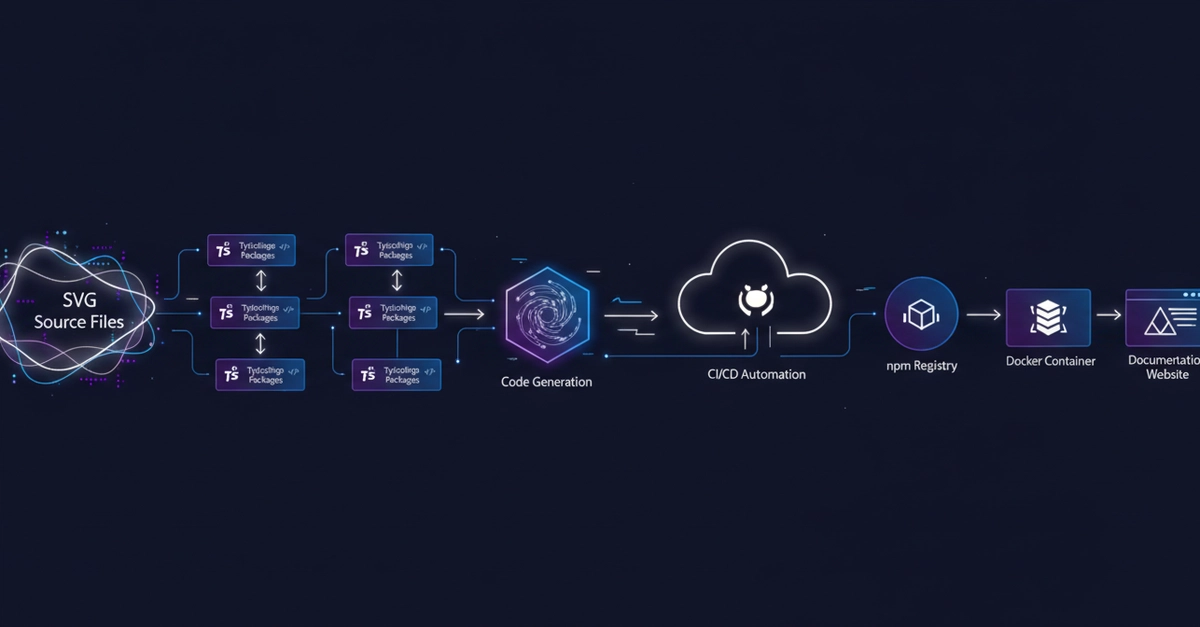
The Monorepo Release Pain Point
Maintaining multiple npm packages within a single Git repository presents a unique set of challenges, particularly when it comes to releasing new versions. The process often involves tedious manual steps: bumping version numbers across different packages, ensuring they are published in the correct dependency order, and meticulously verifying each step. For teams managing even a few packages, this manual burden quickly becomes a significant bottleneck and a prime source of errors. Multiply this by four or more packages, and release day transforms from a routine operation into a high-stakes, error-prone endeavor.
This article outlines a robust, automated release pipeline designed to tackle these issues head-on. The goal is to establish a system that is not only reliable but also scalable, adaptable to any monorepo shipping multiple distinct packages. While the concrete example used is Nava Icon, the architectural patterns and principles discussed are broadly applicable to any multi-package monorepo setup.
Defining "Deployment" for Libraries
Unlike applications deployed to servers, the concept of "deployment" for libraries and packages carries a different meaning. For library authors, deployment signifies making a new, stable version of their code accessible to other developers. This typically involves:
- Versioning: Correctly incrementing the version number according to semantic versioning (SemVer) principles.
- Building: Compiling and bundling the package, ensuring all necessary assets are included.
- Publishing: Uploading the new version to a package registry (e.g., npm, Yarn).
- Testing/Verification: Ensuring the published package functions as expected, often by running tests against it or integrating it into a staging environment.
- Documentation: Updating and deploying relevant documentation, such as README files or generated API docs.
An effective release system automates these distinct phases, transforming a complex, multi-step manual process into a streamlined, reliable workflow.
Core Components of an Automated Release Pipeline
A production-ready release pipeline for a multi-package monorepo hinges on several key components working in concert. These components address the core challenges of managing dependencies, ensuring code quality, and automating the release process.
Version Management Strategy
Accurate version management is foundational. Relying on manual version bumps is a recipe for disaster in a monorepo. The system should leverage tools that can automatically determine the next version number based on code changes. This typically involves:
- Automated Version Bumping: Tools like
changesetsorlerna versioncan analyze Git commit history or specific change files to suggest or automatically apply SemVer-compliant version increments. This removes human error from the versioning process. - Dependency Graph Awareness: The system must understand the dependency relationships between packages within the monorepo. When package A depends on package B, updating package B must correctly trigger a potential update for package A.
Automated Publishing Workflow
Once versions are determined, the next critical step is publishing to the package registry. This phase requires careful orchestration:
- Publishing Order: Packages must be published in an order that respects their dependencies. A package that is depended upon must be published before the packages that depend on it.
- Conditional Publishing: The pipeline should only publish packages that have actually changed. Unchanged packages should be skipped to avoid unnecessary registry operations and potential version conflicts.
- Authentication: Securely managing authentication credentials for the package registry is paramount. This is often handled through environment variables or dedicated secrets management tools within the CI/CD environment.
Containerized Verification
Simply publishing a package is not enough. Robust verification ensures the published artifact is stable and correct. Containerization offers a clean, isolated environment for this:
- Isolated Test Environments: Spin up Docker containers that mimic production or staging environments. Within these containers, install the newly published packages and run integration tests.
- Dependency Resolution Testing: Test that other packages within the monorepo (or even external dependent projects) can correctly resolve and install the new versions. This is crucial for catching subtle dependency conflicts.
- Rollback Strategy: In the event of verification failures, the pipeline must have a mechanism to automatically roll back the published versions or prevent further propagation of the faulty release.
Documentation Deployment
Up-to-date documentation is vital for library adoption. The release process should include automated documentation updates:
- API Documentation Generation: Tools like TypeDoc can generate API documentation directly from TypeScript type definitions.
- Static Site Deployment: Deploying generated documentation to static hosting platforms (e.g., GitHub Pages, Netlify, Vercel) ensures it's readily available alongside the package release.
Implementation Considerations
Building such a pipeline involves selecting the right tools and structuring your CI/CD workflows effectively. Consider the following:
- CI/CD Platform: GitHub Actions, GitLab CI, Jenkins, or CircleCI can all be leveraged. The choice often depends on existing infrastructure and team familiarity.
- Monorepo Tooling: Tools like Lerna, Nx, or Yarn Workspaces help manage dependencies and scripts across packages.
- Release Automation Tools: Libraries like
changesetsare specifically designed to simplify versioning and publishing in monorepos. - Scripting: Bash scripts or more sophisticated scripting languages can orchestrate complex multi-step processes within your CI/CD jobs.
The key is to treat the release process as a first-class citizen in your development workflow, investing in automation to save time, reduce errors, and improve developer experience. This approach transforms release day from a dreaded chore into a predictable, automated event.