
Choosing Your Thumbnail Architecture for Small SaaS
When building a small SaaS application that handles user-uploaded images, the initial architecture for generating and serving thumbnails is a critical decision. Developers face a choice: leverage object storage, integrate an image Content Delivery Network (CDN), or implement a synchronous resize-on-upload process. The most pragmatic approach for early-stage SaaS, particularly those prioritizing stability and manageable operations, is to opt for a robust object storage solution combined with a background worker process for thumbnail generation. This strategy decouples image storage from compute, simplifies application logic, and provides measurable operational metrics.
The core principle is to treat original image files and their derived thumbnail versions as distinct entities. By storing originals in object storage (like AWS S3, Google Cloud Storage, or Azure Blob Storage) and having a backend worker generate each required thumbnail as a separate, deterministically keyed object, the application can reliably request specific image sizes. This deterministic keying means the application always knows the exact path to a thumbnail, rather than relying on dynamic URL transformations. This design choice separates the durable storage of bytes from the compute required for transformations, which is a fundamental architectural principle for building resilient systems. It allows teams to monitor queue depths and completion rates, attaching Service Level Objectives (SLOs) to these critical background processes. This is the "boring design" that minimizes operational surprises and pager duty for a platform team.
Why Not Edge Transformation or Synchronous Resize?
Edge transformation services, while powerful, introduce complexity that can be a liability for a small, growing SaaS. These services often rely on dynamic URL parameters to specify image dimensions, formats, and other manipulations. While flexible, this approach can lead to opaque error handling and debugging. If an edge service fails or misinterprets a URL parameter, it can be difficult to diagnose without deep access to the CDN's internal workings. For a small team, this lack of transparency can turn a minor image issue into a significant operational headache.
Synchronous resize-on-upload, where the image is transformed as part of the user's upload request, presents its own set of problems. This approach directly impacts the user experience by increasing upload times. A slow upload directly attributable to image processing can lead to user frustration and abandonment. Furthermore, it ties compute resources directly to the user's incoming request path. If image processing is CPU-intensive, it can saturate server resources, impacting other critical application functions. Scaling such a system requires scaling the web servers or API endpoints that handle uploads, which might not be the most efficient use of resources, especially if only a subset of uploads require significant processing. This tightly couples the user's upload to the availability and performance of the image processing pipeline, making it a single point of failure or performance bottleneck.
The Object Storage and Worker Pattern Detailed
The recommended pattern involves three main components:
- Object Storage for Originals: Store all uploaded images in their original format and resolution in a cost-effective object storage service. This ensures that the master copy of the image is always available and safely durably stored.
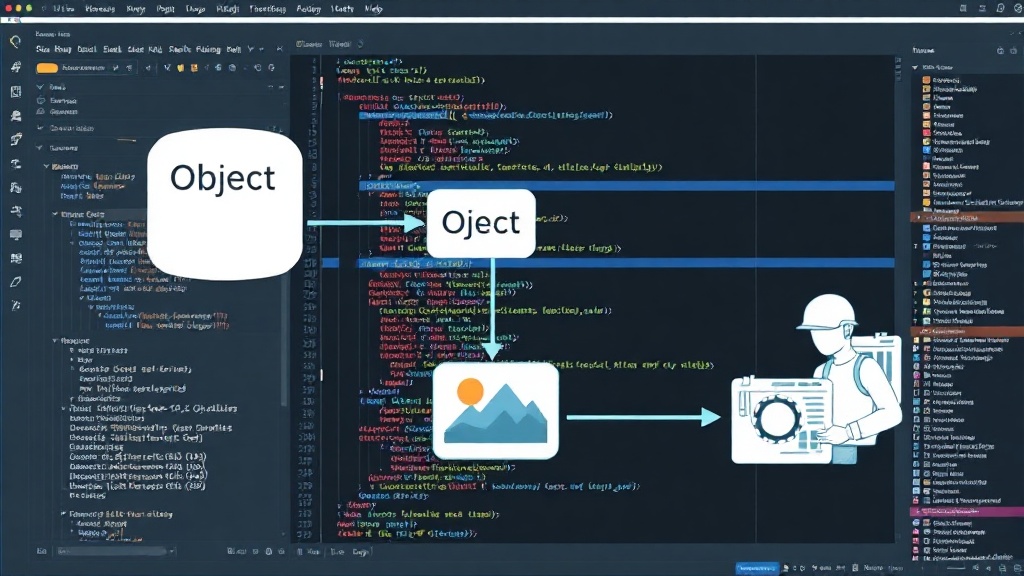
- Background Worker for Thumbnail Generation: Implement a worker process that listens for new original images added to object storage. Upon detecting a new image, this worker retrieves the original, generates the required thumbnail sizes (e.g., 100x100, 300x300, 600x600), and saves each thumbnail as a separate object in the same or a different object storage bucket. The key for each thumbnail object should be deterministic, often derived from the original image's key plus a suffix indicating the size (e.g.,
user-uploads/abc123def/original.jpganduser-thumbnails/abc123def/100x100.jpg). - Application Access: The application's backend or frontend code then requests the specific thumbnail URL directly from the object storage. For serving, these objects can either be served directly from object storage (if latency is acceptable and public access is managed) or, more commonly, served via a dedicated image CDN that caches these objects at the edge.
This decoupled approach offers several advantages:
- Resilience: If the thumbnail generation worker fails, it doesn't impact the user's ability to upload or view original images. The worker can be retried, and the system can continue to operate.
- Scalability: The worker pool can be scaled independently of the web servers. If thumbnail generation becomes a bottleneck, more worker instances can be spun up without affecting the application's request handling capacity.
- Observability: Monitoring the queue depth and processing rate of the thumbnail generation worker provides clear metrics for performance and potential issues.
- Cost-Effectiveness: Object storage is typically very cost-effective for storing large numbers of files. Generating thumbnails as separate objects means they can be managed, cached, and served efficiently.
When to Consider an Image CDN as Primary
While the object storage and worker pattern is excellent for initial development and many small SaaS applications, there are scenarios where a dedicated image CDN or a service that offers edge transformations becomes more appropriate. If your product's core requirement involves dynamically generating an unlimited number of arbitrary image dimensions on-the-fly, or if permanent, globally distributed public image links are a primary feature, then an image CDN is likely necessary. Services like Cloudflare Images, Imgix, or Cloudinary provide sophisticated on-demand image manipulation at the edge. These services abstract away the complexities of image resizing and delivery, offering APIs that generate transformed images directly from a single master asset stored elsewhere (often also in object storage). However, adopting such a service too early can obscure underlying costs and complexities, and it might be overkill for applications with predictable thumbnail needs.
Consider the product's actual image contract. If the UI consistently requires fixed avatar sizes (e.g., 64x64, 128x128) and perhaps a medium preview size, the object storage and worker pattern is sufficient. If, however, users can request any aspect ratio, crop on the fly, or apply real-time filters via URL parameters, an edge transformation service becomes more compelling. The decision hinges on whether image manipulation is a core feature requiring dynamic, on-demand generation or a background task supporting predictable UI elements.
For a small SaaS starting out, the goal is to defer complexity. Building a system that reliably stores originals, generates known thumbnail variants asynchronously, and serves them efficiently is the most robust path. This allows the team to focus on core product features while maintaining operational stability. As the product grows and image handling requirements become more sophisticated, migrating to or integrating with an edge-based image service can be a logical next step, but it should not be the initial critical path.