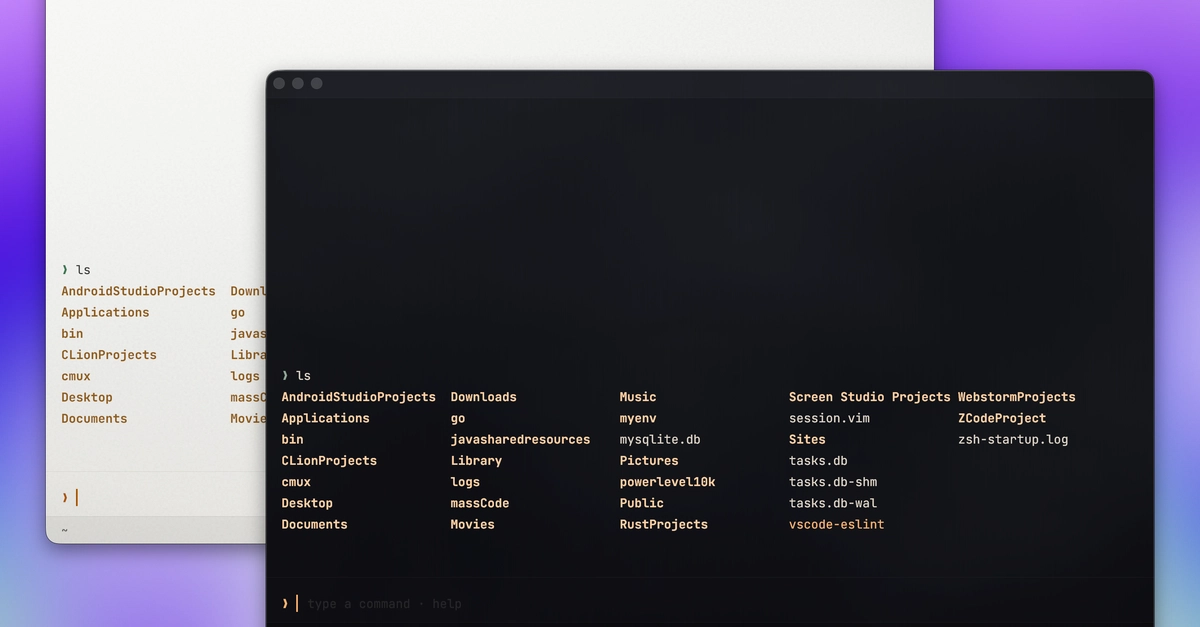
Metalterm: A New Terminal Built for Performance
The macOS terminal landscape has a new contender: Metalterm. Released recently, this native terminal emulator built with Rust and Metal aims to redefine performance benchmarks. Its creator, who goes by pioner92, set out to explore the outer limits of terminal capabilities by treating rendering performance, latency, memory usage, and overall smoothness as paramount concerns, not afterthoughts. The result is a compact application, currently around 10 MB, that utilizes a custom Metal renderer. This setup allows Metalterm to complete each frame in approximately 0.22 ms of GPU time. At a 120 Hz refresh rate, this represents a mere 2.6% of the available 8.33 ms frame budget, indicating significant headroom for complex rendering tasks.
Why Another Terminal?
The question of 'why build another terminal?' is a valid one. The terminal emulator space is not empty. Projects like Ghostty, Rio, Kitty, and Alacritty have already achieved impressive performance levels, pushing the boundaries of what was previously thought possible. However, Metalterm’s developer identified specific areas for further exploration. The core philosophy behind Metalterm is to achieve near-instantaneous responsiveness and minimal resource consumption by rethinking the rendering pipeline from the ground up. This isn't about adding more features; it's about perfecting the core experience of displaying text and handling input with maximum efficiency.
Technical Foundations: Rust and Metal
The choice of Rust for the core logic is deliberate. Rust’s emphasis on memory safety and performance makes it an ideal candidate for building system-level applications where reliability and speed are critical. Its fearless concurrency features also simplify the development of a responsive application that can handle background tasks without blocking the user interface. For the rendering backend, Metal was the clear choice for macOS. Metal, Apple's low-level graphics and compute API, provides direct access to the GPU, enabling highly optimized rendering pipelines. By bypassing higher-level abstractions, Metalterm can achieve lower latency and higher throughput than traditional OpenGL or software-based rendering solutions.
Performance Metrics and Optimization
The reported metrics for Metalterm are striking. A 10 MB footprint is remarkably small for a modern native application, especially one that competes on performance. The 0.22 ms GPU time per frame at 120 Hz is equally impressive. This efficiency suggests that Metalterm is not just fast but also incredibly lightweight, making it suitable for a wide range of macOS hardware, from older machines to the latest high-end devices. The optimization efforts likely focused on several key areas:
- Glyph Rendering: Efficiently rasterizing and caching text glyphs is crucial for terminal performance. Metalterm's custom renderer likely employs advanced techniques for this.
- Buffer Management: Handling large scrollback buffers and rapid updates requires optimized memory management and data transfer to the GPU.
- Input Latency: Minimizing the time between a key press and the character appearing on screen is paramount. This involves tight integration between input handling and the rendering loop.
- Shader Optimization: The Metal shaders themselves must be highly tuned to leverage the GPU's parallel processing capabilities effectively.
The Impact of GPU Acceleration
GPU acceleration in terminals is not entirely new, but Metalterm's approach seems to prioritize raw rendering efficiency above all else. Traditional terminals often rely on CPU-bound rendering, which can become a bottleneck when dealing with large amounts of text, complex fonts, or high refresh rates. By offloading the rendering process to the GPU via Metal, Metalterm can parallelize the drawing of characters, lines, and other elements. This is particularly beneficial for tasks like scrolling through long logs, displaying dynamic output, or running applications that generate a high volume of text updates. The result is a smoother, more fluid user experience that feels more responsive, even under heavy load.
What’s Next for Metalterm?
While Metalterm is currently a macOS-exclusive application, the underlying principles of building a performant terminal with modern graphics APIs could inspire cross-platform efforts. The developer has made the project open source, inviting community contributions and further development. The focus on minimal resource usage and maximum rendering speed positions Metalterm as a compelling option for developers, system administrators, and power users who demand the best performance from their command-line interface. The surprising detail here is not just the low memory footprint, but the aggressive prioritization of rendering efficiency over feature bloat, a refreshing approach in today's software landscape.
The primary question for users and developers alike is how Metalterm’s architecture will scale with more complex terminal applications or features like true color support, ligatures, and advanced rendering effects. Can this lean, mean, GPU-powered machine handle the next generation of terminal-based workflows without compromise?