
Rust: A Modern Take on Systems Programming
Rust, initially developed by Mozilla and now propelled by a vibrant community, is rapidly becoming the system programming language of choice. It directly addresses the long-standing pain points of C and C++: memory safety and concurrency. The core innovation of Rust lies in its ability to ensure memory safety during compilation, entirely bypassing the need for a garbage collector. This fundamental design principle results in exceptionally fast and reliable software.
The language's approach to managing memory is what truly sets it apart. Instead of relying on a runtime garbage collector, which can introduce performance overhead and unpredictable pauses, Rust enforces strict rules at compile time. This guarantees that memory is managed correctly, preventing common bugs like null pointer dereferences, buffer overflows, and data races before the code even runs.
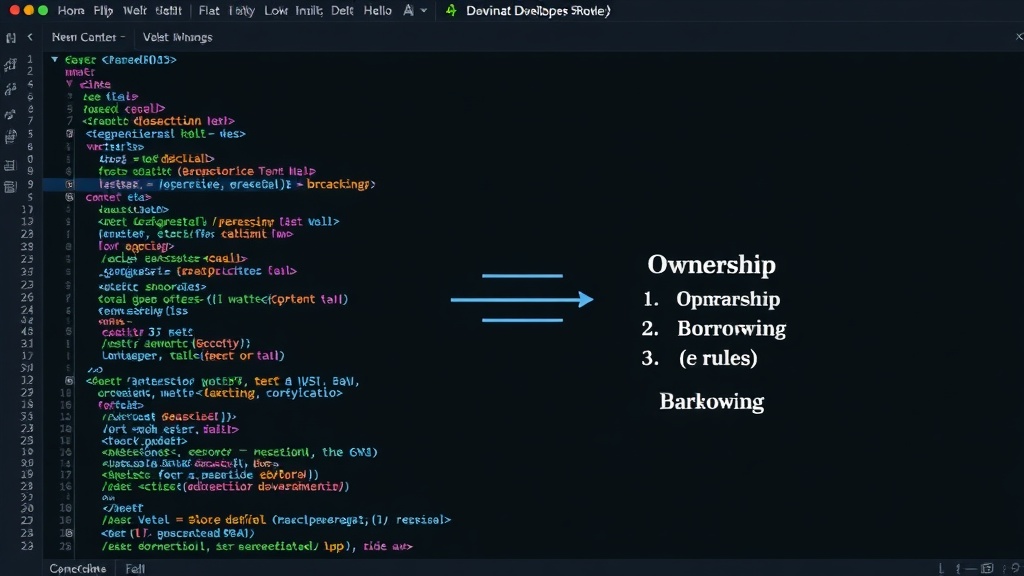
Ownership and Borrowing: The Core of Rust's Safety
At the heart of Rust's memory safety guarantee is its unique ownership system. The compiler meticulously tracks how memory is accessed and managed, ensuring that there are no dangling pointers or data races. If a programmer attempts to create multiple mutable references to the same piece of data simultaneously, the code will simply fail to compile. This compile-time enforcement is a paradigm shift from languages where such errors only manifest at runtime, often in production.
Ownership means that each value in Rust has a variable that's its 'owner'. There can only be one owner at a time. When the owner goes out of scope, the value is dropped. This is analogous to how individual team members are responsible for specific tasks; when they leave the project, those tasks must be reassigned or completed before they can be abandoned.
Borrowing, on the other hand, allows other parts of the program to access data without taking ownership. This can be done immutably (multiple readers allowed) or mutably (only one writer allowed at any given time). This strict rule prevents data races, a common source of bugs in concurrent programming. The compiler acts as a vigilant code reviewer, catching potential issues that other languages might miss until much later.
Performance Without Compromise
The absence of a garbage collector means that Rust applications can achieve performance comparable to C and C++. This makes it an ideal choice for performance-critical applications such as operating systems, game engines, web browsers, and embedded systems. Developers don't have to choose between safety and speed; Rust provides both.
Consider a scenario where a web server needs to handle thousands of concurrent requests. In languages with garbage collection, the server might experience brief lags as the GC runs, impacting response times. Rust's predictable performance, free from GC pauses, ensures consistent low latency, which is crucial for high-throughput applications. The language's control over memory layout and its efficient concurrency primitives further contribute to its performance edge.
Developer Experience and Ecosystem
While Rust's safety features are paramount, its focus on developer experience is equally compelling. The compiler provides exceptionally helpful error messages, often suggesting specific fixes. This makes the learning curve, though initially steep due to the ownership system, more manageable than one might expect.
The Rust ecosystem is also rapidly maturing. Cargo, the package manager and build system, is a standout feature. It simplifies dependency management, testing, and building, streamlining the development workflow. The growing number of high-quality libraries (crates) available on crates.io covers a wide range of use cases, from web development (frameworks like Actix-web and Rocket) to data science and embedded systems. This rich ecosystem reduces the need for developers to reinvent the wheel, accelerating development cycles.
Community and Adoption
The Rust community is known for being welcoming and active. This collaborative environment fosters continuous improvement of the language, its tools, and its documentation. Major technology companies like Microsoft, Amazon, and Google are increasingly adopting Rust for critical components of their infrastructure. This adoption signals a broader industry trend towards prioritizing safety and performance in software development.
For developers, the growing adoption means more job opportunities and a larger pool of resources for learning and problem-solving. The language is not just a niche tool; it's becoming a mainstream option for building robust and efficient software. This widespread acceptance is a strong indicator of Rust's long-term viability and impact on the software development landscape.