The AI Authorization Problem
AI-enabled Software-as-a-Service (SaaS) products face a common and critical failure mode: ensuring that AI agents respect tenant-specific data boundaries. Imagine a support agent assisting a user from tenant-a. The user requests information about a contract, and the AI model generates a tool call like get_contract("contract-b"). While the tool call itself is syntactically correct and the tool exists, the critical flaw is that contract-b might belong to tenant-b, not the user's current tenant. This oversight can lead to data leaks and significant security vulnerabilities.
While refining prompts can reduce the frequency of such errors, prompts alone cannot serve as a robust authorization boundary. The complexity of natural language and the inherent unpredictability of AI models mean that relying solely on prompt engineering for security is insufficient. A more programmatic and reliable enforcement mechanism is necessary to guarantee that AI actions remain confined within the appropriate data scope.
Introducing TenantInvariant
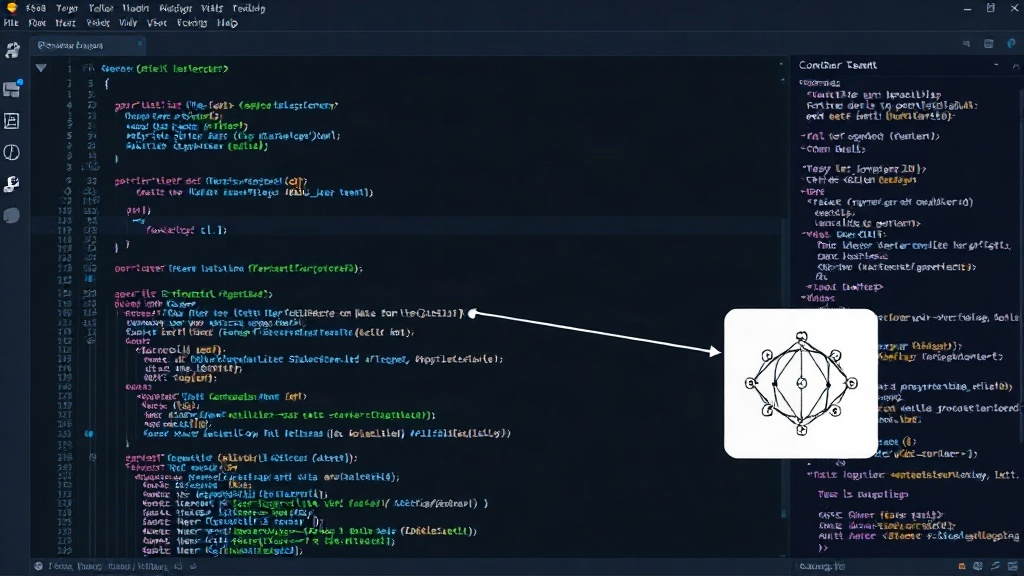
To address this gap, an experimental Rust crate named TenantInvariant has been developed. This crate aims to explore and implement a more secure approach to managing tenant data access within AI tool calls. The core idea is to introduce a programmatic guard that verifies the tenant context of any data accessed or manipulated by an AI agent.
TenantInvariant operates by intercepting tool calls generated by AI models. Before execution, it cross-references the requested resource (e.g., a contract ID, a user profile) against the current user's tenant ID. If a mismatch is detected, the tool call is blocked, preventing unauthorized data access. This mechanism acts as a crucial layer of defense, ensuring that AI agents function strictly within their designated operational boundaries.
How TenantInvariant Works
The crate provides a framework for defining and enforcing tenant invariants. Developers can integrate TenantInvariant into their AI agent architectures, typically as a middleware component. When an AI model produces a tool call, the call is routed through TenantInvariant. The crate then performs the following checks:
- Tenant Context Identification: It identifies the tenant associated with the current user or request. This is usually derived from session data, authentication tokens, or API gateway information.
- Resource Tenant Association: It determines the tenant to which the resource targeted by the tool call belongs. This often requires a lookup in the application's data store, where each resource is tagged with its owning tenant ID.
- Invariance Check: It compares the user's tenant ID with the resource's tenant ID.
- Enforcement: If the IDs do not match, the tool call is rejected, and an appropriate error is returned. If they match, the tool call is allowed to proceed to execution.
The implementation in Rust leverages the language's strong type system and performance characteristics to provide a secure and efficient solution. Rust's memory safety features also contribute to preventing potential vulnerabilities that could arise in less robust languages.
Developer Experience and Integration
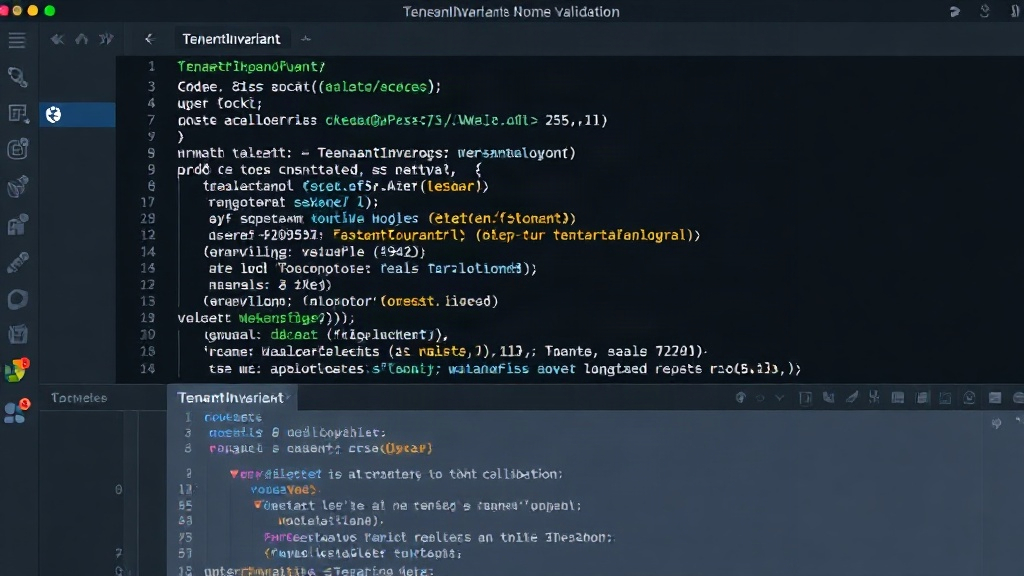
Integrating TenantInvariant into an existing AI-powered application involves defining the relevant tool signatures and ensuring that resource lookups correctly return tenant information. The crate is designed to be flexible, allowing developers to customize how tenant associations are determined and how violations are handled.
For developers building AI agents, this means shifting the responsibility of tenant boundary enforcement from the prompt engineering layer to a dedicated, verifiable code component. This not only enhances security but also simplifies the prompt design process, allowing developers to focus on the AI's core logic and capabilities rather than complex authorization constraints within the prompt itself.
The experimental nature of TenantInvariant suggests that while the concept is sound, practical implementation details and optimizations will evolve. However, the principle remains clear: programmatic enforcement of tenant boundaries is essential for secure AI applications.
Broader Implications for AI Security
The challenge highlighted by TenantInvariant is not unique to AI agents. Multi-tenant SaaS applications have grappled with authorization for years. However, the opaque nature of AI models and their ability to generate complex, indirect actions introduce new attack vectors. An AI might not directly request data from another tenant, but it could, for instance, ask a question that implicitly requires accessing such data to provide a coherent answer.
TenantInvariant offers a concrete pattern for mitigating these risks. It underscores the importance of treating AI agents not as infallible oracles, but as components that require robust security controls, much like any other part of a software system. As AI integration becomes more pervasive, similar patterns for enforcing data privacy and access control will become indispensable.
The question remains: what other implicit assumptions are AI models making about data access, and how can we build similar programmatic safeguards for them? The development of tools like TenantInvariant is a crucial step in building trustworthy AI systems that operate securely in complex, multi-user environments.