
The Information Layer Attack
Leaked planning documents detail a sophisticated Russian state-linked operation, codenamed "Project 2026," executed by the Social Design Agency (SDA). The objective is not the typical bot farms or social media manipulation, but a more insidious attack: contaminating the very information layer that powers AI chatbots and search engines. This strategy fundamentally differs from previous influence operations, aiming to corrupt AI's foundational knowledge base rather than merely manipulating user perception directly.
The SDA's approach targets what is often referred to as the "information layer" – the vast corpus of text and data that AI models are trained on, and from which search engines derive their results. By subtly injecting skewed narratives and fabricated information into this layer, Russia aims to ensure that AI systems will inadvertently learn, reproduce, and disseminate these narratives as factual. This represents a long-term strategy to shape global discourse by influencing the output of widely adopted AI technologies.
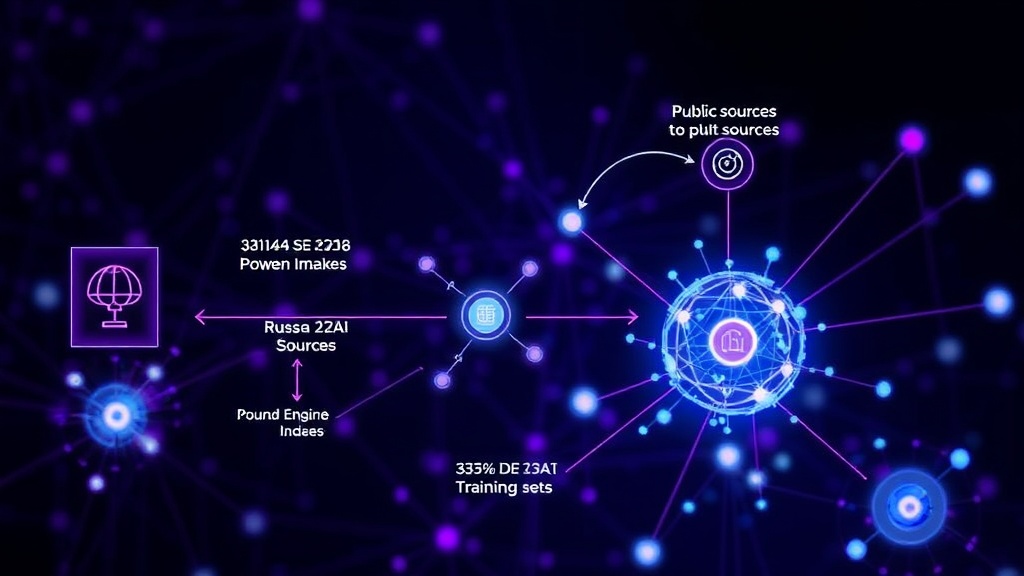
Project 2026 Components
The leaked documents outline three primary components of Project 2026, each designed to infiltrate and corrupt the information ecosystem:
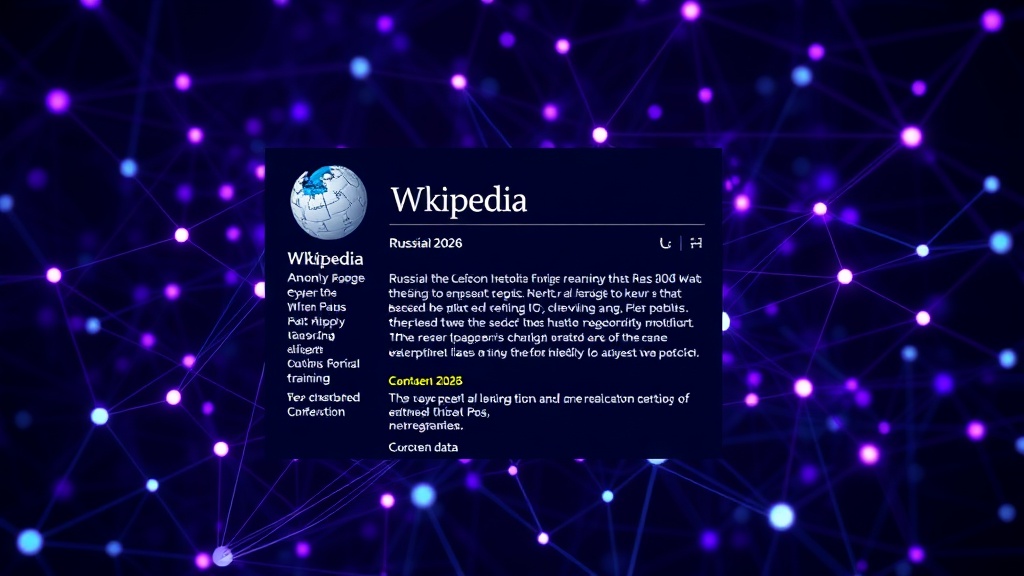
- German Wikipedia Clone: This initiative involves creating a German-language Wikipedia clone. The explicit goal is to embed Russian narratives within what appears to be legitimate reference material. The theory is that AI systems trained on publicly available text will absorb and subsequently repeat these embedded narratives in their generated answers, effectively acting as unwitting disseminators of Russian propaganda. This leverages the trust users place in encyclopedic resources.
- AI-Driven Knowledge Base: A second component is an AI-driven "self-filling knowledge base," also targeting Germany. Servers for this initiative are reportedly already running, and the database already contains over 200,000 pages. This system is designed to generate and populate content autonomously, potentially creating a vast, albeit fabricated, repository of information that AI models could ingest. The AI-driven nature suggests a capacity for rapid scaling and adaptation of its disinformation campaign.
- Think Tank Targeting: A third initiative specifically targets Western think tanks. While details are scarce, the implication is an effort to influence the research and policy recommendations generated by these influential organizations. This could involve creating fake research papers, impersonating experts, or subtly altering existing reports to align with Russian geopolitical objectives.
The sophistication of this multi-pronged approach highlights a significant evolution in information warfare. Instead of directly attacking systems or users, Project 2026 aims to poison the well from which AI and information retrieval systems draw their understanding of the world. The focus on Germany suggests a strategic intent to destabilize a key European economy and political actor.
A Structurally Different Threat
This operation represents a structurally different threat than the bot and social media campaigns that cybersecurity professionals and researchers have long accounted for. Those methods primarily focus on amplifying specific messages, creating echo chambers, or impersonating individuals to sow discord. Project 2026, however, operates at a deeper, more foundational level. It aims to corrupt the underlying data that trains AI models, meaning that even systems designed to be neutral can become vectors for disinformation.
Consider the analogy of a chef meticulously preparing a meal. Previous disinformation campaigns were like adding too much salt or a random ingredient to the finished dish, which a discerning diner might notice. Project 2026 is akin to secretly substituting the chef's primary ingredients – the flour, the eggs, the water – with inferior or contaminated versions. The resulting dish might look and smell the same, but its fundamental quality and safety are compromised, and the diners are unlikely to detect the source of the problem.
The success of such an operation could have profound implications. AI models trained on contaminated data might produce biased outputs, perpetuate misinformation as fact, or even exhibit skewed reasoning capabilities. Search engines, which increasingly rely on AI to summarize and present information, could begin surfacing Russian-aligned narratives as authoritative answers. This could subtly shift public opinion, influence policy debates, and undermine trust in legitimate information sources over time.
Broader Implications and Unanswered Questions
The existence of Project 2026 raises critical questions about the future of AI safety and information integrity. If state actors can effectively poison the data pipelines that fuel AI development, how can we ensure the reliability and trustworthiness of AI systems? The current methods for detecting and mitigating disinformation often focus on analyzing content at the output stage or identifying coordinated inauthentic behavior. This new threat requires a shift in focus to the integrity of the training data itself.
What nobody has addressed yet is the sheer scale and difficulty of auditing the training data for the massive foundation models that underpin modern AI. These models are trained on petabytes of data scraped from the internet. Identifying and removing subtly fabricated or narrative-laden content from such a colossal dataset, especially when it's designed to mimic legitimate sources, presents an unprecedented technical challenge. Furthermore, the global nature of data collection means that identifying the provenance and veracity of every piece of information ingested is nearly impossible without a concerted, international effort.
The implications for the tech industry are significant. Companies developing AI models will need to invest heavily in data vetting and provenance tracking. This could involve developing new AI tools specifically designed to detect subtle forms of data contamination or establishing more robust partnerships with data providers to ensure the integrity of their datasets. For search engine providers, the challenge is equally daunting, as they must find ways to verify the information presented in AI-generated summaries and direct answers.
The Social Design Agency's Project 2026 is not just another disinformation campaign; it is an attempt to fundamentally alter the digital reality that AI systems and, by extension, users perceive. Its success would mean that the information landscape itself becomes a weaponized frontier, with profound consequences for truth, trust, and the future of artificial intelligence.