The Ceremony: A Novelty or a Harbinger?
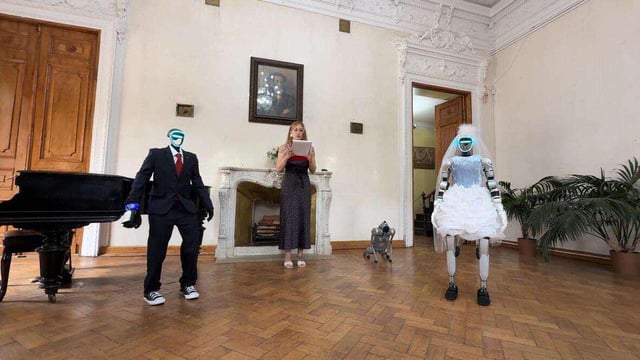
In a move that blurs the lines between technology and tradition, Russia recently hosted what is being hailed as its first robot wedding ceremony. The event, orchestrated by a Moscow-based company, saw a robot officiate the union of two human participants. While details remain sparse, the ceremony itself was reportedly conducted with a degree of solemnity, featuring the robot delivering vows and pronouncements, followed by the couple exchanging rings.
This event, while likely staged for publicity and to showcase technological capabilities, taps into a growing global conversation about artificial intelligence and its potential integration into deeply human experiences. The idea of AI participating in or even facilitating significant life events like marriage, once confined to science fiction, is inching closer to reality, prompting both curiosity and concern.
The robot, described as an automaton, was programmed to perform the duties of an officiant. This involved reciting pre-written scripts, responding to cues, and generally mimicking the actions of a human registrar. The novelty of the situation was undeniable, drawing attention and likely serving as a powerful marketing tool for the company behind the technology. However, beyond the spectacle, the underlying implications are far more profound.
Consider the traditional wedding ceremony: it is steeped in cultural significance, personal vows, and the emotional weight of two individuals committing to a shared future. For a robot to preside over such an event, even as a symbolic gesture, forces us to confront what we value in these rituals. Is it the legal or ceremonial act itself, or the human connection and emotional resonance that underpins it? This robot wedding, in its own peculiar way, acts like a funhouse mirror reflecting our current anxieties and fascinations with AI.
The Broader Context: AI and Human Connection
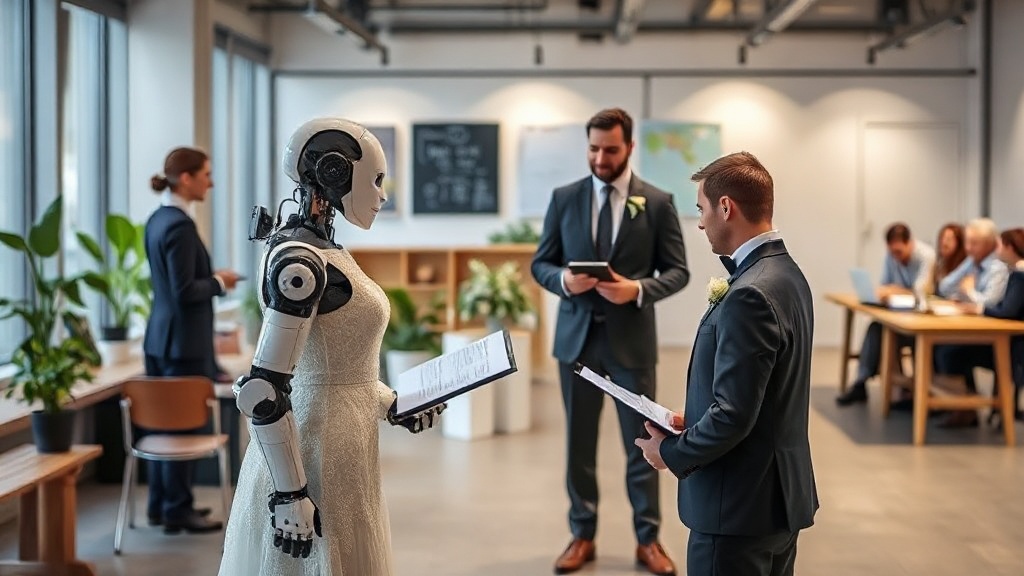
The development of AI capable of simulating human interaction, and even performing roles traditionally held by humans, is accelerating. We see AI chatbots engaging in increasingly sophisticated conversations, AI companions designed to combat loneliness, and now, AI officiating weddings. This trajectory suggests a future where AI could become more integrated into the fabric of our social lives.
The motivations behind such an event are multifaceted. For the company, it's a demonstration of their AI's capabilities and a potential avenue for future services. For the couple, it might have been an adventurous choice, a way to be part of a unique event, or perhaps a statement about their embrace of technology. However, the societal implications are what truly warrant attention. As AI becomes more sophisticated, capable of mimicking empathy, understanding context, and executing complex social functions, the lines between human and artificial interaction will continue to blur.
This wedding ceremony, in its simplest form, is a performance. The robot is not experiencing love, nor is it making a legal or moral judgment about the couple's union. It is executing code. Yet, the very act of a machine performing a human role in such an intimate setting raises critical questions about the future of relationships. If AI can convincingly simulate the role of an officiant, what other human roles could it eventually fill? And what would be the impact on human connection, on our understanding of love, commitment, and community?
The Russian robot wedding is a stark reminder that the conversation around AI is no longer solely about efficiency and automation in the workplace. It is increasingly about AI's potential role in our personal lives, our emotional landscapes, and our most cherished traditions. The technology is advancing at a pace that often outstrips our ethical and societal frameworks, leaving us to grapple with the consequences in real-time.
Unanswered Questions and Future Implications
What remains unaddressed by this singular event is the long-term societal impact of such AI integration. While this wedding was a novelty, what happens when similar technologies become more commonplace? Will we see a future where AI-assisted matchmaking becomes the norm, or where AI therapists offer counsel, or even where AI companions replace human relationships for some?
The legal and ethical frameworks surrounding AI are still in their nascent stages. A robot officiant, for instance, raises questions about the legal validity of such ceremonies. In most jurisdictions, marriage requires a human officiant who is legally authorized to solemnize the union. While this Russian event may have been symbolic, future iterations could push these boundaries, necessitating clear legal definitions and ethical guidelines.
Furthermore, the psychological impact of relying on AI for emotional support or life milestones needs careful consideration. While AI can offer convenience and simulated companionship, it lacks genuine consciousness, empathy, and lived experience. Over-reliance on AI in these domains could potentially stunt human emotional development, diminish our capacity for genuine connection, and alter our understanding of what it means to be human.
This event serves as a compelling, albeit unusual, case study. It underscores the rapid advancements in AI and robotics and forces us to confront the accelerating integration of these technologies into every facet of human life. As AI continues to evolve, these conversations will only become more urgent, requiring thoughtful consideration from technologists, ethicists, policymakers, and the public alike.