AI Integration in the Ruby Ecosystem
The Ruby ecosystem is undergoing a significant transformation, marked by its swift adaptation to the burgeoning field of Artificial Intelligence. This evolution is not merely about adopting new trends; it represents a proactive integration of AI capabilities into the core development workflows and toolchains that Rubyists rely on. The community's response has been characterized by a surge in the development and adoption of libraries, frameworks, and tools designed to leverage AI, making sophisticated AI functionalities more accessible to Ruby developers.
This rapid integration is a testament to the ecosystem's dynamism and its commitment to staying relevant in an increasingly AI-driven technological landscape. It signals a broader trend across programming languages, but Ruby's approach highlights its unique strengths in developer productivity and elegant syntax, now augmented with AI-powered features. The focus appears to be on practical applications, aiming to enhance existing development processes rather than reinventing them entirely.
Emerging AI-Powered Libraries and Tools
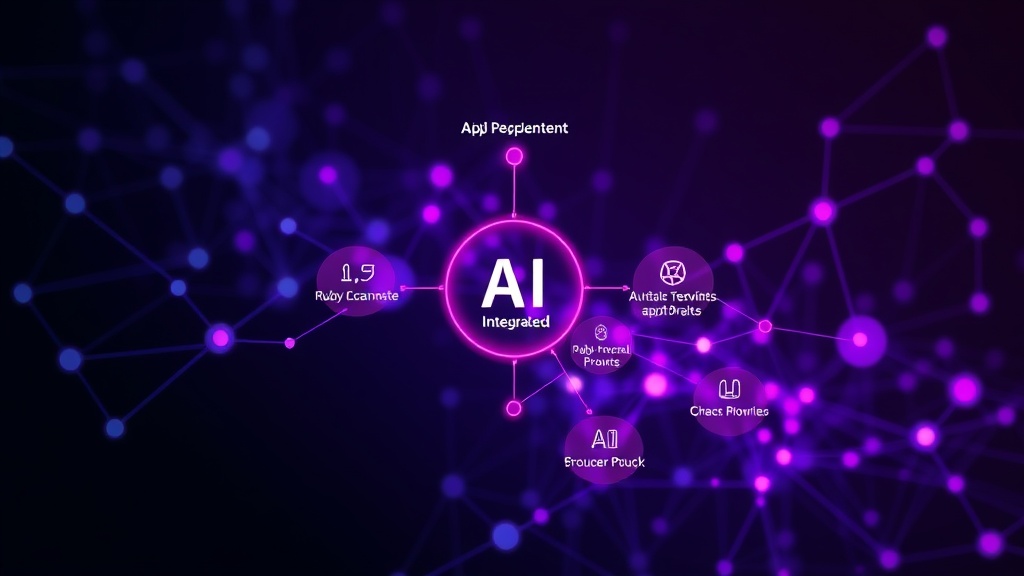
Several key developments underscore Ruby's embrace of AI. New libraries are appearing that abstract away the complexities of interacting with large language models (LLMs) and other AI services. These tools aim to provide Ruby developers with straightforward APIs to incorporate AI features like natural language processing, code generation, and data analysis directly into their applications. For instance, libraries are emerging that facilitate easier integration with popular AI platforms, allowing developers to send prompts, process responses, and fine-tune models without needing deep expertise in AI infrastructure.
Beyond direct LLM interaction, the ecosystem is seeing tools that apply AI to improve the development experience itself. This includes AI-powered code completion, intelligent debugging assistants, and automated testing frameworks that can learn from code changes and predict potential issues. Such tools are designed to boost developer productivity, reduce errors, and streamline the entire software development lifecycle. The goal is to make Ruby development more efficient and enjoyable, even as the complexity of AI technologies increases.
The community is also exploring how AI can enhance data science and machine learning within Ruby. While Python has long dominated this space, new Ruby libraries are aiming to provide competitive alternatives for data manipulation, model training, and deployment. This includes efforts to build robust, performant libraries that can handle large datasets and complex computations, making Ruby a more viable option for AI-centric projects.
Community and Maintainer Perspectives
The Ruby community's engagement with AI is a collaborative effort. Discussions on platforms like Dev.to and at conferences such as RubyKaigi highlight a keen interest in understanding and implementing AI solutions. Maintainers of popular Ruby gems are actively considering how AI can augment their tools, whether it's by adding AI-driven features or by using AI to improve their own development and maintenance processes.
A significant aspect of this adaptation is the focus on practical, actionable AI. Instead of chasing speculative AI trends, Rubyists are prioritizing tools and libraries that offer tangible benefits to their daily work. This pragmatic approach ensures that AI integration is not just a buzzword but a genuine enhancement to the Ruby development experience. The emphasis is on building tools that are easy to use, well-documented, and integrate seamlessly with existing Ruby projects, much like the philosophy that has long defined the Ruby ecosystem.
What remains to be seen is the long-term impact of these AI integrations on the Ruby job market. As AI tools become more sophisticated, they may alter the skill sets required for Ruby developers. Will AI-assisted development lead to a higher demand for developers who can effectively leverage these tools, or will it automate certain tasks, potentially reducing the need for junior developers? This is an open question that the community will grapple with as AI adoption matures.
The Future of AI in Ruby
The ongoing integration of AI into the Ruby ecosystem is poised to redefine how applications are built and maintained. As more AI-powered libraries and tools mature, we can expect to see Ruby applications becoming more intelligent, efficient, and capable. This evolution ensures that Ruby remains a competitive and relevant choice for modern software development, even in an era increasingly dominated by AI.
The community's proactive stance, coupled with a pragmatic focus on utility, suggests that AI will become an integral part of the Ruby developer's toolkit. This isn't just about adding AI features; it's about enhancing the core strengths of Ruby—developer happiness and productivity—with the power of artificial intelligence. The future looks bright for Rubyists looking to harness AI.