The Unlikely Upgrade Path for the RTX 2080 Ti
In an era dominated by the RTX 40-series and the ever-increasing demands of AI and high-fidelity gaming, NVIDIA's RTX 2080 Ti, a card that once represented the pinnacle of consumer GPU performance, might seem like a relic. Launched in late 2018 with 11 GB of GDDR6 memory, it was a powerhouse for its time. However, the relentless march of technology, particularly in fields like machine learning and complex 3D rendering, has exposed the limitations of its 11 GB VRAM buffer. Now, a specialized service is offering a highly unconventional, yet potentially significant, upgrade: pushing the RTX 2080 Ti's memory capacity to a remarkable 22 GB.
This isn't a standard manufacturer-supported upgrade. Instead, it's a testament to the ingenuity and persistence of third-party hardware modification specialists. The service, detailed through community discussions and service provider listings, targets users who still rely on or wish to extend the lifespan of their 2080 Ti for memory-intensive tasks. The core of the upgrade involves replacing the original 11 GB of GDDR6 memory chips with higher-density modules, effectively doubling the VRAM without altering the underlying GPU silicon.
The implications are substantial for specific use cases. For AI researchers and developers working with increasingly large models, or for 3D artists handling massive scenes and high-resolution textures, the 11 GB limit of the original 2080 Ti was a significant bottleneck. This upgrade promises to alleviate that constraint, potentially making the card viable for a new generation of workloads that would have previously necessitated a much newer, and considerably more expensive, GPU. It's akin to giving a classic sports car a modern engine transplant – retaining the soul but vastly improving its capabilities for contemporary demands.
Technical Hurdles and the Modification Process
Doubling the VRAM on a GPU like the RTX 2080 Ti is not a trivial undertaking. It requires a deep understanding of the card's PCB layout, memory controller, and the intricate signal integrity challenges involved. The process typically involves:
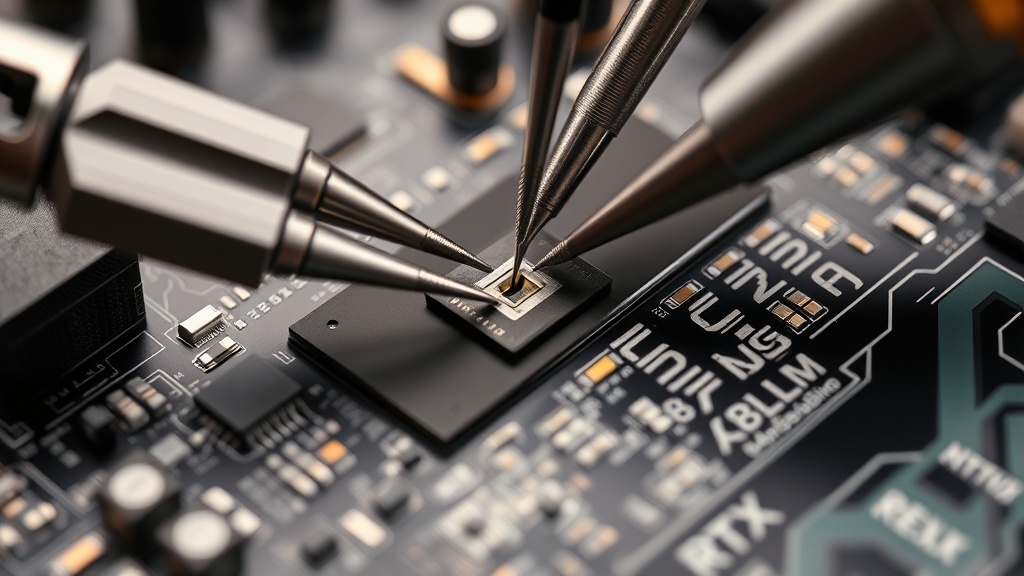
- Desoldering Original Memory Chips: The existing 11 GB of GDDR6 memory chips are carefully removed from the PCB using specialized hot air rework stations. This is a critical step where overheating or improper technique can permanently damage the GPU.
- Soldering Higher-Density Chips: New, higher-density GDDR6 memory chips (e.g., 2 GB or 4 GB modules, depending on the specific revision and available parts) are soldered onto the board in place of the originals. The total number of memory chips might remain the same, but each chip now holds more data.
- BIOS/Firmware Modification: Crucially, the graphics card's BIOS (Basic Input/Output System) or VBIOS (Video BIOS) must be modified to correctly recognize and address the new memory configuration. This involves adjusting memory timings, configurations, and capacity reporting. Without this, the system would not see the full 22 GB, or the card might not function at all.
- Testing and Validation: Rigorous testing is performed to ensure stability, performance, and thermal integrity. This includes running demanding benchmarks, memory stress tests, and real-world application workloads.
The surprising detail here is not just the technical feasibility, but the existence of a market willing to pay for such a niche, high-risk modification. It speaks volumes about the diminishing returns in VRAM increases on newer generations relative to the cost, and the enduring value proposition of powerful, albeit older, GPU architectures when their primary bottleneck can be addressed.
Who Benefits from a 22 GB RTX 2080 Ti?
While the RTX 2080 Ti is no longer a top-tier gaming card by modern standards, its 4352 CUDA cores and strong FP32 performance still hold value. The memory upgrade specifically targets:
- AI/Machine Learning Enthusiasts and Researchers: Training or fine-tuning larger neural network models, especially those with significant parameter counts or large batch sizes, directly benefits from increased VRAM. This upgrade could allow users to experiment with models that would otherwise require an RTX 3090, 4090, or professional-grade NVIDIA Quadro/RTX A-series cards.
- 3D Artists and VFX Professionals: Working with extremely complex scenes, high-polygon models, and massive texture sets in software like Blender, Maya, or Houdini can quickly consume VRAM. A 22 GB buffer provides more headroom, reducing the need for aggressive texture optimization or scene simplification, and potentially speeding up render times by avoiding out-of-memory errors.
- Data Scientists: Certain data analysis tasks, particularly those involving large datasets that can be processed on the GPU, can also benefit from more memory.
- Enthusiasts Seeking Extended Lifespan: For users who are budget-conscious but need more VRAM than their current 11 GB card offers, this modification presents a cost-effective alternative to purchasing a brand-new GPU, provided they can find a reputable service provider.
The Trade-offs and Considerations
Despite the allure of doubled VRAM, this upgrade comes with significant caveats:
- Warranty Voided: Any modification of this nature will immediately void the original manufacturer's warranty.
- Risk of Failure: The modification process itself carries a risk of permanently damaging the GPU. Users must trust the service provider's expertise implicitly.
- Performance Not Universally Improved: While VRAM capacity increases, the core GPU processing power remains that of the RTX 2080 Ti. For tasks not bottlenecked by VRAM, the upgrade will offer no performance benefit. In some cases, poorly optimized memory timings could even lead to a slight performance decrease in certain scenarios.
- Cost: The service is not cheap. The cost of the modification, including high-density memory chips and labor, can approach the price of a used, higher-tier GPU with more native VRAM. Users must weigh the cost against the performance gains and the risk.
- Availability of Services: Finding a reliable and skilled technician capable of performing this complex modification can be challenging.
What nobody has addressed yet is the long-term reliability of these modified cards. While initial testing might show stability, the stress on the memory controller and power delivery system from higher-density, potentially higher-speed chips, and the quality of the soldering, could lead to premature failure down the line. This remains a significant unknown.
Conclusion: A Niche Solution for Specific Needs
The RTX 2080 Ti memory upgrade to 22 GB is a fascinating example of hardware modification pushing the boundaries of what's possible with older enthusiast hardware. It's not a solution for everyone, nor is it a direct competitor to the latest generation of GPUs. However, for a specific segment of users whose workflows are severely hampered by VRAM limitations and who are willing to accept the inherent risks and costs, this upgrade offers a compelling path to extend the utility of a powerful, albeit aging, graphics card. It allows a generation of hardware to participate in memory-hungry workloads that were previously out of reach, demonstrating that innovation in hardware often extends beyond official product lines.