Revolut's 'Smile to Pay' Launches in the UK
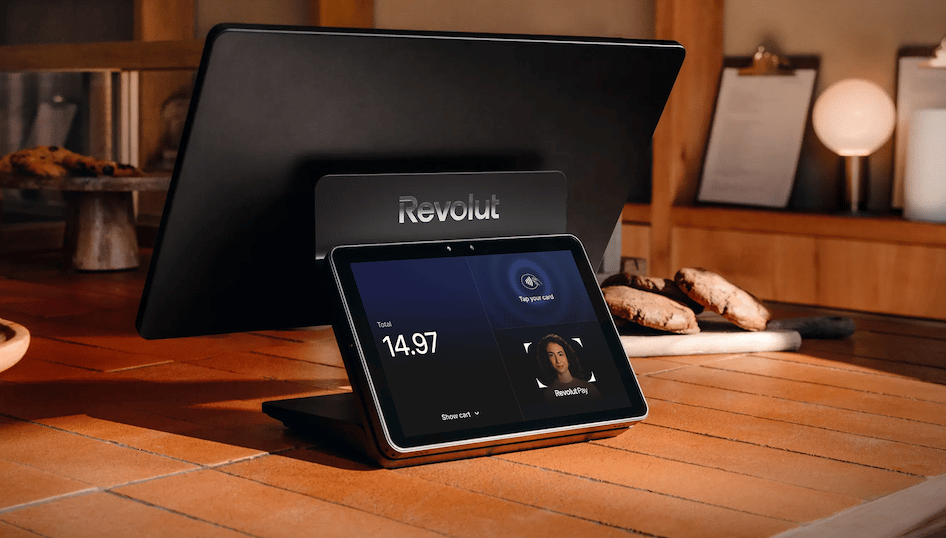
Revolut is set to launch a facial recognition payment system in the UK, enabling customers to pay for goods and services in physical stores simply by looking at a checkout terminal. Dubbed 'Smile to Pay,' the feature aims to streamline the checkout process, offering a contactless and card-free alternative to traditional payment methods. This move positions Revolut at the forefront of biometric payment adoption in the UK retail landscape.
The system leverages facial recognition technology to authenticate transactions. When a customer opts for this payment method at a participating merchant, they will simply need to look at the payment terminal. The terminal, equipped with a camera, will scan the customer's face, compare it against a stored biometric template, and, upon successful verification, authorize the payment. This eliminates the need to present a physical card, use a mobile device, or enter a PIN, offering a swift and potentially more secure way to pay.
While the exact technical specifications of the scanning terminals are not yet fully detailed, the process is designed to be quick, ideally taking mere seconds. This is crucial for retail environments where speed is of the essence. The underlying technology relies on sophisticated algorithms to capture and match facial features, ensuring that the verification is both accurate and efficient. Revolut’s announcement suggests that the system will integrate seamlessly with existing payment infrastructures, minimizing disruption for merchants.
Broader Context and Global Adoption Trends
Revolut's expansion of 'Smile to Pay' into the UK follows successful trials and implementations in other markets. The company has previously introduced similar biometric payment systems in countries like Poland, where it has seen significant user adoption. In Poland, the feature was launched in partnership with a major retail chain, allowing customers to pay for groceries using their faces. This prior experience has likely informed Revolut's strategy for the UK rollout.
Globally, the adoption of biometric payments is on an upward trajectory. While fingerprint and iris scans have been in use for some time, facial recognition is gaining traction due to its convenience and the increasing sophistication of the underlying technology. Companies are exploring various applications, from unlocking smartphones to authorizing financial transactions. This trend is driven by a consumer desire for faster, more seamless, and secure payment experiences. The integration of such technologies into everyday retail scenarios represents a significant shift in how consumers interact with financial services.
The technology behind 'Smile to Pay' is built upon advanced computer vision and machine learning algorithms. These systems analyze unique facial characteristics, such as the distance between eyes, nose shape, and jawline, to create a unique biometric signature. This signature is then encrypted and stored securely, accessible only for the purpose of transaction verification. The emphasis on security is paramount, as financial transactions require a high degree of trust and protection against fraud.
Security and Privacy Considerations
Concerns around facial recognition technology often center on privacy and data security. Revolut has stated that the system is designed with robust security protocols to protect user data. The facial data captured is anonymized and encrypted, and it is compared against a secure template stored by Revolut. Crucially, the system is designed to prevent unauthorized access and misuse of biometric information. The company emphasizes that the technology complies with stringent data protection regulations.
However, the inherent nature of biometric data raises questions about potential vulnerabilities. Unlike a password or a PIN, a face cannot be easily changed if compromised. This makes the security of the stored biometric templates critically important. Revolut's approach involves not storing raw facial images but rather a mathematical representation of facial features. This reduces the risk associated with data breaches, as the stolen data would not be a direct image but an encrypted template that is difficult to reverse-engineer.
The company also highlights that users have control over their data and can opt out of using the facial recognition feature at any time. This user control is a key aspect of building trust in new biometric payment technologies. The broader implications for the retail sector are significant, potentially leading to a future where physical payment terminals are replaced by systems that rely solely on facial recognition or other biometrics, streamlining operations and enhancing customer experience.
Future Outlook and Market Impact
The successful rollout of 'Smile to Pay' in the UK could set a precedent for further adoption of biometric payments across the fintech and retail industries. Revolut's substantial customer base in the UK provides a significant testing ground for the technology's scalability and user acceptance. As more merchants adopt compatible payment terminals, the convenience factor could drive widespread adoption, potentially accelerating the move away from traditional payment cards.
Competitors in the fintech space will undoubtedly be watching Revolut's progress closely. The ability to offer a frictionless payment experience through biometrics could become a key differentiator. Companies that have traditionally focused on card payments or mobile wallets may need to explore their own biometric strategies to remain competitive. The long-term impact will depend on user trust, the robustness of the security measures, and the seamless integration with the retail ecosystem.
What remains to be seen is how quickly the broader retail infrastructure in the UK will adapt to support such advanced payment methods. While Revolut is enabling the customer-facing side, widespread adoption hinges on merchant willingness and ability to invest in compatible checkout technology. The journey from early adoption to ubiquitous use will likely involve overcoming technical hurdles and building sustained consumer confidence in the security and privacy of facial recognition payments.