Rescript: A New Contender in Browser-Based Video Editing
The video editing landscape has seen significant innovation with tools that abstract away traditional timelines for more intuitive workflows. Rescript emerges as a new, free, and open-source player in this space, positioning itself as a direct alternative to the popular Descript. Its core promise: edit videos as easily as you edit text, all within your web browser.
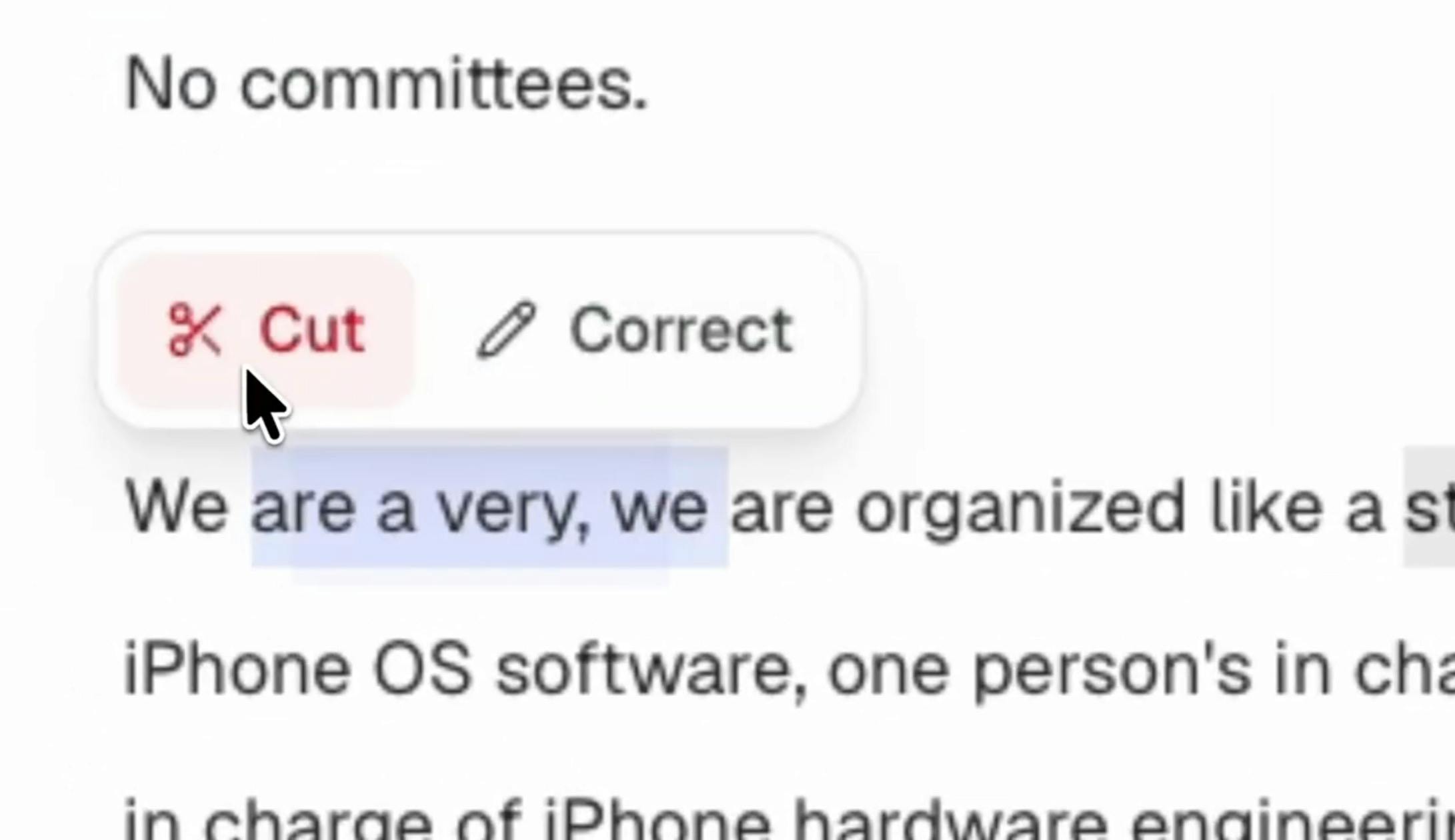
This approach fundamentally changes how creators, marketers, and even developers interact with video content. Instead of complex timelines, layers, and keyframes, Rescript focuses on a transcript-centric editing model. Users upload their video, and the tool generates a searchable transcript. Editing the video then becomes a matter of editing this text. Delete a sentence from the transcript, and the corresponding video segment is removed. Reorder paragraphs, and the video sequence changes accordingly. This is akin to editing a document in Google Docs or Microsoft Word, but with video as the output.
The implications for speed and accessibility are substantial. For professionals who are comfortable with text-based workflows, Rescript lowers the barrier to entry for video production. It removes the steep learning curve associated with traditional video editing software, making sophisticated editing accessible to a wider audience. This is particularly relevant for content creators who need to produce a high volume of videos quickly, such as podcasters, educators, and social media managers.
Key Features and Design Philosophy
Rescript's design philosophy centers on simplicity and efficiency. By running entirely in the browser, it eliminates the need for downloads or installations, allowing users to start editing immediately from any device with an internet connection. This also means that projects are often saved and processed in the cloud, though the open-source nature suggests potential for local processing in future iterations or community-driven forks.
While specific feature sets are still evolving, the core functionality revolves around:
- Transcript-Based Editing: The cornerstone of Rescript. Video is manipulated by editing its transcribed text.
- Text-to-Video Synchronization: Changes in the transcript directly and accurately reflect in the video output.
- Browser-Native Operation: No software installation required, accessible from anywhere.
- Open-Source: Free to use and modify, fostering community contribution and transparency.
The open-source aspect is a critical differentiator. Unlike proprietary software, Rescript's codebase is available for inspection and contribution. This allows for greater customization, potential integration with other tools, and a community-driven development cycle that can respond rapidly to user needs. For developers, this presents an opportunity to contribute to a growing project, add features, or even build specialized versions.
The Rise of Text-to-Video Editing
Rescript is not the first to explore this paradigm. Descript pioneered the transcript-based video editing approach, proving its viability and popularity. However, Descript operates on a freemium model, with advanced features and higher usage limits locked behind paid tiers. This is where Rescript aims to carve out its niche.
By offering a fully free and open-source solution, Rescript democratizes access to this powerful editing style. It removes the financial barrier that might prevent hobbyists, students, or small-scale creators from utilizing transcript-based editing. The comparison to Descript is inevitable, but Rescript's commitment to being free and open-source fundamentally alters its market positioning. It's less about competing on a feature-for-feature basis and more about providing an accessible, community-driven alternative.
The technical challenge in such systems lies in achieving seamless synchronization between the audio, video, and text. Any lag or desynchronization breaks the illusion of editing text. Rescript's success hinges on its ability to deliver a smooth, reliable user experience that feels as fluid as editing a plain text file. The browser environment adds another layer of complexity, requiring efficient JavaScript engines and careful resource management to handle potentially large video files and complex transcriptions.
What This Means for Creators and Developers
For creators, Rescript offers a compelling new option for video production. If you're a podcaster who also wants to create video versions of your episodes, or a marketer needing to quickly edit talking-head videos for social media, Rescript's model could dramatically speed up your workflow. The ability to iterate rapidly on video content without mastering complex software is a significant advantage.
For developers, Rescript represents an exciting open-source project. Contributing to Rescript means working on cutting-edge browser-based media manipulation technology. It's an opportunity to deepen understanding of WebAssembly, JavaScript media APIs, and real-time transcription services. The open nature also invites integration with other tools, such as AI-powered summarization services or automated captioning systems, potentially extending its utility far beyond basic editing.
The broader impact of tools like Rescript could be a shift towards more agile video content creation. As the demand for video content continues to grow across all platforms, efficiency and accessibility become paramount. Rescript's approach directly addresses this, promising to make video editing less of a technical hurdle and more of a creative expression, accessible to anyone with a story to tell and a web browser.
The surprising detail here is not that another Descript alternative has emerged, but that it has done so as a completely free and open-source project running entirely in the browser. This combination challenges the typical SaaS model for such sophisticated tools and opens the door for widespread adoption and community-driven innovation.