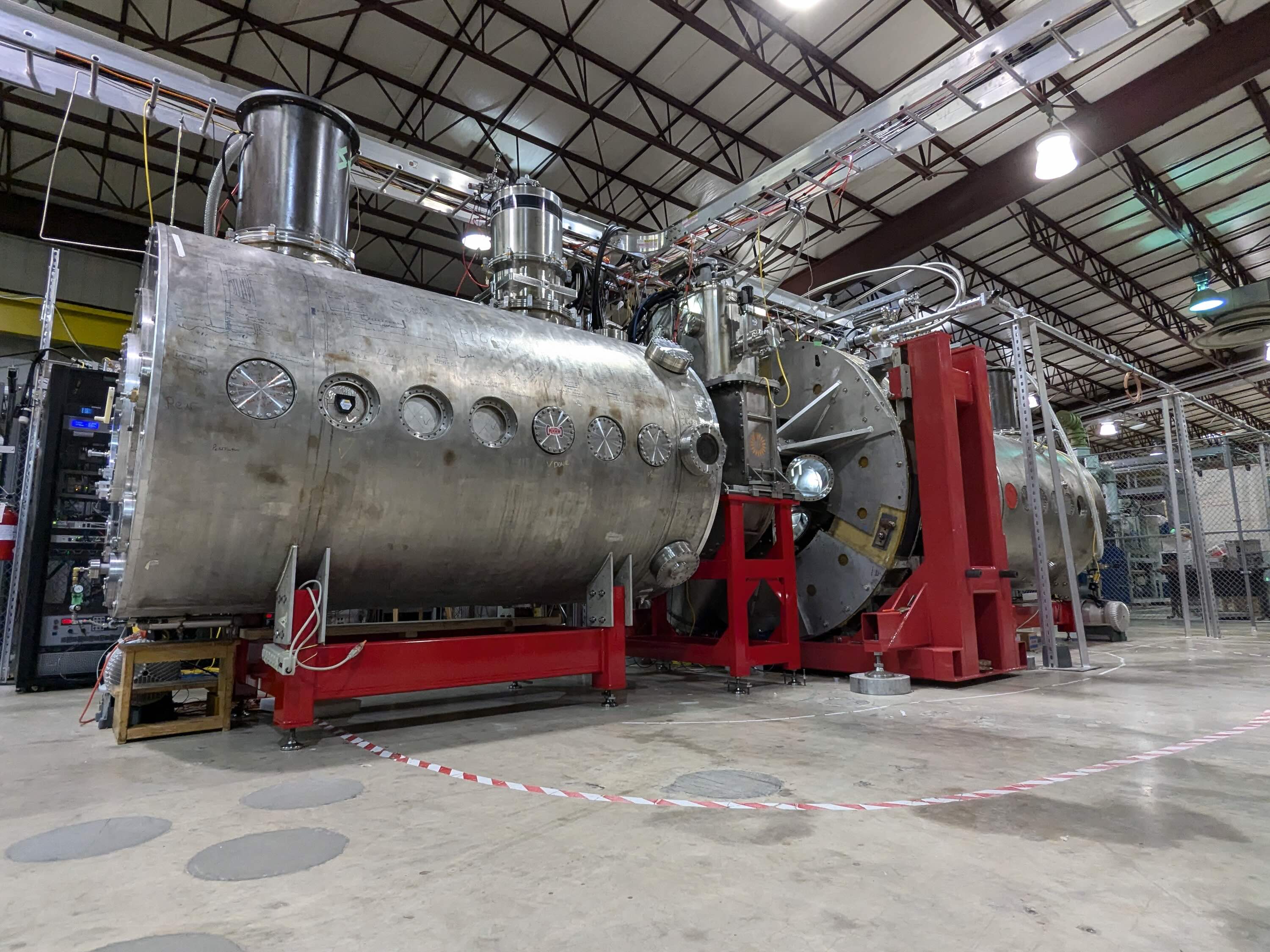
A New Home for Fusion Energy Research
Realta Fusion, a company dedicated to advancing nuclear fusion as a clean energy source, has selected a unique location for its next phase of development: a former Oscar Mayer hot dog factory in Madison, Wisconsin. This unconventional choice of real estate signals a pragmatic approach to the immense infrastructural challenges of building and testing a fusion reactor. The facility, once buzzing with the production of processed meats, will soon house sophisticated equipment aimed at harnessing the power of the stars on Earth.
The decision to repurpose an existing industrial site, rather than building a new facility from scratch, offers significant advantages. These include access to robust electrical infrastructure, substantial square footage, and potentially existing utility connections that can be adapted for the demanding requirements of fusion experiments. This pragmatic approach, common in the burgeoning private fusion sector, allows companies to accelerate their timelines and reduce capital expenditure, focusing resources on the core scientific and engineering challenges of achieving sustained fusion reactions.
Realta Fusion’s choice highlights a broader trend in the energy sector: the repurposing of legacy industrial sites for next-generation clean energy technologies. As fossil fuel industries contract, the infrastructure they leave behind—from power plants to manufacturing facilities—presents an opportunity for innovation. This strategy not only provides a cost-effective solution for startups but also contributes to the revitalization of industrial areas, transforming them into hubs for future energy solutions.
The Science Behind Realta Fusion’s Approach
Realta Fusion is developing a compact, high-field tokamak fusion device. Tokamaks are a leading design for fusion reactors, using powerful magnetic fields to confine a superheated plasma of hydrogen isotopes, forcing them to fuse and release energy. The company's specific innovation lies in its use of high-temperature superconducting (HTS) magnets. These advanced magnets can generate much stronger magnetic fields than traditional superconducting magnets, allowing for a smaller, more efficient reactor design.
Achieving net energy gain – where the fusion reaction produces more energy than is consumed to initiate and sustain it – is the ultimate goal. Realta Fusion aims to demonstrate this critical milestone with its HTS magnet technology. The strength of the magnetic fields generated by these magnets is crucial for confining the plasma at the extreme temperatures (over 100 million degrees Celsius) required for fusion. Think of it less like trying to hold a candle flame with your bare hands, and more like using an incredibly powerful, invisible force field to contain a miniature sun.
The factory’s large footprint is essential for housing the tokamak itself, along with the associated power systems, diagnostic equipment, and safety infrastructure. The sheer scale of the machinery required for fusion research, even in a compact design, demands significant industrial space. The former hot dog factory provides this necessary volume, along with the structural integrity to support heavy equipment.
Why Wisconsin? A Strategic Decision
The selection of Madison, Wisconsin, is not arbitrary. The state, and the Midwest more broadly, has a rich history in industrial manufacturing and a growing ecosystem for advanced energy research. Proximity to skilled labor, academic institutions with relevant expertise, and potential government incentives likely played a role in Realta Fusion’s decision. Wisconsin has been actively seeking to attract high-tech industries, and a fusion energy facility represents a significant economic and technological development.
Furthermore, the location offers a balance between industrial capacity and a supportive community. Repurposing a site with a long history of employment, even if in a different industry, can foster local goodwill and provide a narrative of continuity and progress. The transition from food production to energy production, while stark, can be framed as a positive evolution for the region, leveraging existing industrial capabilities for a future-focused endeavor.
The specific advantages of the Oscar Mayer site include its robust electrical grid connection, a critical requirement for powering the massive magnets and auxiliary systems. Fusion reactors are notoriously energy-intensive to start up and operate. Access to reliable, high-capacity power is non-negotiable. The site’s existing infrastructure, designed to support large-scale industrial operations, is likely to be more adaptable and cost-effective than building such connections from scratch in a greenfield location.
Challenges and the Path Forward
Despite the promising approach, the path to commercial fusion energy remains challenging. Realta Fusion, like all companies in this field, faces significant engineering hurdles in achieving stable plasma confinement, managing heat loads, and developing materials that can withstand the intense neutron bombardment from fusion reactions. The transition from a research and development facility to a commercial power plant is a monumental leap that requires not only scientific breakthroughs but also regulatory approval and massive investment.
The company’s strategy of using an existing factory underscores the practical realities of the fusion industry. It’s a race against time and a race for capital. By minimizing upfront infrastructure costs, Realta Fusion can dedicate more resources to accelerating its experimental program and demonstrating the viability of its HTS magnet-based approach. The success at this Wisconsin site will be a critical test case for their technology and their business model.
What remains to be seen is how quickly the company can adapt the factory environment to the stringent safety and operational requirements of a fusion experiment. The transition from processing food to containing plasma involves a vastly different set of safety protocols and technical expertise. However, the private fusion sector has shown an impressive ability to attract diverse talent and overcome complex engineering problems. The former Oscar Mayer factory may just be the next chapter in that ongoing saga.