The Deep Cloning Dilemma in React
Deep cloning objects in React applications has long presented a difficult choice between correctness and performance. Developers often resort to the seemingly simple JSON.parse(JSON.stringify(obj)) method. However, this approach is fundamentally flawed for many real-world data structures. It fails to preserve crucial data types like Date objects, Maps, and Sets. Worse, it cannot handle objects with circular references, a common pattern in complex state management, leading to runtime errors.
Alternatively, developers might reach for popular third-party libraries such as Lodash's _.cloneDeep. While these libraries offer robust deep cloning capabilities, they come at a cost: increased bundle size. In performance-sensitive frontend applications, every kilobyte matters, and adding significant weight for a utility function can be a hard pill to swallow.
The most problematic, yet sometimes necessary, approach is cloning state directly within React's render cycle. Triggering a deep clone on every render, especially for large or complex objects, can become a performance bottleneck. More critically, if not managed precisely, it can lead to infinite render loops by creating new object references that React interprets as state changes, forcing constant re-renders.
These challenges highlight a clear need for a specialized, efficient, and reliable deep cloning solution tailored for the React ecosystem. This is the void that react-hook-lab aims to fill with its latest release.
Introducing useDeepClone and the Custom Engine
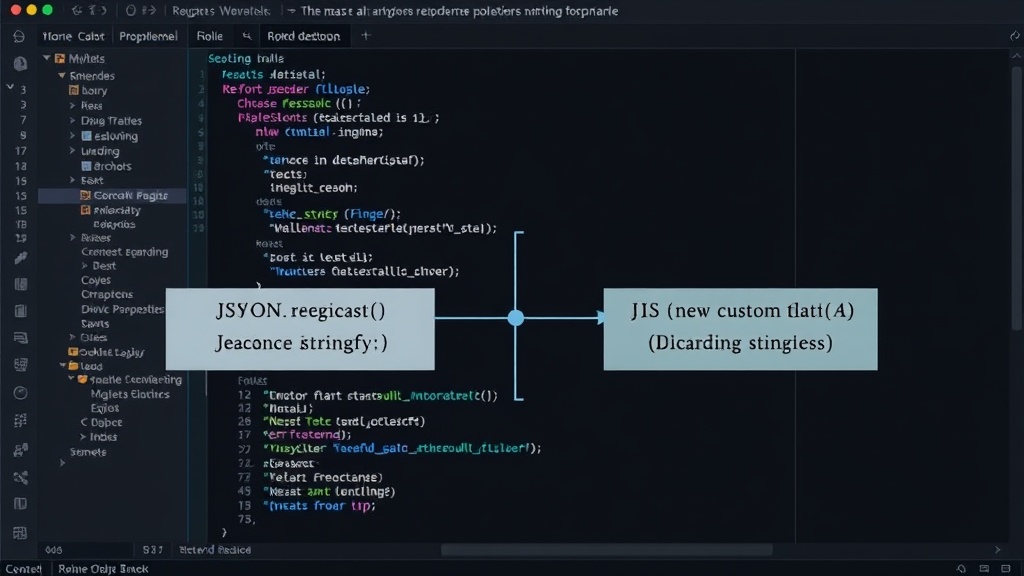
The new react-hook-lab library introduces two key components to address the deep cloning problem: a performant deepClone utility function and a React hook, useDeepClone, built upon it. The core innovation lies in a custom-built cloning engine designed to overcome the limitations of JSON.parse(JSON.stringify()) and minimize bundle size compared to external libraries.
This custom engine is engineered to correctly handle a wider range of JavaScript data types, including Date, RegExp, Map, Set, and ArrayBuffer. Crucially, it also supports the cloning of objects with circular references, preventing the common errors associated with simpler cloning methods. The engine's design prioritizes efficiency, aiming to perform cloning operations faster than generic library functions while consuming fewer resources.
The useDeepClone hook leverages this engine to provide a React-idiomatic way to manage cloned state. It ensures that cloning operations are performed intelligently, often only when necessary, thus preserving React's reference stability and avoiding unnecessary re-renders. By abstracting the cloning logic into a hook, developers can integrate deep cloning into their components with minimal friction, maintaining clean component logic and predictable state updates.
Optimizations and Performance Gains
The performance of useDeepClone stems directly from its underlying custom cloning engine. Unlike generic cloning functions that might iterate over every possible property type and structure, this engine is optimized for common JavaScript patterns found in React applications. It uses a combination of techniques to achieve speed:
- Type-Specific Handlers: The engine employs specialized logic for different data types (primitives, arrays, objects, Maps, Sets, etc.). This avoids a one-size-fits-all approach, leading to faster processing for each type.
- Circular Reference Management: A dedicated mechanism tracks visited objects during the cloning process. This prevents infinite loops and allows for correct cloning of complex, interconnected data structures. This is a significant advantage over
JSON.parse(JSON.stringify()). - Reduced Overhead: By avoiding the need to parse and stringify JSON, and by not depending on large external libraries, the engine's operational overhead is minimized. This translates to faster execution times, especially for frequent cloning operations.
The hook itself adds another layer of optimization by integrating with React's rendering lifecycle. useDeepClone can be configured to clone only when specific dependencies change or when explicitly requested, preventing unnecessary cloning on every render. This intelligent caching and conditional execution are vital for maintaining application responsiveness and preventing performance regressions. The goal is to offer the correctness of robust cloning libraries without the bundle size penalty, and the predictable behavior of custom solutions without the manual implementation burden.
Practical Implementation with useDeepClone
Integrating useDeepClone into a React application is straightforward. The hook accepts the object to be cloned and an optional dependency array, similar to `useEffect` or `useMemo`.
Consider a scenario where you have a complex state object representing user preferences, including nested objects and arrays. You need to modify a part of this state without mutating the original. Using useDeepClone:
import React from 'react';
import { useDeepClone } from 'react-hook-lab';

function SettingsComponent({
  initialSettings
}) {
  // Clone initialSettings. The clone will update only if initialSettings changes.
  const clonedSettings = useDeepClone(initialSettings, [initialSettings]);

  const handleSettingChange = (key, value) => {
    // Modify the cloned state
    clonedSettings[key] = value;
    // Update the parent state with the modified clone
    // (Assuming an updateState function is passed down or managed)
    // updateState(clonedSettings);
  };

  return (

      {/* Render UI based on clonedSettings */}
       handleSettingChange('theme', e.target.value)}
      />
      {/* ... other settings inputs */}

  );
}
In this example, clonedSettings is a deep copy of initialSettings. The hook ensures that clonedSettings is only re-cloned if the initialSettings prop actually changes. This prevents unnecessary re-renders and maintains performance. When a user interacts with a setting, they modify the clonedSettings object. This modified clone can then be used to update the application's actual state, ensuring immutability and correct state management practices within React.
The Future of State Management in React
The introduction of useDeepClone by react-hook-lab addresses a persistent pain point for React developers. By providing a performant, correct, and bundle-size-conscious deep cloning solution, it enables developers to manage complex state more effectively. The ability to handle circular references and preserve various data types, combined with React-specific optimizations, makes it a compelling alternative to existing methods.
This utility is more than just a convenience; it's a step towards more robust and efficient state management patterns in React. As applications grow in complexity, the need for reliable immutability patterns becomes paramount. Tools like useDeepClone empower developers to adhere to these patterns without sacrificing performance or introducing unnecessary dependencies.