Streamlining Global E-commerce Pricing
Selling to international customers requires more than just offering products globally. Displaying prices in a visitor's local currency is a critical conversion rate optimization tool. Historically, implementing this feature has been a complex undertaking. It involved a multi-step process: accurately performing IP geolocation to identify the user's region, fetching near real-time exchange rates, implementing robust caching mechanisms to avoid repeated API calls, defining fallback strategies for when geolocation fails, and carefully managing potential race conditions where the exchange rate fetch might lag behind the component render cycle.
This complexity often turned a seemingly simple requirement into a significant development project, diverting resources from core product features. The need for a streamlined solution became apparent for businesses aiming to improve their international sales performance without incurring disproportionate development overhead.

Introducing react-currency-localizer-realtime
The new react-currency-localizer-realtime library aims to collapse this entire process into a straightforward integration for React applications. It provides a React hook and a component designed to handle the intricacies of currency localization automatically. Developers can now integrate this solution with minimal effort: simply drop it into their project and pass the base price. The library then manages the rest, from detecting the user's locale to displaying the localized price.
At its core, the library leverages real-time mid-market exchange rates sourced from the AllRatesToday API. This API provides access to over 160 currencies, with data updated every 60 seconds. The rates are derived from institutional interbank market data, meaning they represent the true mid-market value without retail markups or hidden spreads, offering transparency and accuracy for both the business and the end-user.
Key Features and Benefits
- Real-time Mid-Market Rates: The library provides live exchange rates that reflect the actual interbank market, ensuring customers see prices without retail markups or hidden spreads. This transparency builds trust and can positively impact purchasing decisions.
- Automatic User Currency Detection: It automatically detects the visitor's local currency, eliminating the need for manual selection or complex IP geolocation logic on the developer's part. This enhances the user experience by presenting relevant pricing immediately upon arrival.
- High-Frequency Updates: Currency rates are updated every 60 seconds, ensuring that the displayed prices are as current as possible. This is crucial in volatile currency markets where even small fluctuations can affect perceived value.
- Comprehensive Currency Support: With support for over 160 currencies, the library caters to a truly global audience. This broad coverage ensures that businesses can serve customers almost anywhere in the world with localized pricing.
- Minimal Integration Effort: Designed as a React hook and component, it abstracts away the complexities of fetching, caching, and displaying rates. Developers can integrate it with just a few lines of code, significantly reducing development time and effort.
- Fallback Mechanisms: While not detailed in the initial announcement, robust libraries typically include fallbacks for cases where currency detection might fail or API calls are interrupted. This ensures a consistent user experience even under adverse conditions.
Technical Implementation and Usage
The primary interface for react-currency-localizer-realtime is expected to be a hook, likely named something akin to useCurrencyConverter, which would return the localized price and potentially other relevant data like the detected currency code and the last update timestamp. Alternatively, a component-based approach might offer a simpler declarative way to wrap price elements, such as <LocalizedPrice value={100} currencyCode="USD" />, where the component itself handles the detection and conversion.
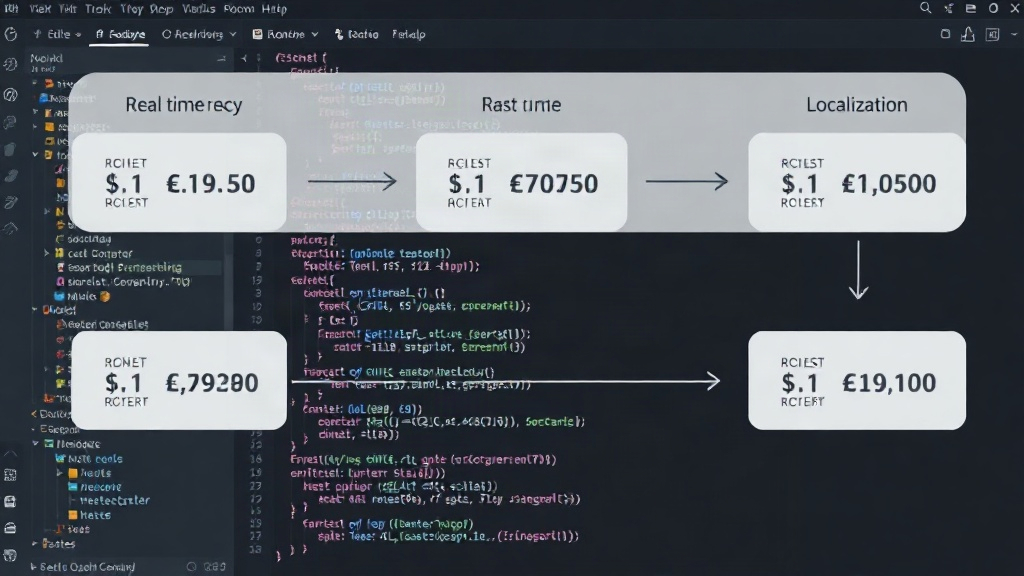
The underlying mechanism involves several asynchronous operations. Upon component mount or when the price prop changes, the hook or component would first attempt to detect the user's currency. This typically involves a client-side API call to a geolocation service or leveraging browser APIs if available and reliable. Concurrently, it would fetch the latest exchange rate from AllRatesToday for the detected currency against a base currency (e.g., USD). The fetched rate is then applied to the provided price value. To optimize performance and reduce API strain, the library likely implements a caching strategy. This cache would store recently fetched rates, checking the cache before making a new API request. For instance, if a rate for EUR/USD was fetched 30 seconds ago and the update interval is 60 seconds, the cached rate would be used. The library also needs to handle the asynchronous nature of these operations gracefully, perhaps showing a loading indicator or a default value while rates are being fetched, and managing potential errors during API calls.
What This Means for Developers and Businesses
For developers, react-currency-localizer-realtime represents a significant reduction in boilerplate code. Instead of building custom solutions for currency conversion, they can integrate a battle-tested library that handles the complexities. This allows teams to focus on building unique features and improving the core user experience rather than reinventing the wheel for international pricing. The ease of integration means that even small teams or solo developers can offer sophisticated, localized pricing to their global customers.
For businesses, especially e-commerce platforms and SaaS providers selling internationally, this library offers a direct path to potentially increasing conversion rates. By showing prices in a familiar currency, businesses reduce cognitive load for international buyers, making the purchasing process smoother and more intuitive. This can lead to higher average order values and improved customer satisfaction. The use of real-time mid-market rates also provides a level of transparency that can build trust with customers, differentiating businesses from those that might use less favorable exchange rates.
Future Considerations and Potential Enhancements
While the current implementation addresses the core need for real-time localized pricing, several areas could see future development. Advanced caching strategies, perhaps leveraging service workers for offline rate availability or more intelligent cache invalidation, could further improve performance and reliability. Support for historical rates might be beneficial for businesses needing to display pricing based on specific past exchange rates for reporting or historical accuracy. Furthermore, offering options for different pricing strategies—such as allowing businesses to set their own markup on top of mid-market rates, or providing options for different types of exchange rates (e.g., retail vs. mid-market)—could expand the library's utility. Integration with popular state management libraries in React could also streamline its use in larger applications. The success of this library will hinge on its reliability, performance, and the clarity of its API, ensuring it lives up to its promise of simplifying a complex but crucial e-commerce feature.