What is Rate Limiting?
Rate limiting is a crucial defensive mechanism in software development. Its primary function is to control the volume of incoming traffic directed at a network or application. Essentially, it imposes a strict limit on the number of requests a specific user, IP address, or device can make to a server within a defined period. This control is vital for maintaining application stability, security, and overall accessibility for all users.
Think of it like a popular nightclub with a limited capacity and a bouncer at the door. If hundreds of people try to rush in at once, the club becomes chaotic and unmanageable. The bouncer, acting as the rate limiter, allows only a certain number of people in every few minutes. Those who arrive when the club is full must wait, ensuring a manageable flow and a better experience for everyone inside. Without this control, the nightclub (or your application) would quickly become overwhelmed and unusable.

Why is Rate Limiting Necessary?
The digital world is rife with potential threats and operational challenges. Uncontrolled traffic can lead to several critical issues:
- Denial of Service (DoS) Attacks: Malicious actors can flood your application with an overwhelming number of requests, exhausting its resources and making it unavailable to legitimate users. Rate limiting acts as a first line of defense, throttling excessive traffic that could signal an attack.
- System Overload: Even without malicious intent, sudden spikes in legitimate traffic can overwhelm your servers. This can happen during marketing campaigns, viral content, or unexpected surges in user activity. Rate limiting smooths out these peaks, preventing crashes and ensuring consistent performance.
- Resource Management: Every request consumes server resources like CPU, memory, and bandwidth. By limiting the number of requests, you can better manage these resources, optimize costs, and ensure a predictable operational environment.
- API Abuse: For services offering APIs, uncontrolled usage can lead to abuse, whether accidental or intentional. Rate limiting protects your API from being exhausted by a single user or bot, ensuring fair access for all developers and applications relying on it.
- Cost Control: For cloud-based services, excessive requests can translate directly into higher infrastructure costs. Rate limiting helps manage resource consumption and, consequently, operational expenses.
How Does Rate Limiting Work?
Rate limiting typically involves tracking requests from a specific identifier (like an IP address or user ID) over a set time window. When the number of requests from that identifier exceeds a predefined threshold, subsequent requests are rejected or delayed until the time window resets or the count is reduced.
Several algorithms can be employed for rate limiting, each with its own trade-offs:
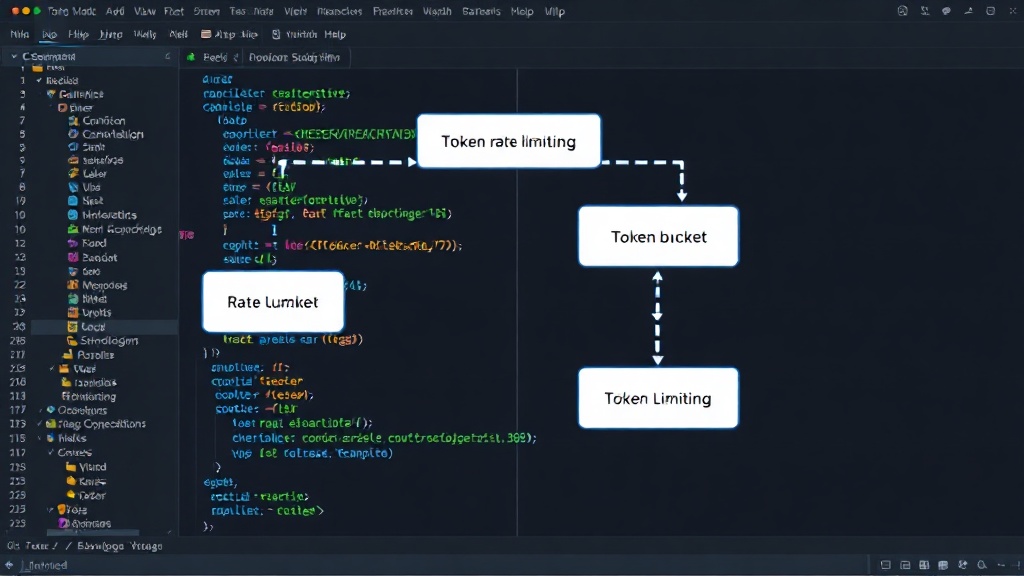
1. Token Bucket Algorithm
Imagine a bucket that holds tokens, with a fixed capacity. Tokens are added to the bucket at a constant rate. Each time a request arrives, the system checks if there's a token available. If there is, one token is removed from the bucket, and the request is processed. If the bucket is empty, the request is either rejected or queued.
This algorithm is flexible because it allows for bursts of traffic, as long as the average rate does not exceed the token refill rate. It’s like having a small buffer of allowed requests that can be used up quickly if needed, but then requires a waiting period as the bucket refills.
2. Leaky Bucket Algorithm
In contrast to the token bucket, the leaky bucket algorithm focuses on smoothing out traffic. Requests are added to a queue (the bucket). This bucket leaks requests at a constant rate. If the bucket is full when a new request arrives, the request is rejected. This ensures that the outgoing traffic rate is constant, regardless of the incoming traffic's variability.
This method is excellent for ensuring a steady outflow of requests, preventing sudden spikes from overwhelming downstream systems. It’s akin to a bucket with a small hole at the bottom; water (requests) fills it, but it only drains out at a fixed, slow pace.
3. Fixed Window Counter
This is one of the simplest methods. It divides time into fixed windows (e.g., 60 seconds). A counter tracks the number of requests within the current window. If the counter exceeds the limit, new requests are blocked until the next window begins. The main drawback is the potential for a burst of requests at the boundary of two windows. For example, if the limit is 100 requests per minute, a user could send 100 requests at 00:00:59 and another 100 at 00:01:00, effectively sending 200 requests in two seconds.
4. Sliding Window Log
To address the boundary issue of the fixed window counter, the sliding window log keeps a log of timestamps for each request. When a new request comes in, the system counts the number of requests within the current sliding window (e.g., the last 60 seconds). If this count exceeds the limit, the request is rejected. This provides a more accurate reflection of recent traffic but requires more memory to store the timestamps.
5. Sliding Window Counter
This algorithm combines the simplicity of the fixed window counter with the accuracy of the sliding window log. It uses two counters: one for the current window and one for the previous window. It calculates the rate based on a weighted average of requests in both windows, providing a smoother, more accurate rate limit without the memory overhead of storing individual timestamps.
Implementing Rate Limiting
Rate limiting can be implemented at various levels:
- Application Level: Code within your application logic handles request tracking and enforcement. This offers fine-grained control but can add overhead to your application servers.
- API Gateway Level: Solutions like AWS API Gateway, Apigee, or Kong can manage rate limiting centrally before requests even hit your backend services. This is often more scalable and easier to manage.
- Load Balancer Level: Some advanced load balancers offer rate-limiting capabilities to distribute traffic control across multiple servers.
- Web Server Level: Web servers like Nginx can be configured with modules (e.g., `ngx_http_limit_req_module`) to implement rate limiting.
When deciding where to implement rate limiting, consider your architecture, scalability needs, and management overhead. For many modern applications, an API Gateway or a dedicated service is a common and effective choice.
Best Practices for Rate Limiting
Effective rate limiting involves more than just setting a number. Consider these practices:
- Clear Limits: Define sensible limits based on expected usage patterns and server capacity.
- Informative Responses: When a request is rate-limited, return an appropriate HTTP status code (e.g., 429 Too Many Requests) and ideally provide information in headers (like `Retry-After`) about when the client can try again.
- Monitoring and Alerting: Continuously monitor your rate limiting metrics. Set up alerts for when limits are frequently hit, which could indicate an attack or a need to scale.
- Tiered Limits: Consider different limits for different user tiers (e.g., free vs. paid users) or different types of requests (e.g., read vs. write operations).
- IP vs. User ID: While IP-based limiting is common, it can affect users behind shared IPs (like corporate networks or public Wi-Fi). User ID-based limiting offers more granularity but requires authentication. Often, a combination is best.
By understanding and implementing rate limiting, you gain a powerful tool to protect your systems, ensure a positive user experience, and maintain operational efficiency in the face of unpredictable digital demands.