The Genesis: A Vision for Accessible Computing
The Raspberry Pi's story began not with a product, but with a problem. In the early 2000s, educators and technologists observed a troubling decline in the number of students pursuing computer science. The complexity and cost of traditional computing hardware were significant barriers to entry, and programming was increasingly relegated to abstract theory rather than hands-on experimentation. This sentiment coalesced around a core group of individuals at the University of Cambridge, including Eben Upton, who envisioned a low-cost, credit-card-sized computer capable of teaching basic programming and computing concepts. The goal was ambitious: to put a programmable computer into the hands of every child, sparking a new generation of innovators.
Initial concepts and prototypes emerged as far back as 2006. These early iterations were rudimentary, focusing on the fundamental idea of a small, affordable board. The initial target was a price point of around $25, a figure that seemed almost impossibly low for a functional computer. The journey to achieve this was fraught with technical challenges and supply chain hurdles. The team explored various microcontrollers and processors, constantly balancing cost, performance, and power consumption. The key was to strip away everything non-essential, focusing solely on the core computing and I/O capabilities needed for education and hobbyist projects.
The Launch and Early Impact: A Phenomenon Ignites
The Raspberry Pi Foundation officially launched the Raspberry Pi Model B in February 2012, priced at $35. The response was immediate and overwhelming. Demand far outstripped supply, with hundreds of thousands of units ordered within hours of the announcement. This wasn't just a product launch; it was a cultural moment. Developers, educators, students, and hobbyists worldwide recognized the immense potential of this tiny, affordable device. It democratized access to computing hardware in a way that hadn't been seen before, empowering individuals to learn, experiment, and create.
The initial success was fueled by a vibrant community that quickly formed around the Pi. Online forums, blogs, and maker spaces buzzed with activity. Users shared projects, troubleshooting tips, and innovative applications. From simple robots and home automation systems to media centers and retro gaming consoles, the possibilities seemed endless. The low cost meant that experimentation didn't carry the same financial risk as with more expensive hardware, encouraging a fearless approach to learning and building. This grassroots enthusiasm became a critical driver of the Raspberry Pi's sustained growth and adoption.
Evolution and Expansion: Beyond the Classroom
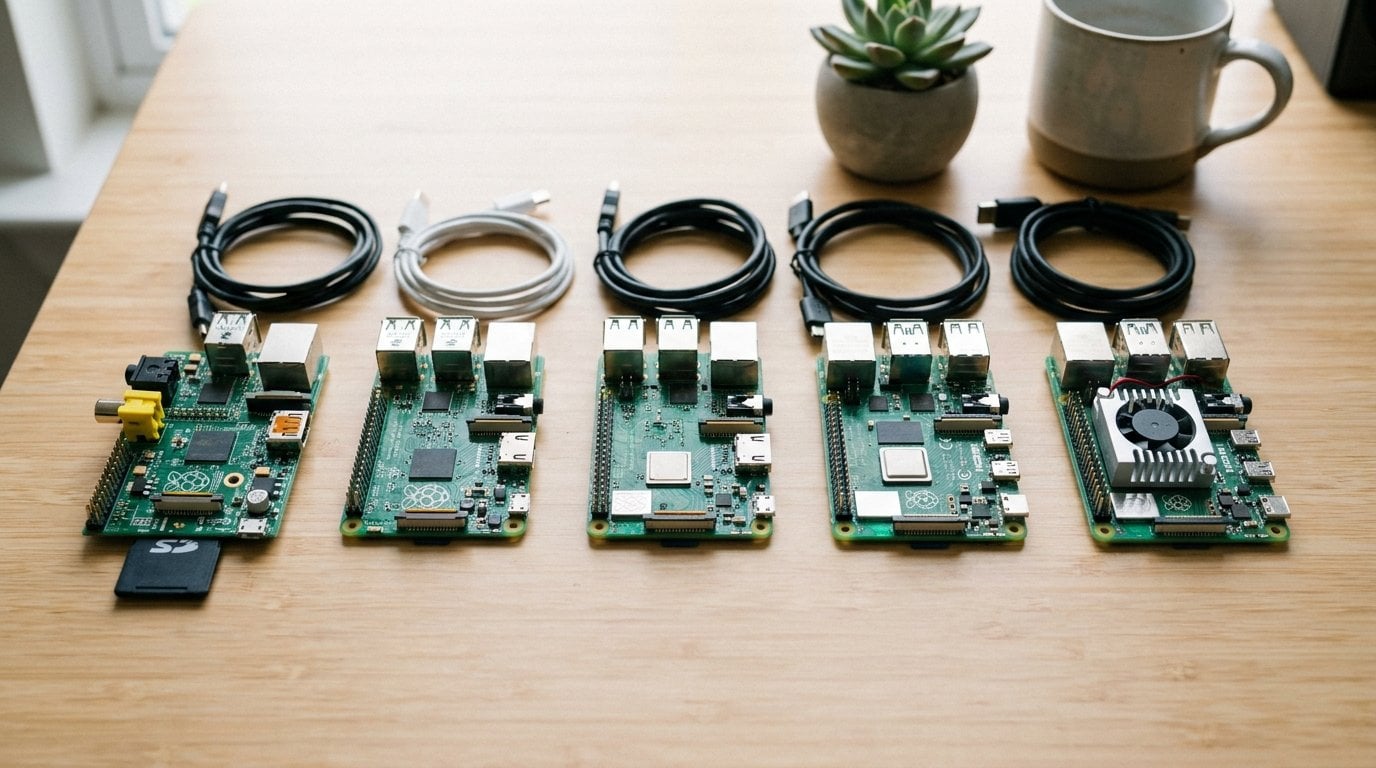
The Raspberry Pi's journey didn't stop at the Model B. The Foundation and its partners, notably element14 and RS Components, continued to iterate and improve the hardware. The Model A offered a lower-cost, lower-power option with reduced connectivity. Subsequent generations brought significant performance increases, more RAM, and improved I/O capabilities. The Raspberry Pi 2, released in 2015, offered a quad-core processor, bringing it closer to desktop-level performance for many tasks. The Raspberry Pi 3, with built-in Wi-Fi and Bluetooth, further cemented its role as a versatile IoT device.
The introduction of the Raspberry Pi Zero in 2015 was another pivotal moment. This even smaller and cheaper iteration, priced at just $5, opened up new frontiers for embedded projects and wearable technology. Its tiny form factor and minimal power consumption made it ideal for applications where space and battery life were critical constraints. The subsequent release of the Zero W, with wireless connectivity, made it a go-to choice for countless DIY projects requiring a connected, low-power brain.
The Modern Era: Industrial Strength and AI
By the late 2010s and early 2020s, the Raspberry Pi had matured from an educational toy into a serious computing platform. The Raspberry Pi 4, released in 2019, represented a major leap forward, offering desktop-class performance with options for up to 8GB of RAM, USB 3.0, and Gigabit Ethernet. This made it capable of handling more demanding workloads, including light desktop computing, server applications, and even edge AI processing. The Compute Module line also evolved, providing industrial-grade versions designed for integration into custom hardware and mass production.
The Pi's role in the burgeoning field of Artificial Intelligence and Machine Learning is particularly noteworthy. Its affordability and accessibility have allowed researchers, students, and developers to experiment with AI models at the edge. Projects ranging from smart cameras and voice assistants to robotics and environmental monitoring now leverage the Pi's capabilities. The development of optimized libraries and frameworks for the ARM architecture, common to Raspberry Pi, has further accelerated this trend. The Foundation's ongoing commitment to education, coupled with the platform's versatility, ensures its continued relevance in shaping the future of computing and AI.
Looking Ahead: The Next Decade and Beyond
As the Raspberry Pi approaches its 15th anniversary and looks towards 2026 and beyond, its impact is undeniable. It has inspired millions, fostered a global community of makers, and fundamentally changed the landscape of accessible computing. The original vision of putting a computer into every child's hands has, in many ways, been realized, not just in schools but in garages, workshops, and research labs worldwide. The platform continues to evolve, with rumors and expectations of even more powerful and capable iterations on the horizon. The journey from a university project to a global phenomenon is a testament to the power of accessible technology and the ingenuity of its community. What remains to be seen is how the platform will adapt to the ever-increasing demands of AI, augmented reality, and the continued expansion of the Internet of Things, but its foundational principles of affordability, accessibility, and community-driven innovation suggest a bright and enduring future.