The Limits of Standard Retrieval
Retrieval-Augmented Generation (RAG) models typically excel at finding relevant text chunks. Given a query, they scan a knowledge base, identify the most similar documents or passages, and feed them to a large language model (LLM) for synthesis. This approach is effective for many tasks, but it has a fundamental limitation: it struggles with information that isn't explicitly stated within a single retrieved chunk. The answer might exist, but it’s fragmented across multiple documents, requiring an understanding of the relationships between them.
Consider a scenario with two documents. One states, "In 2022, the team chose PostgreSQL." The other reads, "After the migration problems, the team moved to DynamoDB in 2024." Neither document alone answers the question: "Why did the database decision change?" The answer lies not in the content of either document individually, but in the implicit connection between the PostgreSQL choice, the subsequent migration issues, and the eventual move to DynamoDB. Standard RAG, focused on similarity, would likely fail to bridge this gap.
This gap highlights a critical question: Are we optimizing RAG for the right kind of information retrieval? Should the focus shift from simply finding the most similar pieces of text to understanding and reconstructing the contextual relationships between disparate pieces of information?
Introducing Context Reconstruction
The concept of reconstructing context across documents moves beyond simple similarity matching. It aims to build a narrative or a causal chain by linking information fragments that, on their own, may not appear highly similar. This involves identifying implicit connections, temporal sequences, cause-and-effect relationships, or comparative elements that span multiple pieces of data. If a system can reliably recover these relationships, it opens up new possibilities for how LLMs can leverage external knowledge.
Imagine a system that can trace the evolution of a technical decision, not by finding a single document that explains it, but by piecing together the initial choice, the challenges encountered, and the subsequent changes. This is akin to a detective building a case by connecting seemingly unrelated clues. The value isn't in the individual clues, but in the story they tell when assembled correctly.
This capability is not just theoretical. It has the potential to unlock deeper understanding from vast, unstructured knowledge bases. Instead of just retrieving facts, a context-reconstructing system could retrieve understanding. This could power more sophisticated question-answering, more nuanced summarization, and more accurate reasoning over complex datasets.
The Experimental Approach
To investigate whether these relationships truly matter, an experiment was designed. The core hypothesis was to compare the performance of a system capable of reconstructing contextual relationships against a standard RAG system that relies solely on similarity-based retrieval. The goal was to determine if the ability to understand these inter-document connections provided a tangible benefit.
The experiment involved creating a small-scale testbed where documents contained information that was intentionally fragmented. The system's task was to answer questions that required synthesizing information from multiple, non-obvious sources. The crucial part of the experiment was the comparison: how well could a system that explicitly models relationships perform compared to one that only models textual similarity?
The initial findings, though preliminary, suggest that the ability to identify and leverage these relationships is not just an incremental improvement but a potentially crucial factor in achieving deeper understanding. When information is distributed and requires inferential leaps, a system that can bridge those gaps through relational understanding will naturally outperform one that cannot.
Implications for RAG Development
If the premise holds true, the implications for RAG development are significant. Current RAG pipelines are heavily optimized for efficient vector similarity search. This involves techniques like embedding generation, indexing, and nearest neighbor search. While these are powerful tools for finding relevant content, they are not inherently designed to understand the semantic or causal links between disparate pieces of information.
Developing systems that can reconstruct context requires a different approach. It might involve:
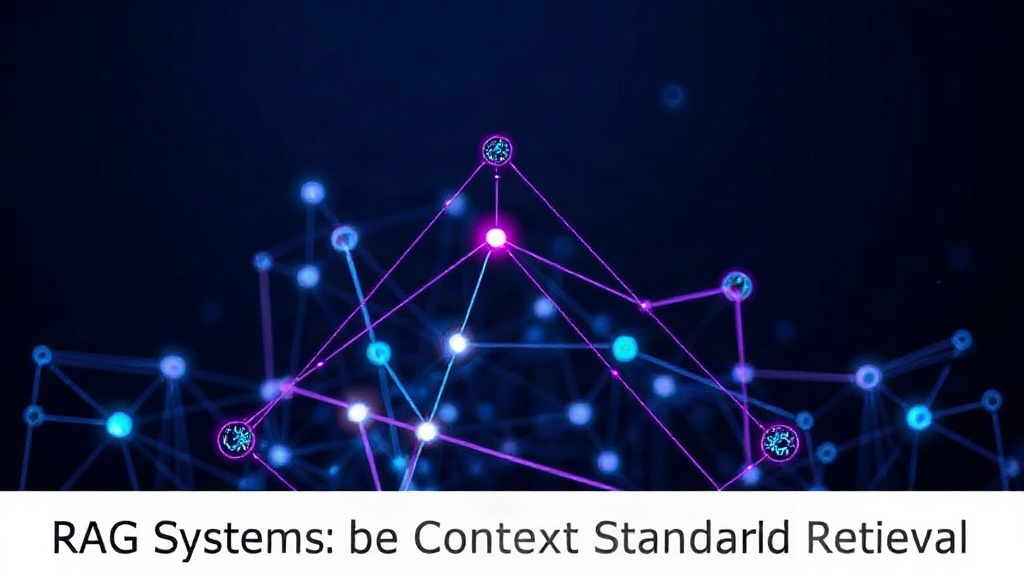
- Graph-based representations: Modeling knowledge as a graph where nodes are entities or facts, and edges represent relationships.
- Advanced NLP techniques: Employing relation extraction models, temporal analysis, and causal inference algorithms.
- Hybrid retrieval strategies: Combining vector search with graph traversal or rule-based reasoning.
- Specialized training data: Curating datasets that explicitly highlight inter-document relationships.
The challenge lies in scaling these methods. Building and querying knowledge graphs can be computationally intensive. Relation extraction models require careful training and validation. Integrating these components into a seamless RAG pipeline adds complexity.
The Future of Contextual AI
The exploration into relational understanding within RAG systems points towards a future where AI can grasp information with greater depth and nuance. This is not about replacing LLMs, but about equipping them with more sophisticated tools to access and interpret external knowledge. If a system can reliably reconstruct context, it could move beyond simply retrieving answers to truly understanding the underlying information, enabling more robust reasoning and more accurate synthesis.
The question of whether RAG needs better retrieval or better relationships is not an either/or proposition. It is likely that both are essential. However, the current emphasis on pure textual similarity may be overlooking a critical component of intelligence: the ability to connect the dots. As AI systems become more integrated into complex decision-making processes, their capacity to understand the subtle, often unstated, relationships within data will become paramount.
This research direction could lead to AI that doesn't just find information, but understands it. The ability to reconstruct context is, in essence, the ability to tell a more complete story. For developers building the next generation of AI applications, this shift in focus could unlock entirely new capabilities and redefine what's possible with augmented generation.