The Limits of PDF-Centric Retrieval
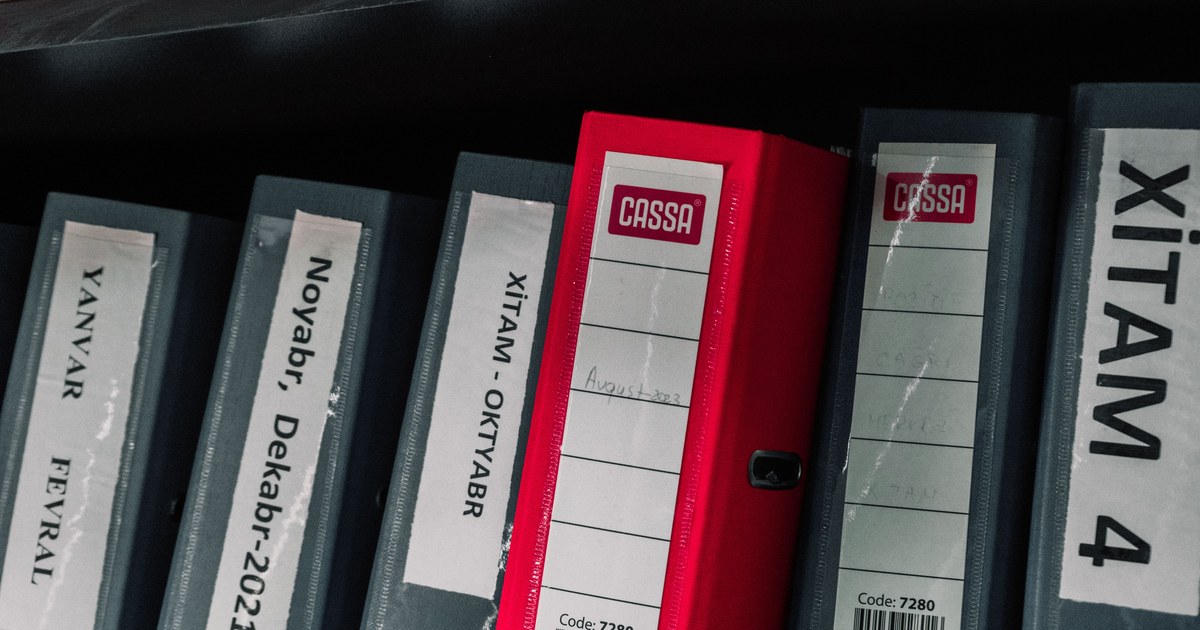
Traditional Retrieval Augmented Generation (RAG) systems excel at extracting information from individual documents. Feed a RAG model a library of PDFs, and it can answer questions based on the content within those files. However, when dealing with complex, multi-document datasets like legal case files, this approach quickly reveals its limitations. A case file is more than a collection of PDFs; it's an organized structure, a hierarchy of documents, and a web of interrelationships. Simply indexing the text content of each PDF misses crucial context embedded in the folder structure, document naming conventions, and implied relationships between files. This article explores why RAG systems need to evolve beyond just parsing individual documents to understand the relational tables inherent in a case file's organization.
Consider a typical legal case. It might contain folders for 'Pleadings,' 'Discovery,' 'Motions,' 'Orders,' and 'Exhibits.' Within these folders are individual documents: complaints, answers, interrogatories, deposition transcripts, expert reports, and court rulings. A RAG system that only reads the text of each PDF might be able to tell you what a specific motion argues, but it won't inherently understand that this motion is a response to a particular discovery request, or that a deposition transcript directly references an exhibit filed earlier. The metadata, the file paths, and the very act of grouping documents in specific folders provide vital context that is lost when treating each PDF as an isolated island of text.
Building for Intent: Beyond Simple Retrieval
The core problem with a purely document-centric RAG approach is that it often fails to grasp the user's underlying intent. The questions we build RAG systems for are rarely about retrieving isolated facts. Instead, they are about understanding processes, timelines, relationships, and consequences. For instance, a lawyer doesn't just want to know what was in a specific discovery request; they want to know what was produced in response, by whom, and when. They want to understand the progression of arguments in a series of motions or the timeline of events as laid out in various reports and timelines.
This is where the concept of 'relational tables' becomes critical. These aren't necessarily literal SQL tables within a database, but rather the implied structure and relationships that a human expert intuitively understands when navigating a case file. This includes:
- Document Hierarchy and Relationships: Understanding which documents are amendments, responses, replies, or exhibits to other documents. For example, a 'Reply Brief' is directly related to an 'Opposition Brief,' which is a response to an initial 'Motion.'
- Temporal Ordering: Recognizing the sequence of events or filings. A 'Complaint' typically precedes an 'Answer,' which precedes discovery, and so on.
- Categorization and Typing: Differentiating between types of documents (e.g., expert reports vs. witness statements, motions vs. orders) and understanding their typical roles in a case.
- Metadata and Provenance: Utilizing information like file creation dates, authoring parties, filing timestamps, and version history.
A RAG system that can parse these relational aspects can move from merely retrieving text snippets to synthesizing coherent narratives, identifying logical gaps, and providing deeper insights. It can answer questions like, "What are all the documents filed by the plaintiff in the discovery phase, and what was the response from the defendant to the last interrogatory?" This requires understanding the 'discovery' folder, identifying 'plaintiff' and 'defendant' documents within it, and then discerning the 'last interrogatory' and its corresponding 'response.'
Parsing the Folder: A New Paradigm for RAG
To achieve this, RAG systems must incorporate a deeper understanding of the data's structure. This involves moving beyond simple text chunking and embedding to a more holistic indexing strategy. Several approaches can facilitate this:
1. Hierarchical Indexing and Graph Representations
Instead of a flat index of all document chunks, consider indexing documents and their relationships. This could involve creating a knowledge graph where nodes represent documents, folders, or even entities within documents, and edges represent relationships like 'contains,' 'is_response_to,' 'references,' or 'filed_by.' This allows the RAG system to traverse these relationships during retrieval, finding relevant information not just by keyword similarity but by contextual proximity within the case structure.
2. Metadata-Aware Retrieval
Leveraging document metadata is crucial. This includes file names, folder paths, creation/modification dates, and any custom tags or properties associated with the files. A RAG system can be trained to use this metadata to filter search results, prioritize certain document types, or infer temporal sequences. For example, if a user asks about "the latest filing related to discovery," the system can filter for documents in the 'Discovery' folder, sort them by date, and retrieve the most recent one.
3. Multi-Stage Retrieval and Synthesis
A more advanced approach involves multi-stage retrieval. The first stage might identify relevant folders or document types based on the query. The second stage could then retrieve specific documents within those identified structures, paying attention to their relationships. Finally, a synthesis step would use the retrieved information, along with its structural context, to generate a comprehensive answer. This mimics how a human expert would approach the problem: first, identify the relevant sections of the case file, then pull out specific documents, and finally piece together the information.
The Future of Enterprise Document Intelligence
The implication for enterprise document intelligence is profound. Systems that can understand the relational context of documents will offer significantly more value than those that only process them in isolation. For legal professionals, this means faster case preparation, more accurate research, and the ability to uncover connections that might otherwise be missed. For other domains dealing with complex, structured document sets—such as financial compliance, scientific research, or large-scale project management—the benefits are equally transformative.
The two questions worth building for are not just retrieval questions, but synthesis and analysis questions. These systems need to be built with the understanding that the folder is as important as the PDF. By parsing the folder, not just the PDFs, RAG systems can unlock a new level of intelligence from unstructured and semi-structured enterprise data, moving from simple information retrieval to genuine knowledge synthesis and actionable insight.