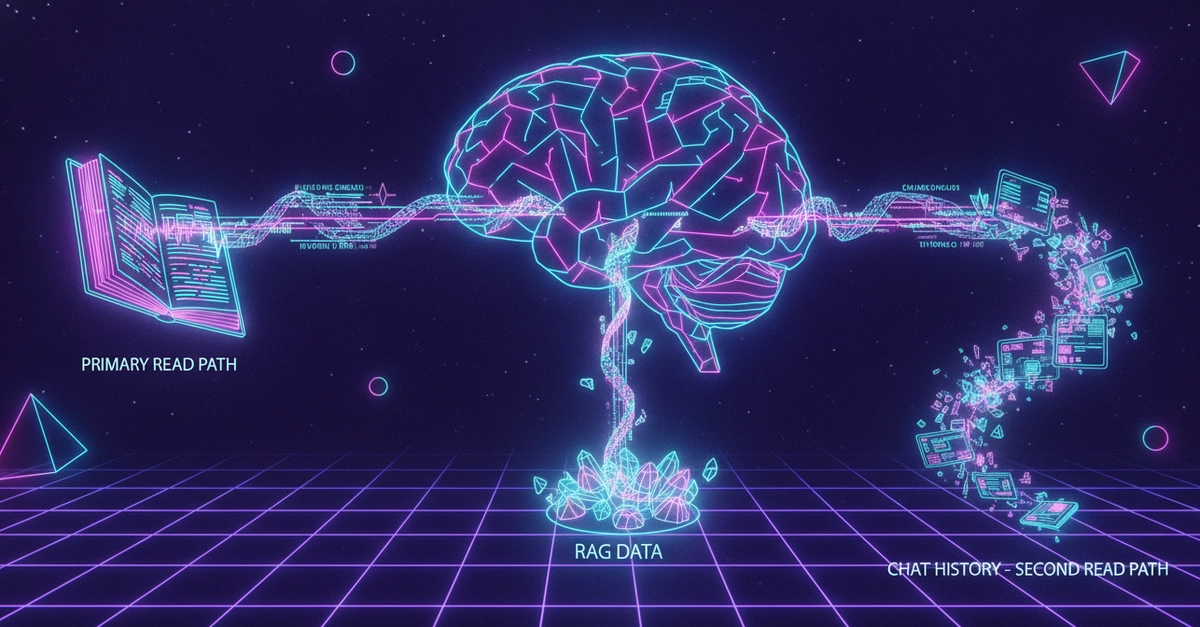
The Second Read Path: A RAG System's Persistent Shadow
Retrieval Augmented Generation (RAG) systems, particularly those embedded in conversational AI agents like copilots, often present source citations alongside their answers. This is not merely a nicety; it's a fundamental requirement for trust. An answer without its evidence is akin to unsubstantiated claims – it relies on faith rather than verifiable fact. The common practice is to display "source cards" that detail which documents backed each answer, including scores and names. This persistence of evidence is usually considered table stakes for a trustworthy RAG product.
However, a critical question emerges when considering the longevity of these interactions: six months from now, a user revisits an old conversation. The source cards render again. Who authorized them to be shown a second time? The comfortable, perhaps lazy, answer is that no one needs to – it’s the user’s own history, and they’ve already seen it. This perspective assumes that the context and permissions at the time of the initial retrieval remain valid indefinitely. But this is a dangerous assumption.
The uncomfortable, yet crucial, truth is: Persistence is not permission. What a user was allowed to see at write time proves nothing about what they should be allowed to see at read time. This distinction is vital because the data landscape, and a user's access to it, is rarely static. Documents can be updated, permissions can change, and entirely new data governance policies can be enacted. Treating historical citations as immutable facts, divorced from the current state of data access, introduces significant risks.
Consider a scenario where a RAG system pulls information from a sensitive internal document. Initially, the user has full access. The answer and its citation are displayed. Six months later, that document is reclassified as confidential, and the user’s access is revoked. If the RAG system simply replays the old citation without re-validating access, it effectively leaks information that the user is no longer authorized to see. This isn't just a hypothetical; it’s a direct consequence of conflating past retrieval with present authorization. The chat history, in this light, becomes a second read path into the system's data, and like the primary search path, it must be governed by current access controls.
Why Re-Authorization is Non-Negotiable
The core of the issue lies in the dynamic nature of data access and the evolving threat landscape. Systems that persist retrieval results – citations, source cards, snippets – transform their history endpoints into a second, often overlooked, read path into the same data that the primary RAG interface accesses. If the system’s primary interface enforces current access controls, its historical replay mechanism should do no less. Failing to do so creates a potential blind spot for data leakage and unauthorized access.
This is analogous to how version control systems handle access. While you can view historical commits and the code at specific points in time, the ability to *access* the repository itself is governed by current permissions. If your access to a Git repository is revoked, you can no longer pull or view its history, even if you previously had it. RAG systems should adopt a similar principle. The history of retrieved data should be subject to the same, if not stricter, access policies as the live data retrieval process.
The implications extend beyond mere access control. Consider data lineage and auditability. If a RAG system can replay old citations without re-validating them against current data versions and access logs, it becomes difficult to perform accurate audits. Which version of a document was actually accessed? Was the user *currently* authorized to see it at the time of replay? Without re-authorization, these questions become harder to answer definitively, undermining compliance and security efforts.
Furthermore, the perceived trustworthiness of the RAG system erodes if users can access information in historical logs that they can no longer retrieve directly. This inconsistency breeds confusion and distrust. Users expect a RAG system to be a reliable, secure, and up-to-date source of information. If historical data points become unreliable or, worse, represent unauthorized access, the entire system's utility is compromised.
Implementing Gated Replay
Gatekeeping the replay of chat history requires a conscious design choice. Instead of treating persisted citations as static, immutable records, they should be treated as pointers that necessitate re-validation. When a user accesses historical chat data, the system should not simply render the old source cards. Instead, it should re-run the retrieval query (or a similar, access-validated process) for each cited source, using the current user's credentials and permissions. This ensures that what is displayed is not a relic of past access, but a reflection of current authorization.
This approach can be implemented in several ways:
- On-Demand Re-retrieval: When a user views an old conversation, the system triggers new retrieval calls for each cited document. This is the most secure method, ensuring absolute adherence to current access policies. However, it can be computationally intensive and may lead to slower load times for historical chats.
- Time-Stamped Access Tokens: Persist not just the citation but also a time-stamped access token or a snapshot of permissions valid at the time of the original query. When replaying, the system attempts to use this token. If it fails or has expired, a new authorization flow is initiated. This offers a balance between performance and security.
- Metadata Auditing: Store metadata about the original retrieval, including user ID, document versions, and access permissions at that moment. When replaying, this metadata is presented alongside a warning that current access cannot be guaranteed, prompting the user to re-authenticate or re-query if they need current data.
The choice of implementation depends on the specific security requirements, performance considerations, and the nature of the data being accessed. Regardless of the method, the principle remains: historical RAG data should not be a free pass to bypass current security controls. It is a record that must be re-validated, much like the initial search query itself.
The Broader Context: Trust and Evolving Data Ecosystems
The RAG paradigm is built on the premise of enhancing information access with verifiable evidence. As these systems become more integrated into workflows, the integrity of their historical records becomes paramount. The question of who authorized the display of historical citations is not merely an edge case; it is a signal of a deeper challenge in managing dynamic data access within persistent conversational interfaces.
This challenge is not unique to RAG. Across software development, the principle of least privilege and the need for continuous authorization checks are foundational. Applying this to RAG history ensures that these powerful AI tools remain secure and trustworthy. Developers building RAG systems must think of chat history not as a static log, but as an active, gated interface to their data, subject to the same rules as the primary query path. This foresight is what separates a robust, secure RAG implementation from one that might inadvertently create new security vulnerabilities under the guise of user convenience.